Art for the Kitchen and Bathroom: What Works Where Steam and Splatter Happen
Art for the Kitchen and Bathroom: What Works Where Steam and Splatter Happen
The kitchen and the bathroom are the two rooms buyers most often leave bare, and the two rooms where they spend the most waking time. The hesitation is understandable. These are wet, hot, greasy rooms. They are hard on everything in them, including art. But the answer is not to leave the walls empty. The answer is to choose the right kind of painting, protect it the right way, and hang it in the right spot.
I paint, and I also cook in a kitchen with art on the walls. This guide gives the honest rules: what steam and splatter actually do to a painting, which works belong in these rooms, which should never enter them, and where exactly to hang what you choose.
What These Rooms Actually Do to Art
Name the enemies clearly. In the kitchen: cooking grease carried on steam, which settles as a thin film on every surface; heat near the stove; splatter near the sink and the burners; and strong cleaning sprays. In the bathroom: repeated humidity from showers, which is the single most damaging everyday condition for art, plus direct splashes near tubs and sinks.
An oil painting on canvas is tougher than most people think. The paint film is a hard, dried skin. It tolerates a kitchen’s air well, and a light surface film can be removed with careful dusting. What oil on canvas does not tolerate is sustained damp soaking into the back of the canvas, which can grow mold, and direct repeated splashing.
Works on paper are the vulnerable ones. Paper drinks humidity. In a steamy bathroom an unprotected sheet will wave, cockle, and eventually spot with mildew. Under properly sealed glass, a work on paper can live in a half bath with no shower. In a full bathroom with daily showers, paper is a risk even framed, unless a professional framer seals the package completely.
My full care guide covers the general rules of light, dust, and damp. This article applies those rules to the two hardest rooms in the house.
The Kitchen: Grease, Heat, and Daily Life
The kitchen is the easier of the two rooms, and original art belongs there. People gather in kitchens. A painting over the eating nook or on the wall opposite the counters gets looked at daily, which is more than most living room art can claim.
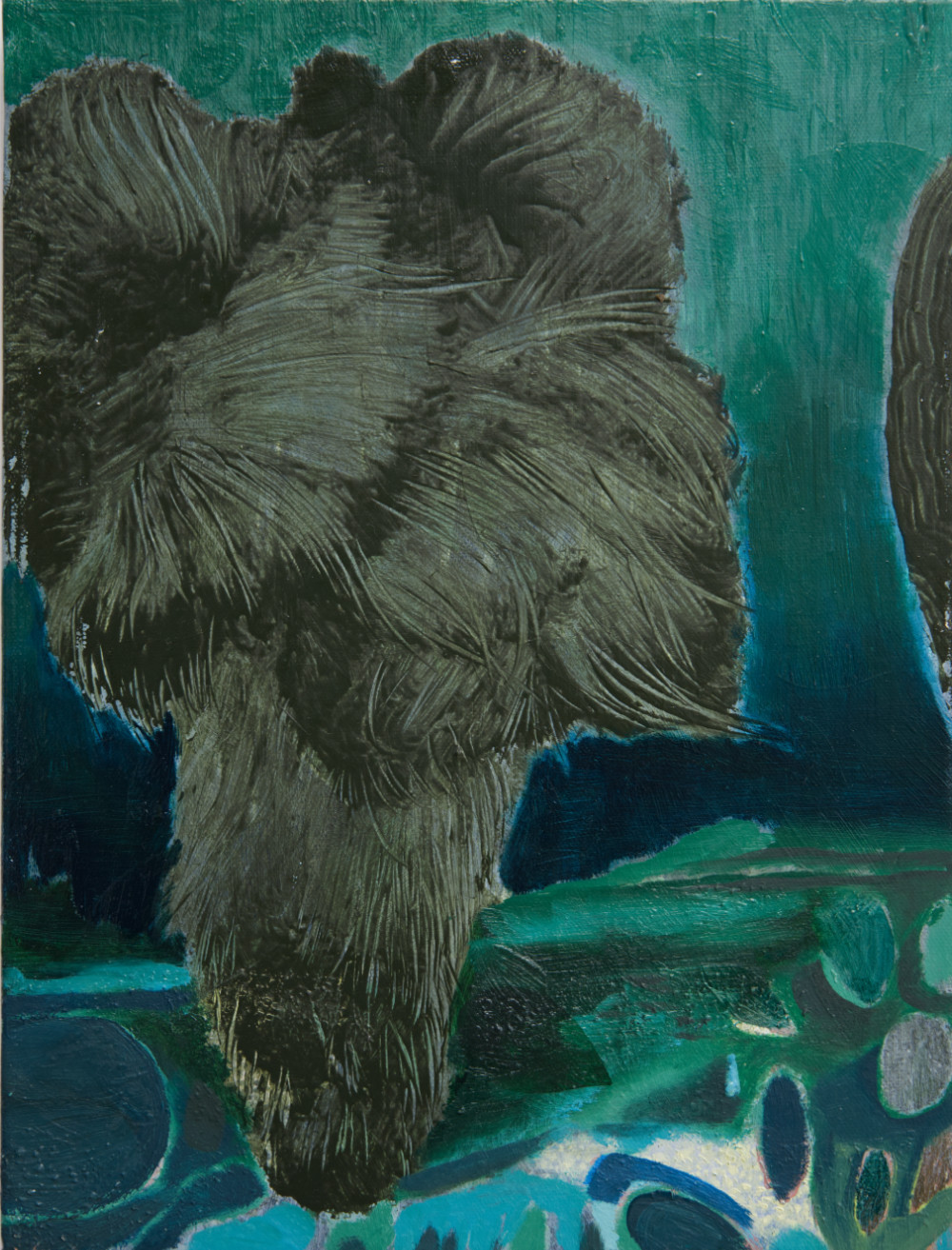
Choose oil or acrylic on canvas for the kitchen, or a canvas print if the wall is close to the action. Keep the painting away from the stove’s direct heat and the sink’s splash zone. The safe walls are the ones you do not cook against: the eating area, the wall beside a window, the space above a low cabinet run, the end wall of a galley kitchen.
Expect a slow grease film over years, the same film that coats the top of your cabinets. On a varnished oil painting it sits on the surface and a professional can clean it. This is a maintenance fact, not a disaster. Kitchens have held paintings for centuries. Still, do not hang your most valuable canvas where the frying pan spits. Give the best piece the calm wall and let a smaller, sturdier work take the lively spot.
Size in kitchens is usually modest. Walls are broken by cabinets, windows, and doors. Small and medium originals shine here, and a pair of small paintings often fits a kitchen better than one large piece competing with cabinet doors. My guide to art for small spaces covers choosing sizes for broken, busy walls like these.
The Bathroom: Steam Is the Whole Question
Split bathrooms into two kinds. A powder room or half bath, toilet and sink, no shower: this room is dry in practice, and almost any art can live there, including framed works on paper. It is also the most seen room by guests, which makes it a surprisingly good place for a painting you love.

A full bathroom with a shower or a soaking tub is different. Every shower fills the room with warm moisture, and that moisture finds the back of every frame. For this room, choose in this order: a canvas print with a protective coating, an acrylic painting on canvas, or an oil painting on canvas that you accept will age faster here. Keep it as far from the shower as the room allows, ideally on the wall the steam reaches last, and run the exhaust fan. The fan is art care equipment in a bathroom. Use it every time.
Works on paper in a full bathroom: only if a professional framer has sealed the frame package with a proper backing barrier, and even then choose a robust piece, not the irreplaceable one. My framing guide explains what a proper frame package includes, and any good framer can build a bathroom grade version of it.
What should never go in a full bathroom: unframed paper, drawings in clip frames, anything with pastel or charcoal on the surface, and inherited or one of a kind works on paper that cannot be replaced. Steam damage is slow and quiet. By the time you see the wave in the sheet, the sheet has been drinking for months.
Subject and Color for Working Rooms
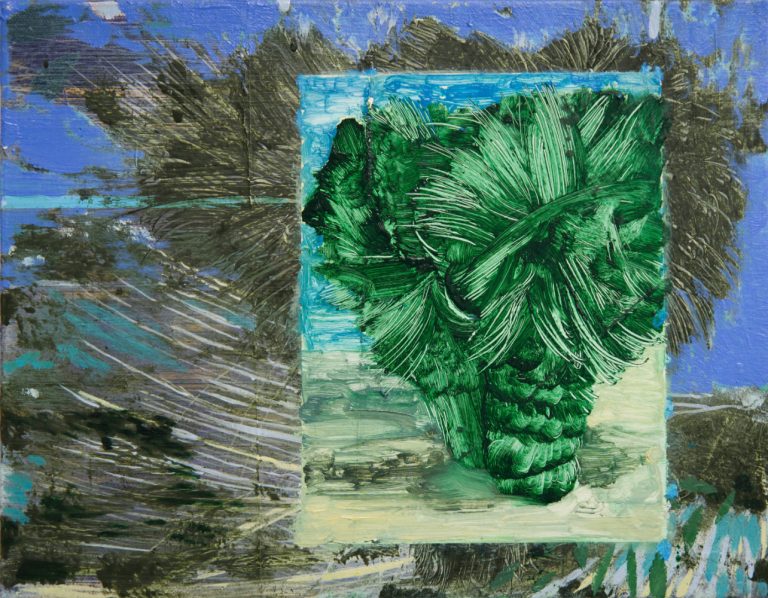
Kitchens and bathrooms reward energy. These are morning rooms and working rooms, not rest rooms. Color that would shout in a bedroom feels alive above a kitchen table. My Mirage paintings are abstract landscapes in strong color, and the small ones are exactly the scale these rooms ask for.
In a kitchen, food adjacent subjects are not required. Landscapes, figures, and abstracts all work. What matters is light: kitchens often have hard overhead light, so avoid glass covered pieces on the wall opposite a bright window, where reflections will fight the image all day. Canvas without glass wins that wall.
In a bathroom, you look at the art at close range, often in a mirror’s company. Fine detail and line reward that closeness. A small ink or figure work in a powder room gets studied the way gallery work gets studied. Choose something you are happy to have your guests alone with, because in that room, they will be.
Scale follows the room’s honest size. Bathrooms and kitchens are usually the smallest rooms in the house, and their free walls are fragments: a strip beside a mirror, a panel above a towel rail, the end of a counter run. Measure the fragment, not the room. A painting that fills its fragment with a small margin reads as architecture. A painting that nearly fits, and crowds the trim, reads as an accident. When the fragment is tall and narrow, a vertical work on paper in a slim frame is often the single best dressed wall in the whole house.
Placement Rules That Prevent Damage
A few placement habits prevent almost all kitchen and bathroom damage. Hang the work at least a few feet from the stove burners and the shower head’s direct spray. Never hang art on the wall inside a shower enclosure or directly above a soaking tub where steam rises straight into it. Avoid the wall section that your hand touches with wet or greasy fingers as you pass; narrow kitchen passages have such walls, and art there gets handled more than hung.
Use proper hooks, not adhesive strips, in humid rooms. Adhesive fails in steam, and a painting that falls into a tub or onto a stove is a loss that a two dollar hook prevents. Bumpers on the bottom corners keep the frame off the wall slightly and let air move behind it, which slows moisture buildup on the back.
Finally, check these rooms’ art twice a year. Look at the back of the frame for spots, feel the wall for damp, and wipe the surface dust with a dry soft cloth. Two minutes, twice a year, is the whole maintenance program.
Cleaning Art in Working Rooms
Kitchen and bathroom art needs a slightly different cleaning habit than art in dry rooms. Dust in a kitchen is not dry. It is dust bound with grease, and it builds a film that a dry cloth only spreads. Once or twice a year, take the painting down, lay it flat, and wipe the surface with a soft cloth barely dampened with clean water, then dry it at once with a second cloth. Work gently, in one direction, and never soak the surface. If the film resists, stop. A cleaner or conservator has solvents graded for exactly this, and a varnished oil painting can be surface cleaned professionally for less than most people expect.
For framed pieces under glass in a powder room, clean the glass, not the art, and spray the cloth, never the frame. Liquid sprayed at a frame runs down inside it and reaches the mat and the sheet. That one habit, spray the cloth, prevents the most common bathroom framing damage I see.
Check the back while the piece is down. In humid rooms the backing board tells the truth first. Spots, warping, or a musty smell mean the frame package needs a framer’s attention before the artwork itself is involved.
Small Kitchens, Rentals, and Walls You Cannot Drill
Many kitchens offer one small free wall, often above a table or beside a door. Treat that wall as a showcase, not an afterthought. One small original, hung alone with air around it, reads as a decision. Three tiny pieces crowded onto the same patch read as storage. If the wall is very small, a single work on paper in a good frame gives the most finished look for the space.
Renters face the no holes rule. In dry rooms, modern hanging strips carry small framed pieces reliably. In kitchens and bathrooms, humidity weakens adhesives, so prefer a picture rail, the top of a cabinet run, or a small easel on the counter for a framed piece. A leaning painting on a kitchen shelf or a bathroom ledge, kept clear of splash zones, is a legitimate and charming way to live with art you cannot hang.
What matters in these rooms is not the size of the gesture. It is that the art is chosen, protected, and placed with the room’s conditions in mind. A small painting, rightly placed, changes a working room more than a large one hung carelessly in a calm room ever will.
Where Prints Earn Their Place
These two rooms are where canvas prints honestly earn their keep. A print on canvas with a protective coating tolerates humidity and wiping better than any original, costs far less to replace, and can hang closer to the splash zones where an original should not go. My comparison of canvas prints and originals covers where prints are the right buy generally; kitchens and full bathrooms are the clearest case in the house.
The sensible division many collectors land on: originals on the calm walls of these rooms, where they are seen constantly and risk little, and prints in the wet zones, above the tub or beside the stove, where the conditions are worst. The room gets real images everywhere, and no irreplaceable surface is asked to survive steam it never should have met.
The Short Answer
Kitchen: yes to original canvas paintings, on the calm walls, away from heat and splash, cleaned gently as the years add up. Powder room: yes to nearly everything, including framed paper. Full bathroom: canvas and prints only, far from the shower, fan running, paper only when professionally sealed, and your most precious work somewhere drier.
Rooms this lived in deserve real art. Choose with the steam in mind and the walls will give you no trouble.