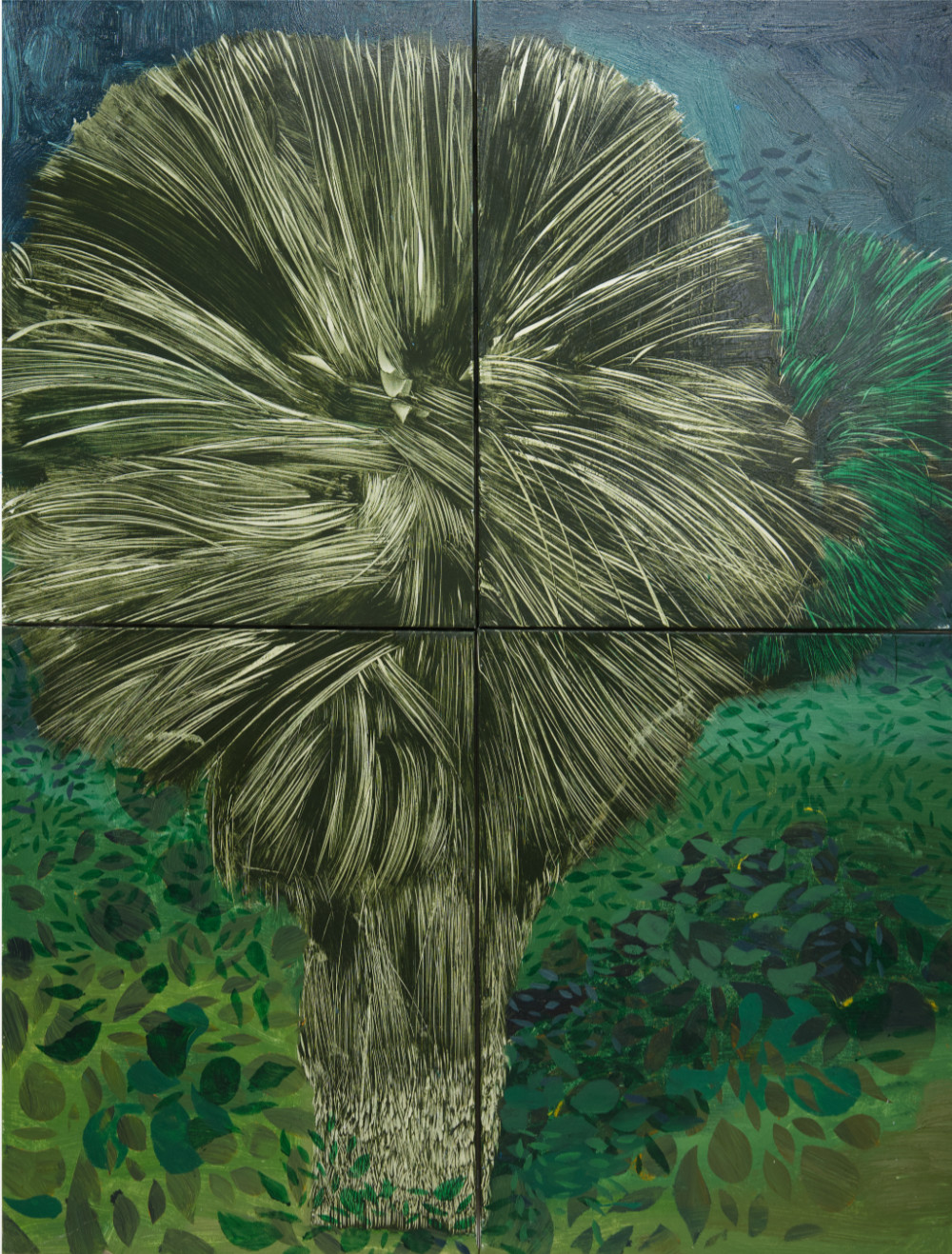
Art for Small Spaces: Original Paintings for Apartments and Small Rooms
Art for Small Spaces: Original Paintings for Apartments and Small Rooms
Small rooms get cautious art. People living in apartments and small houses tend to buy small, timid pictures, scatter them on the walls, and end with rooms that feel smaller and busier than they are. The instinct is understandable. A big painting feels like a risk in a small room. In practice the rules run the other way. A small room needs fewer pieces and clearer decisions, and one painting of real presence makes the room feel larger, because it gives the eye a single deep place to go.
I am a painter. Some of my collectors live in large houses. Some live in one bedroom apartments, and their walls taught me as much as the big ones did. This guide is for the smaller walls. The sizes that work, the one strong piece rule, where small paintings earn their place, how color behaves in a tight room, and how to hang well in a rental without losing a deposit.
The One Strong Piece Rule
In a small living room, choose one painting to be the room’s artwork and let everything else be quieter. One painting with a real image, a figure, a deep color field, something the eye can enter, does more than five small framed prints at random heights. The group of five makes the wall feel cluttered. The single painting makes the wall feel like a window. Rooms feel small when every surface asks for attention. They feel calm and larger when one surface offers depth.
This does not mean the painting must be huge. It means it must be the decision. A 24 by 30 inch original over a small sofa can carry a whole apartment living room. A 48 inch canvas can too, in the right room, and large paintings in small rooms are not the contradiction people expect. A big calm painting has fewer edges, fewer frames, and less visual noise than a cluster of small ones. My guide to buying a large painting covers the checks before a big purchase, and several of them, doorway widths and wall strength, matter doubly in apartment buildings.
What the one strong piece cannot be is apologetic. Pale, thin art in a small room reads as a placeholder, and the room stays unfinished. Choose the piece you actually respond to. In a small space you will be close to it every day. There is no wall in an apartment that hides a painting you only half like.
Sizes That Work, Room by Room
Start with the wall, as always, but think in proportions rather than bravery. Over a loveseat or a small sofa, the two thirds rule still holds. Art spanning about two thirds of the furniture width, which in an apartment often means a single work of 30 to 40 inches wide, or one strong vertical if the ceiling is high and the sofa is short.
In a small bedroom, the wall over the headboard is usually the only full wall. A horizontal painting of moderate size, hung a little higher than the living room rule because pillows and heads lean there, restores the room’s balance. My guide to art for the bedroom goes into the calm color questions that matter most in that room.
For the wall by a dining table in an open plan apartment, scale down the dining room thinking rather than abandoning it. One painting in the seated sightline, sized to the table, not the whole open space. The painting also does a second job in open plan rooms. It marks where one room ends and the other begins, better than a rug does, because it works at eye level. My room by room size guide gives the measurements for each of these walls in a standard house, and the same proportions hold when the house shrinks.
Where Small Paintings Earn Their Place
Small originals are not failed large paintings. At the right distance they are the most intimate art there is. A small painting is read from two or three feet, at the distance of a desk, a reading chair, or a hallway you pass through slowly. Hung at that range, an 11 by 14 inch original shows its surface the way a large canvas shows its image. The paint itself becomes the subject.
Give small works the close range walls. Above a desk where you sit for hours. Beside a reading chair with its lamp. On the short wall of a hallway, where you approach it head on. In a bathroom with no steamy shower air reaching it, a small original on canvas can live happily, though works on paper should stay out of humid rooms entirely. What small paintings should not do is float alone in the middle of a large empty wall, where they read as an apology. If a small piece must live on a big wall, hang it off center, low and near furniture, so it reads as a deliberate note rather than a lost one.
Pairs of small works are the apartment collector’s friend. Two related paintings, same size, hung close, give you scale without a single large purchase, and you can buy them one at a time as the budget allows. Works from one series pair honestly, because they were painted in conversation with each other.

Color and Light in a Tight Room
Small rooms forgive dark color on a painting better than they forgive dark color on a wall. A deep, rich painting on a light wall adds depth the room does not have. It reads as distance. Several of my collectors in small apartments chose the darkest painting in a series for exactly that reason, and it opened the room instead of closing it.
Light is the harder problem. Apartments often give you one window wall and three walls in permanent shade. Put the main painting where the daylight reaches it from the side, never on the wall the sun strikes head on, and never in the room’s darkest corner unless you plan to light it. A small picture light or a lamp aimed with intention rescues a dim wall for very little money. The choice is not between a bright apartment and a dark one. It is between a wall you light on purpose and a wall you leave to chance.
Mirrors get recommended for every small room, and they do bounce light. But a mirror gives the room back to itself. A painting gives the room somewhere else to be. In the one room where you spend your evenings, that difference is the whole ballgame.
Renters: Hanging Without Damage
Renting is not a reason to live with bare walls, and it is not a reason to fear hanging real art. Modern picture hanging strips carry surprising weight when used in pairs and given their full setting time, and they suit most small and medium canvases. For anything large or valuable, one or two small nail holes are the honest answer. They fill with a dab of filler in minutes at move out, and most leases treat them as normal living. What damages walls is the adhesive pad ripped off with paint attached, and the hook that was never rated for the load.
Keep the packaging. If you move often, as apartment life can require, your painting’s original box and corner protection are its travel kit. An original painting is, among household objects, one of the easiest to move. It is flat, it is light for its value, and it comes off the wall in a minute. Collectors in small spaces move their art with them for decades. The painting that fits your first apartment’s best wall will fit a wall in every home after it. Buy for your eye, not for the lease.
Start Where You Sit
The practical order for a small space is this. Choose the seat you use most. Find the wall it faces. That wall gets the strong piece, sized by the rules above. Every other wall gets less, later, or nothing, and nothing is a respectable choice. Bare secondary walls make the main wall stronger. Then live with the painting for a season before adding anything. Small rooms reveal quickly whether a second piece is needed, and it usually is not.
A note on budget. One original painting costs more than a cart of framed prints, and it should, because it is a different object entirely. My guide to starting a collection on a real budget is honest about the order of buying, and the small space version of that order is simple. Buy the one piece for the main wall first, at the best quality you can reach, and let it be the room. Prints can fill a hallway later if it still asks for them.
The Walls You Pass: Hallways and Corners
Apartment hallways are narrow, and that narrowness is a gift for art. You pass within two feet of a hallway wall, at walking pace, several times a day. That is closer and slower than any gallery viewing. One small original on a hallway wall gets more honest looks in a month than a large print over a distant sofa gets in a year. Hang it at true eye level, center around 57 inches, because in a hallway there is no furniture to anchor it lower. Light it if the hall is dark, even with a simple battery picture light, or it will read as a dark rectangle you pass rather than a painting you visit.
Corners are the other overlooked place. A small painting on the short return wall at a corner, the wall you face when you turn from the kitchen to the living room, lands in your sightline at the exact moment you are between tasks and able to look. Apartments are made of these small in between walls, and they are free. No furniture competes for them. Before you conclude that your home has no room for art, walk it slowly once and count the walls you actually face in a day. There are always more than you thought, and one of them is the right size for the painting you have been talking yourself out of.
A Small Space Example From My Studio
My Mirage series spans the sizes a small home needs, because I painted it at the scales of real walls. The small Mirage paintings, 11 by 14 inches, are complete works, not studies. I began the series during my residency at Angelo State University, painting the landscape around San Angelo, and the small canvases carry the same desert light and the same half seen figures as the large ones. At reading distance they are dense with paint. In the store they are the most reachable originals in the series, and in an apartment they are the size that goes over a desk or beside a chair and gets looked at every single day. The series runs up from there to canvases of 48 by 72 and 60 by 80 inches for the homes with the wall to hold them.
You can see the whole range on my Mirage series page, and the originals are listed in the Mirage collection in the store. Original paintings from my studio ship free, and my shipping guide shows how a painting is packed and how it travels. Handling takes five to seven days, then transit takes seven to ten days. Measure the wall your chair faces. That is your gallery. Choose the painting that deserves it.