Art for the Entryway: Choosing the First Painting a Guest Sees
Art for the Entryway: Choosing the First Painting a Guest Sees
The entryway painting has the strangest job in the house. It is the first artwork a guest sees and the last one they pass on the way out. It is seen by people taking off coats, holding bags, mid sentence. It is also seen by you, twice a day at least, at the two hinge moments of the day, leaving and coming home. No painting in the house is passed more often. Few are chosen with less thought. Most entryways end up with whatever picture did not fit anywhere else, and the house introduces itself with its leftovers.
I am a painter, and I think the entryway deserves a deliberate choice, because it sets the terms for every wall after it. A guest who meets one real painting at the door reads the rest of the house’s art as a collection. A guest who meets a faded print reads the rest as decoration. This guide covers the entryway’s particular rules. Its short viewing distance, its narrow walls, its hard light, and its working life as the busiest passage in the home.
The First Impression Is a Real Thing
A house makes its argument in the first ten seconds. The entryway is where a guest decides, without knowing they are deciding, whether this is a home where things are chosen or a home where things accumulate. One original painting, hung with intention at eye level, makes the argument for chosen. It does not need to be large. It needs to be real, a surface with paint on it, an image with a figure or a field of color that holds a look for the length of a greeting.
There is a second audience, and it matters more. You. The painting at the door is the one you see when you come home tired. Collectors tell me the entryway piece becomes a kind of household landmark, the thing that says you are home now. Choose something you are glad to be greeted by. A painting you bought for guests will tire you. A painting you bought for your own homecoming will greet guests well all by itself, because genuine things read as genuine.
Viewing Distance: Arm’s Length and a Glance
Entryway viewing is unlike any other room’s. The distance is short, often three to five feet, closer if the entry is a narrow hall. And the look is brief, a glance while moving, then a longer look while waiting for others to be ready. Art that works here works at both speeds. At a glance it should give one clear note, a figure, a strong color, a calm field. At a standstill it should open up, surface, layers, detail that rewards the person waiting by the door with their coat on.
This double duty is where original paintings beat prints most clearly. A print has one speed. Its surface is the same at three feet as at ten. An original has paint sitting on it, edges where colors meet, thin places and thick places. At entryway distance that surface is fully visible, and it is what separates a painting from a picture of a painting. My guide to original paintings versus prints explains the difference in material terms, and no room tests it harder than the hall.
Busy, high contrast art can overwhelm a narrow entry. The viewer cannot step back from it, so it shouts at close range. If your entry is tight, favor depth over noise. A painting you can look into, rather than one that jumps out, will feel generous in a small space instead of loud.
Sizing a Narrow Wall
Entryway walls come in three shapes. The wall facing the door, the wall beside the door, and the long hall wall. The wall facing the door is the prize. It is seen head on by everyone who enters, at the full length of the entry. It can carry the largest piece the entry allows, usually a single vertical or square painting. A vertical format suits the facing wall well, because entryways are often taller in feeling than they are wide, and a figure painting, standing as a person stands, meets the entering guest figure to figure.
The wall beside the door is seen at an angle and in passing. It suits smaller works and pairs. The long hall wall wants rhythm, either one horizontal painting or a close hung pair, but keep the profile slim. In a hall, depth matters as much as size. A canvas on a stretcher stands about an inch and a half off the wall. Add a deep frame and the art reaches into a passage that shoulders and bags also use. Choose slim profiles in halls. A painting with painted edges and no frame is the hallway’s friend, and my framing guide explains when that finish is the right one.
Height is simple here. True eye level, center near 57 inches, because everyone who sees this painting is standing. It is the one room where the gallery rule applies without adjustment. My guide to hanging heights covers the seated rooms where the rule bends.
One Painting, a Pair, or a Small Group?
One painting is the strongest introduction. It is a single clear statement, it is easy to light, and it leaves the entry calm around the business of coats and keys. If the entry is small, one painting is almost always the answer, and a better one than you first planned, since this wall works harder than any other in the house.
A pair suits a long entry or a facing wall that is wide and low. Two works of equal size, hung at the same height with a two inch gap, read as one thought in two parts. Pairs from the same series hang together without effort, because the colors and the hand are already in agreement.
A group of small pieces can work in an entry, but it is the hardest to get right and the easiest to let drift. Groups invite additions, and additions invite clutter, in the room least able to absorb it. If you build one, set its outer edges as a single rectangle, hang it once, and declare it finished. The entryway is a passage. Its art should feel settled, not in progress.
Light at the Door
Entries have the worst light in the house as often as the best. Some are lit by glass in the door, changing all day. Some are interior boxes with one ceiling fixture that flattens everything it touches. Walk your entry at three times before you choose. If daylight through the door glass strikes the facing wall directly at any hour, that wall will glare and, over years, fade whatever hangs on it. Move the original to the side wall and let the facing wall hold a mirror or a print.
For the interior entry, one good light changes everything. A ceiling fixture that washes the art wall, or a small picture light over the painting, makes the entry feel like a room instead of a corridor. The painting should be the brightest thing in the entry after dark. It is a small space, so a small light does it. What matters is that the light is aimed at the painting, not spilled evenly over coats and shoes.
A Working Wall: Bags, Keys, and Weather
The entryway is where the house takes its knocks. Wet coats, swinging bags, keys, the vacuum cleaner being parked. Hang the painting where the traffic does not brush it, ideally on a wall that stands a step back from the door swing and the coat hooks. Keep its bottom edge above the reach of a bag carried at hip height where the passage narrows. These are not precious rules. An original painting is a durable object, built to be lived with for generations. But the entry asks for one extra minute of placement thought, and it repays it every rainy evening.
The surface itself is easy to keep. Dust with a dry, soft cloth now and then. Nothing wet, no sprays. My care guide for oil paintings covers the full short list, and it is genuinely short. A painting at the door that is dusted twice a year will look right for decades.
The Tape Test, Entryway Version
Tape the painting’s outline on the wall you have chosen. Then use the door twenty times. Come in with bags. Go out in a hurry. Stand inside with the door closed and look at the outline the way a guest does in the first five seconds. Stand outside the open door and see what the house shows the street, because an open door frames the entry painting for visitors before they step in. If the outline holds its own in all of that, the size and the wall are right. If it vanishes, go larger or move it to the facing wall. The entry is no place for a painting that has to be pointed out.
What About the Bench, the Mirror, and the Console?
Most entries hold furniture, and the painting has to compose with it rather than compete with it. A console table under the painting is the classic arrangement, and it works when the painting is clearly in charge. Hang the painting first, at eye level on its own terms. Then let the table hold only what the entry truly needs, a bowl for keys, a tray for mail, one lamp if the entry has no other light. Objects on the console should stay below the painting’s lower edge with clear space between them, the way mantel objects stay below a painting over a fireplace. If the table dressing rises into the painting, both lose.
A mirror is the other common resident, and an entry can hold both a mirror and a painting if they take different walls. Put the mirror where it is used, beside the door, at the height of a face. Put the painting where it is seen, on the facing wall. The common error is the mirror hung as the entry’s centerpiece with the painting squeezed beside it. A mirror shows the guest their own coat. A painting shows them the house. Give the painting the main wall, and the house will introduce itself in the right order. If the entry is too small for both, the painting wins the wall and a small mirror inside the coat closet door does the practical job.
An Entryway Example From My Studio
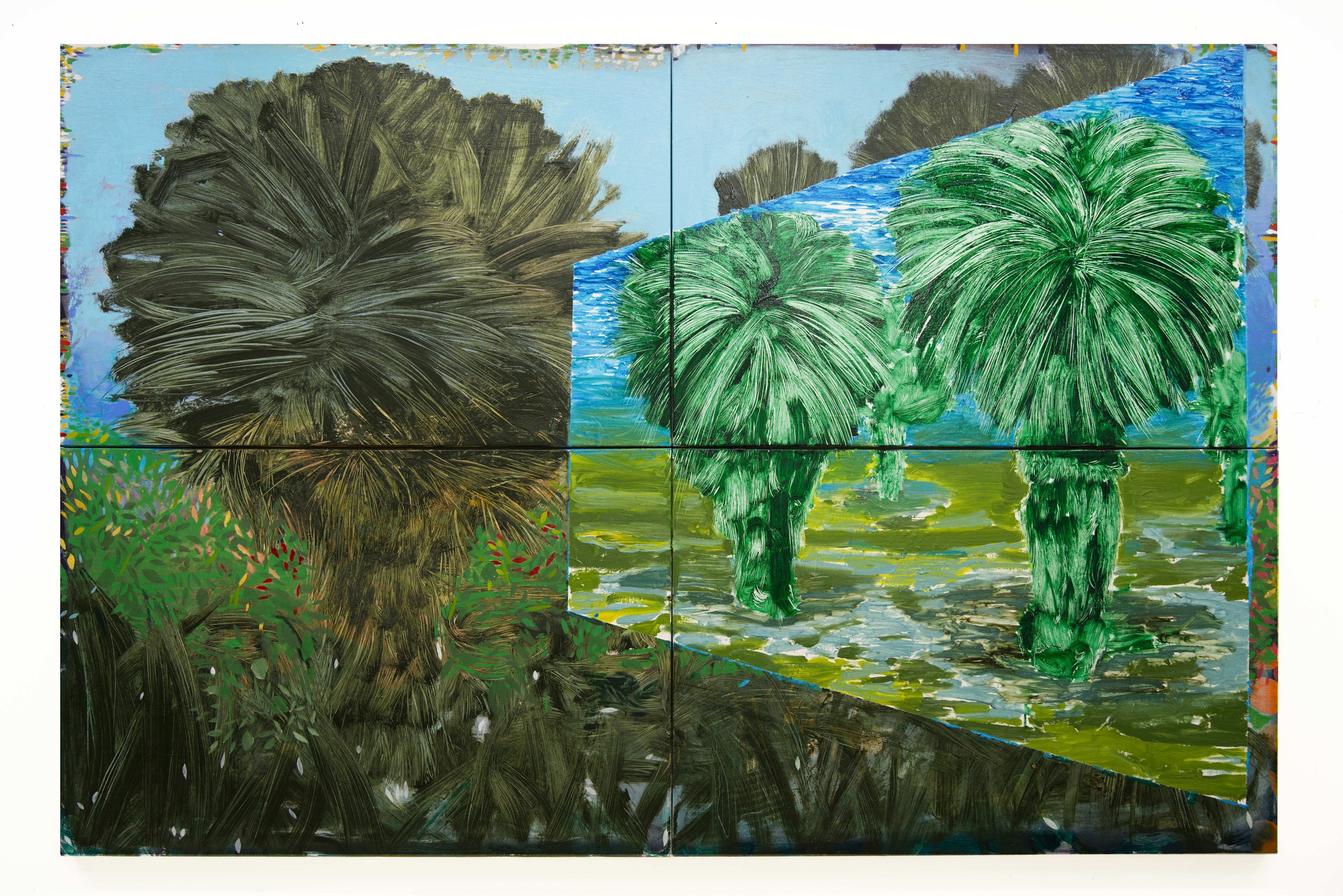
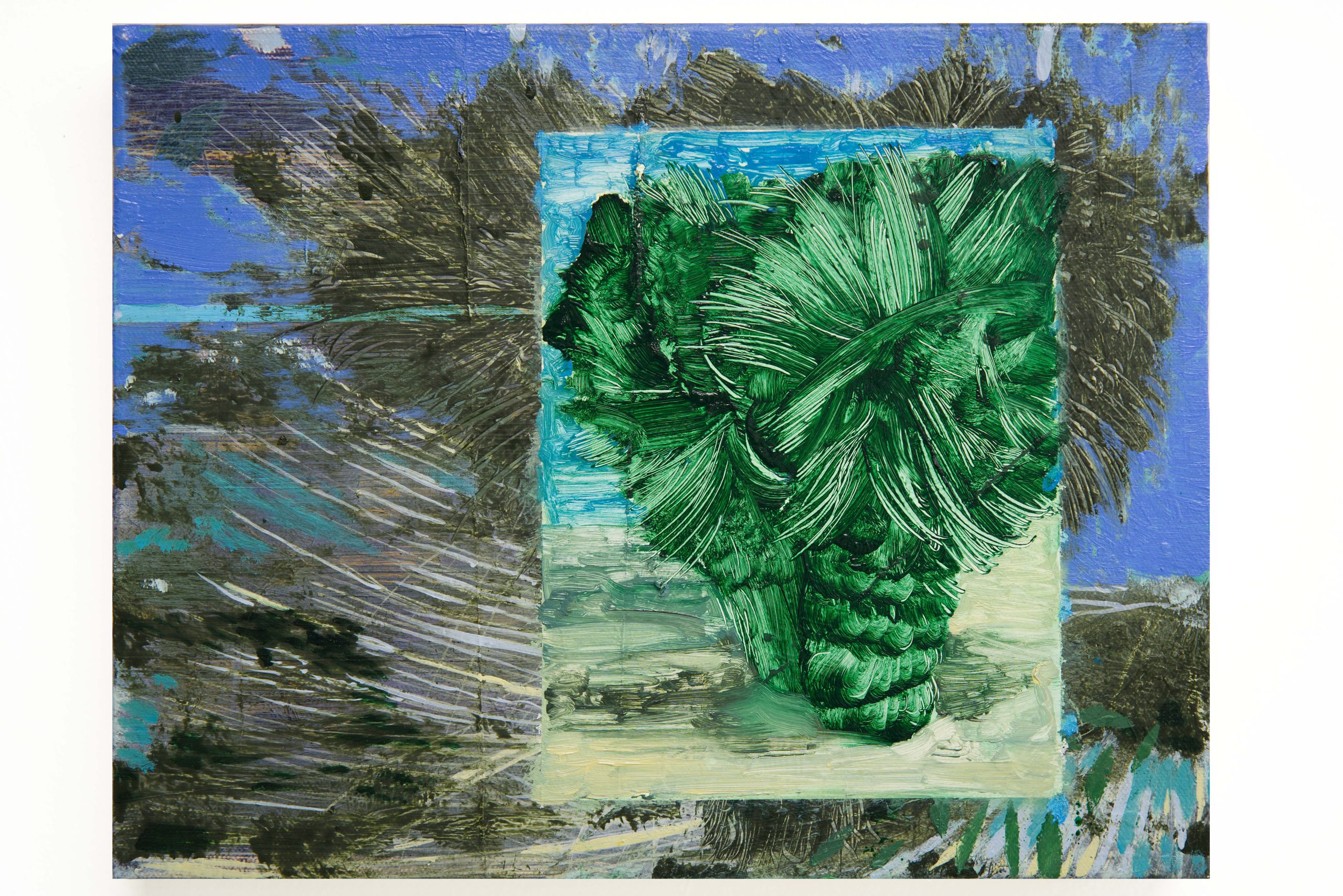
My Mirage paintings include the sizes an entryway asks for. I began the series during my residency at Angelo State University, painting the landscape around San Angelo, and the figures rose out of those fields of desert color. The small Mirage works, 11 by 14 inches, are the entryway size I recommend most often for narrow halls, complete paintings with real surface, priced at the reachable end of the series. Hung as a pair on a facing wall, or singly beside a door at eye level, they do the double duty this room demands. A clear figure at a glance. A worked, layered surface for the person waiting with their coat on.
The full series is on my Mirage series page, and the originals are listed in the Mirage collection in the store, up to the large canvases for houses whose entries open into halls with real walls. Measure your facing wall first. Then choose the painting your house introduces itself with.