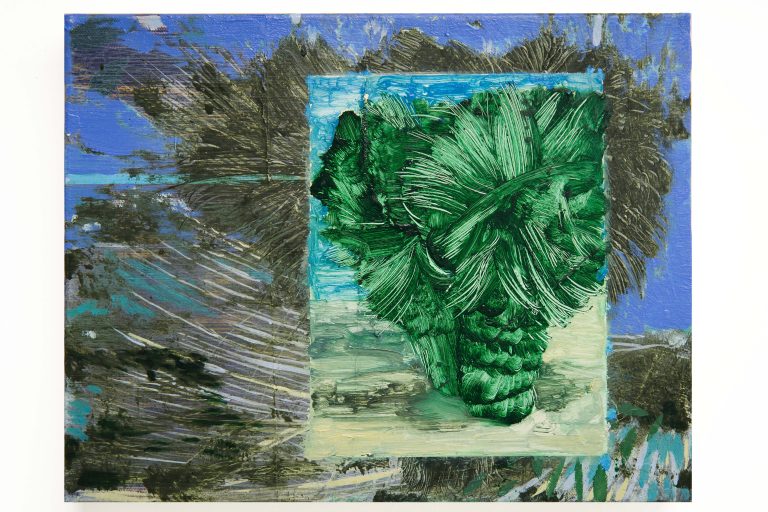
Paintings on Paper vs. Paintings on Canvas: What a Buyer Should Know
Paintings on Paper vs. Paintings on Canvas: What a Buyer Should Know
Buyers ask me about medium, size, and price. They rarely ask about the surface the painting is made on, and that surface quietly decides half of what they are buying. Paper and canvas behave differently, age differently, frame differently, and cost differently. Neither is better. They are different tools, and a buyer who understands them shops with much clearer eyes.
This guide compares the two supports honestly: what each does to the painting, what each does to the price, how each is framed and shipped, and how each should be cared for. I work on both. My large paintings are oil on canvas, and some of my most direct work is ink and paint on paper.
What Paper Does to a Painting
Paper invites speed and honesty. Ink and watercolor sink into it. Oil and gouache sit on it differently than on canvas. The surface is smooth, so a line stays exactly where the hand put it, with no weave interrupting it. For drawing based work, portraits, and anything built on line, paper is the natural home.

Paper also records decisions. A stroke on paper is hard to hide or revise, so works on paper often carry an immediacy that slower canvas work does not. Collectors who love the feeling of watching the artist think tend to love works on paper.
My Owing to the Absence series is ink on paper, 32 works shown this fall in Dayton, Ohio. The ink drinks into the sheet, the white of the paper becomes part of the image, and each portrait holds the speed of its making. On canvas, those same images would be slower, heavier, and different paintings entirely.
The practical side: works on paper are usually more affordable than canvas paintings of the same size, because the material costs less and the work often takes less time. That makes paper the smartest entry point into collecting an artist whose canvases sit above your budget. You are buying the same hand and the same eye, in a more direct form.
What Canvas Does to a Painting
Canvas is a woven fabric, usually linen or cotton, stretched over a wooden frame. Its weave gives the surface a tooth that grabs paint. Oil paint on canvas can be pushed, scraped, layered, and reworked for weeks. Canvas forgives and accumulates. A canvas painting can hold a long history of decisions inside its surface.
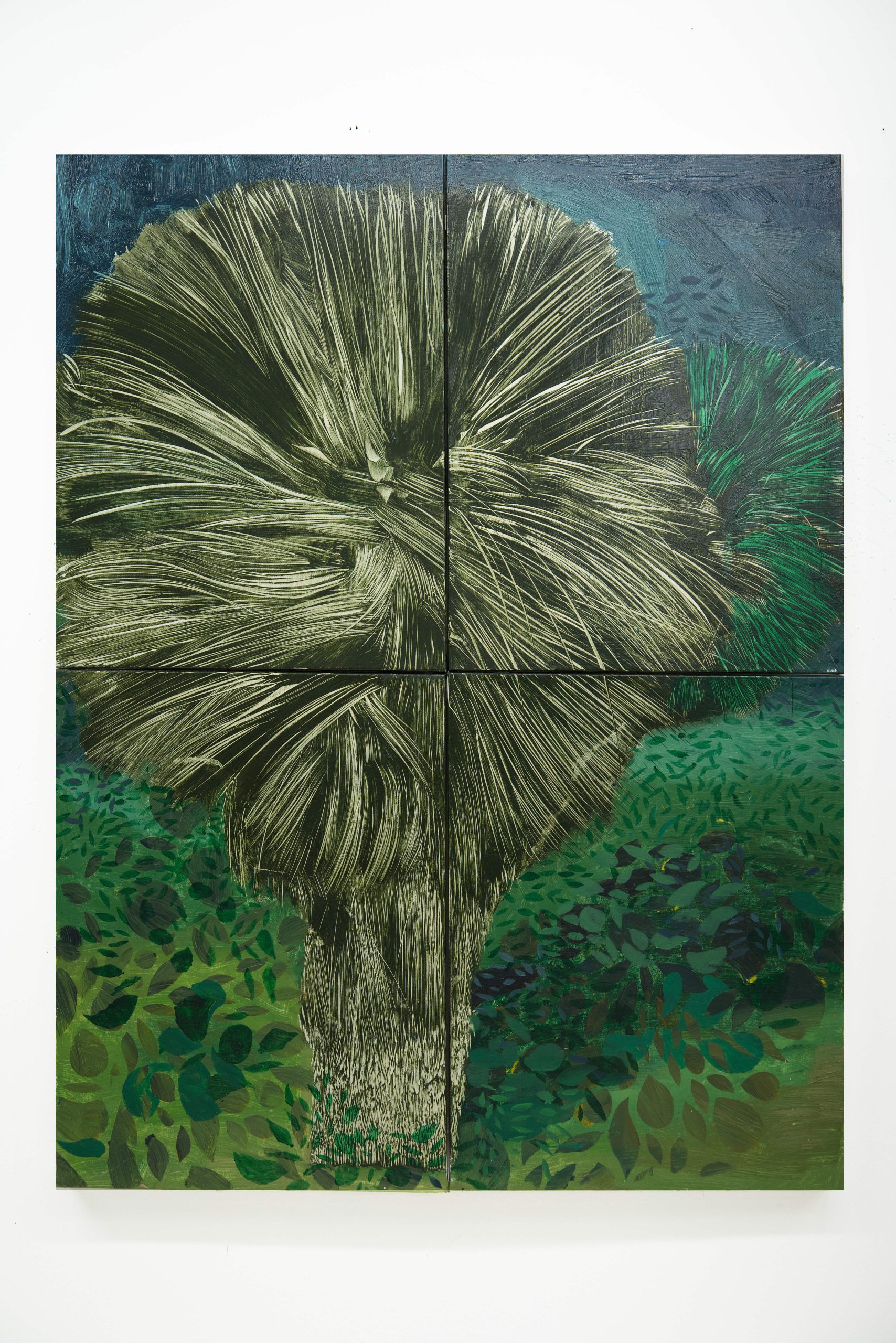
That depth is what you see in my Mirage paintings. They are built in layers over time, abstract landscapes with figures rising out of them. The largest are joined from several canvases and worked until the surface carries the whole journey. Paper could not hold that kind of building. It would buckle and tear long before the painting finished.
Canvas also scales. A canvas painting can be six feet wide and hang on a wall with two hooks. A work on paper of that size needs an enormous frame and glass, and the framing can cost more than a mid sized canvas painting. For big walls and big statements, canvas is the practical support.
The Price Difference, Explained Plainly
Buyers sometimes assume paper means lesser. The market does price works on paper below oils on canvas by the same artist, and the reasons are material, not artistic. Canvas, stretcher bars, and the weeks of layered work cost more. Paper is a sheet. Framing is the buyer’s expense, and it is real money, but the painting itself starts lower.
Think of it as two doors into the same house. A work on paper by an artist you admire is an original, one of one, made by that hand. It is not a print and not a reproduction. My guide to originals versus prints explains where the true line between original and copy sits, and works on paper stand firmly on the original side of it.
There is also a collecting logic. Many collectors start with works on paper, learn an artist’s language at close range, and later move to a major canvas with confidence. Museums do the same. Their paper rooms are full of the most intimate work their artists ever made.
Framing: The Real Difference in Your Budget
Here the two supports part ways in your wallet. A canvas painting often needs no frame at all. With painted edges or a gallery wrap, it hangs as it arrives. A simple floater frame is an option, never a requirement. My framing guide walks through those choices in detail.
A work on paper must be framed under glass or acrylic to be protected. That framing should be done properly: the sheet floated or matted with acid free materials, kept off the glass, and sealed against dust. Proper framing for a large sheet is a real cost, sometimes a few hundred dollars. When you compare prices, compare honestly: canvas price against paper price plus framing.
The reward for that framing is presentation. A well framed work on paper has a quiet, museum like presence. The margin of paper or mat around the image gives the eye rest and makes the work feel considered. Many buyers end up preferring the look once they see it done well.
One cost saver worth knowing: paper comes in standard sheet sizes, and standard sizes fit ready made frames and pre cut mats. A work on a standard sheet can be framed well for a fraction of custom framing. When you buy a work on paper, its listed dimensions tell you which road you are on. An unusual size is not a flaw, but budget for the custom frame it will want.
Shipping and Handling Differences
Canvas paintings ship in strong flat boxes or crates, padded and protected, and they travel well. In my store, original paintings ship free unless the product page states otherwise, with handling of 5 to 7 days and then transit by carrier. A canvas arrives ready to hang.
Works on paper ship flat, between rigid boards, protected from bending and moisture. They arrive unframed unless the listing says otherwise, and they should be framed reasonably soon rather than stored in the shipping boards for a year. Keep the sheet flat, dry, and out of light until it goes to the framer.
One more handling note. Never roll an original work on paper that was made flat, and never unroll a canvas painting yourself if it arrives rolled for transport. Restretching is a job for a framer. The product page for each painting in the store states how that piece ships, so read it before the box arrives.
Care and Longevity
Both supports last for centuries when they are cared for, and both die young when they are not. Canvas fears punctures, hard knocks, and damp walls that grow mold on the back. Paper fears light, humidity, and acidic materials touching the sheet.
For paper, the rules are simple. Frame with acid free mat and backing. Use UV protective glass or acrylic if the wall gets sun. Keep the work out of bathrooms and other steamy rooms unless it is sealed by a professional framer, and even then, choose the least steamy wall. Hung with those basics respected, an ink or watercolor work will outlive everyone in the house.
For canvas, keep the painting out of direct sun and away from heat sources, dust it with a soft dry cloth, and never hang it on a wall that feels damp. The care is light. The full routine is in my guide to caring for an oil painting, and most of it is simply choosing the right wall once.
The Middle Ground: Other Supports Buyers Meet
Paper and canvas are the two poles, but you will meet other supports in listings, and it helps to know them. Canvas board is canvas fabric glued to a rigid board: flat, light, easy to frame, and common for studies and smaller works. It ships easily and hangs like a framed piece. Panel, usually wood or aluminum composite, gives the smoothest and most rigid surface of all. Painters choose it for fine detail, and it will never sag or tear, though large panels are heavy.
Paper mounted on panel is a hybrid worth knowing: a finished work on paper adhered by a professional to a rigid board, so it can hang without glass. Done by the artist, a conservator, or a skilled framer, it is stable. Done casually at home, it is how good drawings get ruined, so buy it already mounted, never as a home project.
None of these is a warning sign. Serious painters use all of them. What matters is that the listing states the support plainly, the way every product page in my store does, so you know what will arrive and how you will hang it.
How the Support Changes the Room
The support also changes how a painting feels in a room, beyond price and care. Canvas without a frame has a soft physical edge and a slight shadow gap from the wall. It feels modern and relaxed, and it sits easily in living rooms with other unframed textures around it.
A framed work on paper has architecture. The frame and mat make a border of order around the image, and the eye reads it as an object of intention. Studies, dining rooms, and quieter spaces often suit that formality. A wall that mixes both, one large unframed canvas and two framed sheets, gets contrast of presentation as well as of image, which is why mixed walls so often look collected rather than decorated.
Glass changes light, too. A glazed piece will catch reflections from windows and lamps, so its best wall is the one the light does not strike head on. An unglazed canvas can take almost any wall. When you are choosing between two works you love equally, let the room’s light cast the deciding vote.
Gifts, Resale, and the Long View
The support matters again when a painting changes hands. Works on paper make generous gifts: they ship flat and safely, the framing lets the giver or the receiver finish the presentation, and the price point of an original on paper sits where a serious gift sits. A canvas gift is a bigger event, in size, in shipping, and in the wall it demands from the receiver, so it suits a home you know well.
For resale and inheritance, both supports hold their standing when they are documented and cared for. Keep the receipt, the title, the medium, and the date with each work. A work on paper that was framed with acidic materials for thirty years may arrive at resale with a conservator’s bill attached to its story. A work on paper framed properly arrives as what it is: an original in fine condition. The support never decides the value alone. The artist, the quality, and the condition decide it together, and condition is the part your care controls.
Which One Should You Buy?
Buy paper when you love line, speed, and intimacy, when your budget is entering an artist’s work for the first time, or when the wall is a study, a hallway, or a room where art is seen up close. Buy canvas when you want scale, surface depth, and a painting that holds a large room from across it.
Buy both, over time, if you collect one artist. The paper works show you the thinking. The canvases show you the arrival. Hung in the same home, they explain each other.
Start where your eye keeps returning. If a sheet of ink figures has been in your mind since you first saw it, that is your answer, and the support question has already solved itself.