
Gallery Walls: How to Hang a Group of Paintings That Belongs Together
Gallery Walls: How to Hang a Group of Paintings That Belongs Together
A single painting makes a statement. A group of paintings makes a world. That is why gallery walls attract so many buyers, and why so many of them disappoint. The paintings are good. The wall still looks scattered. The problem is almost never the art. The problem is that the group was hung as separate pictures instead of as one composition.
Treat the whole group as a single piece of art and everything gets easier. The group has one outer shape. It has one center. It has one spacing rule that repeats everywhere. Inside that frame, sizes and subjects can vary freely. This guide walks through the order that works: choose the anchor, build the group on the floor, set the spacing, and hang from the center out.
Start With One Anchor Painting
Every strong group has a lead painting. It is usually the largest piece, or the one with the strongest color, or the one you love most. The other paintings answer it. Without an anchor, every piece competes at the same volume and the wall feels noisy.
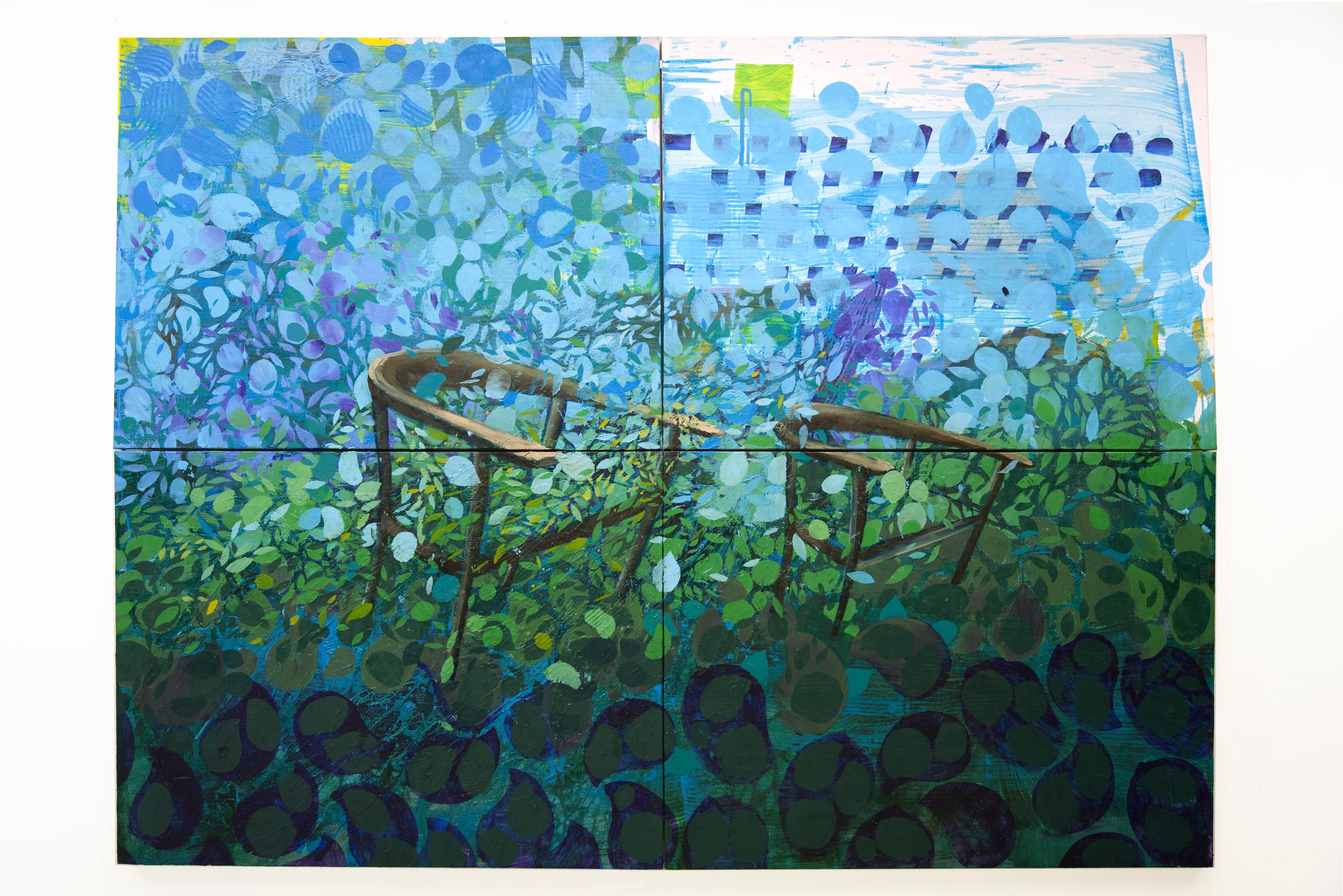
Place the anchor first, slightly off center. Dead center is fine for a single painting above a sofa. Inside a group, a lead piece placed a little to one side creates movement and gives the smaller works a direction to gather around. My room by room size guide covers how large the lead piece should be for the wall you have.
If you are buying the group over time, buy the anchor first. Live with it. Then add pieces that share something with it: a color, a mood, a subject, or the hand of the same painter. A group bought this way grows with a logic that visitors feel even if they cannot name it.
What Holds a Group Together
A group does not need matching paintings. It needs one shared thread, and only one. Too many threads and the wall looks forced. None and it looks random.
The strongest thread is a single artist or a single series. Paintings from one series were made to live together. They share a palette, a surface, and a way of thinking. My Mirage paintings, for example, were painted as one body of work, so any three of them already agree with each other before you hang them.
The second thread is color. Choose two or three colors that repeat across the group and let everything else vary. The third thread is framing. Identical frames unify almost anything, while mixed frames need the art itself to carry more of the unity. The fourth thread is subject: all landscapes, all figures, all abstracts. Pick one thread and trust it.
The Spacing Rule That Fixes Most Walls
Here is the single most useful rule in this article. Keep the gaps between paintings small and equal. Two to three inches between frames, everywhere, in every direction. Most failed gallery walls fail here. The gaps are large, uneven, and different in each row, so the eye reads separate pictures floating on a wall instead of one group.
Small equal gaps do two things. They make the group read as one rectangle of art, and they forgive small differences in size and subject. If your wall looks wrong and you cannot say why, measure the gaps before you move anything else. My guide to hanging heights and spacing gives the full numbers for single pieces and groups, including how high the center of a group should sit.
The outer edges matter as much as the gaps. The group should have a clean outer boundary, roughly a rectangle or a deliberate shape. Pieces that drift outside that boundary look lost. When in doubt, pull the group tighter. A compact group almost always looks more confident than a spread out one.
One measurement habit saves the whole job. Once the group is laid out on the floor, measure the gap pattern once and write it down: two and a half inches, say, between every pair. Then hang with a small level and a tape, checking each new piece against the last one hung, not against the wall. Errors compound from piece to piece; measured against the previous frame, they never get the chance.
Build It on the Floor First
Never design a gallery wall on the wall. Every hole you drill is a commitment, and groups need experimenting. Lay the paintings on the floor in front of the wall, or cut paper templates to the size of each piece and tape them up.
Start with the anchor. Add the next largest piece. Then fill with the smaller works, turning pieces and swapping positions until the group balances. Heavy, dark, or large pieces sit lower and toward the center. Light and small pieces rise and move outward. Take a photo of each arrangement you like. Photos flatten your attachment to the last thing you tried and let you compare honestly.
When the floor layout works, measure the total width and height of the group. Treat those numbers as the size of one big painting and find its center. That center goes at eye level, about 57 to 60 inches from the floor, the same rule as a single piece. Mark it, hang the anchor relative to it, and work outward piece by piece, keeping your two to three inch gaps.
Mixing Sizes Without Chaos
New collectors often fear mixing sizes. They buy four paintings of the same dimensions and hang them in a grid. A grid is safe, and it can look clean and modern, especially with a matched series. But a group with varied sizes has more life, as long as the spacing rule holds.
A reliable pattern is one large, two medium, and three or four small. The large piece anchors. The mediums bridge. The smalls add rhythm and let you include works on paper, small studies, and pieces bought on a smaller budget. Small original paintings are often where a collection starts, and a gallery wall is the best home for them because the group gives them presence.
Avoid one trap: do not hang all the small pieces in one corner and all the large ones in another. The group will lean visually. Spread sizes across the whole arrangement so every region of the wall has some weight.
Frames in a Group
Frames are the group’s clothing. Matching frames are the simplest route to unity, and they suit a single series hung together. Thin frames in one finish, black, natural wood, or white, let the paintings differ while the presentation agrees.
Mixed frames can work beautifully, but they ask more of the art. If the frames vary, keep the thread in the paintings stronger: one artist, one palette, one subject. What fails is everything varying at once, frames, subjects, palettes, and sizes, with no rule anywhere. One freedom at a time.
Works on paper need frames with glass, and that glass should match in spirit across the group. If some pieces are framed canvases with painted edges and no frame at all, that is fine too. A canvas with finished edges holds its own shape in a group. The rule is intention. Every choice should look chosen.
How Many Paintings Does a Gallery Wall Need?
Three is the honest minimum. Two paintings are a pair. Three begin to be a group, with a rhythm the eye can follow. From three, the comfortable range runs to about nine on a typical living room wall. Beyond that, the wall starts to behave like a salon hang, floor to ceiling and edge to edge, which is a real and honorable style, but a different one, with its own rules and a much higher demand on the quality of every piece.
Within the range, odd numbers arrange more easily than even ones. Three, five, and seven let you build a center and answer it on both sides without perfect symmetry. Even numbers work best in grids or in strict pairs of pairs. If your group keeps looking stiff, count it. An even group hung loosely is often the quiet problem.
Scale the count to the wall, not the collection. A wide wall above a long sofa can carry seven pieces in one composition. A narrow wall between two doors may carry three and be complete. Empty wall at the edges is not failure. It is the margin that lets the group read as one object, the same way a mat gives a single work on paper its rest.
Hallways, Staircases, and Other Moving Walls
Gallery walls suit hallways and staircases because these are places people pass through, and a group rewards passing. Each walk shows you a different piece. The rules shift slightly. In a hallway, viewers stand close, so small works and works on paper succeed; fine line and detail are seen at arm’s length. Keep the group’s center at eye level and its bottom edge safely above the height where hands steady themselves on the wall.
On a staircase, let the group climb. Arrange the composition so it follows the slope of the steps, with the bottom edges stepping up at a constant height above each tread. This is the one arrangement where measuring matters more than eyeballing: mark the slope with a long level or a string line first, then place the anchor at the middle of the run, and build up and down from it.
In both places, glass glare is the enemy. Hallway lights reflect in framed glass at passing angles. Favor unglazed canvas on the darkest stretches, or anti reflection glazing on the paper pieces, and the wall will read clearly as people move.
Lighting and Viewing a Group
A group needs even light more than it needs strong light. One spotlight aimed at the center painting leaves the edges in gloom and breaks the composition you worked to build. Ceiling light washed down the whole wall, or two picture lights shared across the group, keeps the unit together.
Glass is the group’s weak point. Several glazed frames on one wall multiply reflections, and from some seats one frame will always be mirroring a window. If the wall faces bright windows, lean the group toward unglazed canvas, or choose anti reflection glazing for the framed pieces. Stand where people will actually sit and check each frame from that seat before you call the wall finished.
Viewing distance works in a group’s favor. A single large painting needs a room deep enough to take it in. A group can be read in parts, from near and far, so it suits long living rooms and open plans where no single seat sees the whole wall at once.
Buying a Group Over Time
Most gallery walls are not bought in one day. They are collected. That is a strength, not a compromise, if you keep the thread in mind with each purchase. My guide to collecting on a budget lays out where the money should go first, and the same order works for a group: anchor first, then bridges, then the small pieces that complete the rhythm.
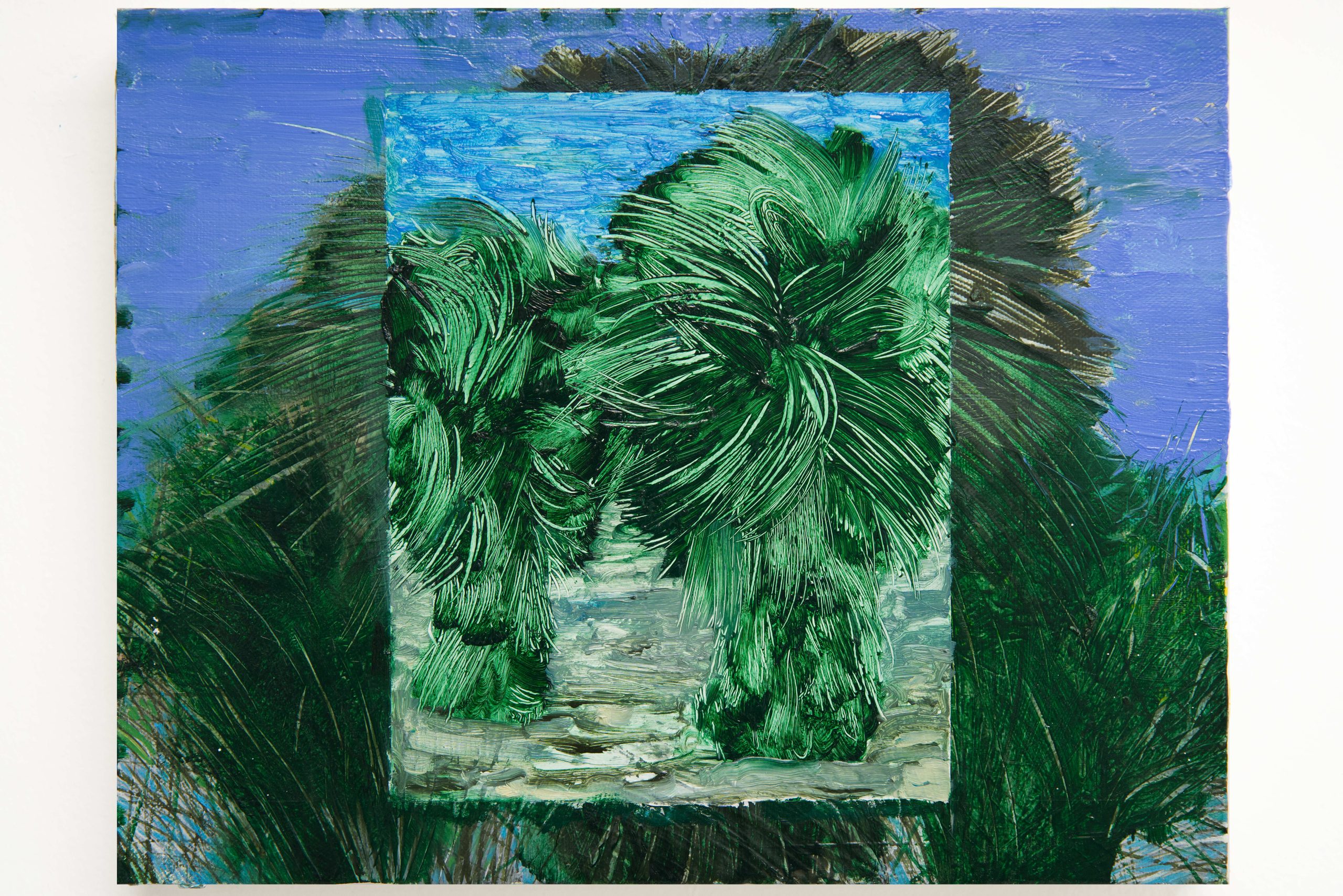
Leave room to grow. Hang the first group a little tighter than the wall allows, with space at one end. When a new painting joins, the group expands in one direction instead of being rebuilt. And keep one honest rule: a new piece must earn its place against the thread. A painting you love that breaks the group is not a problem. It is the anchor of the next wall.
A gallery wall built this way stops being decoration. It becomes the record of how your eye developed, one painting at a time. Start with the anchor. Keep the gaps small and equal. Let the group be one composition. The wall will hold together, and so will the collection.