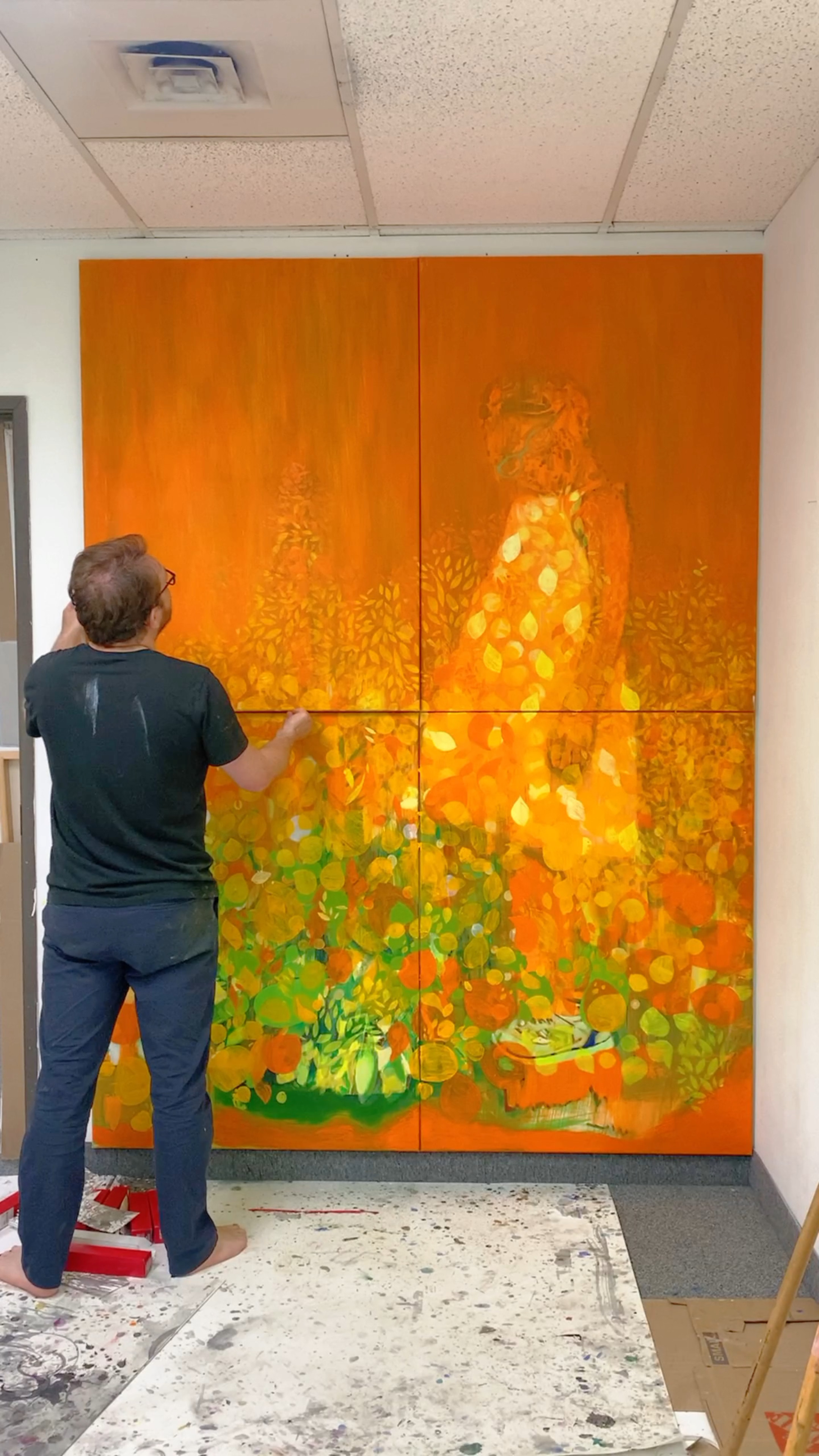
How to Care for an Oil Painting So It Lasts 200 Years
How to Care for an Oil Painting So It Lasts 200 Years
Light, humidity, cleaning, framing, and the short list of things you should never do.
Oil paintings from four hundred years ago hang in museums today, still vivid, still holding a room. Your painting, bought this year, can absolutely do the same. Oil paint wants to last. Your job is simply not to get in its way.
I am Bartosz Beda, a painter in Dallas, Texas. I have been painting since I was seven years old, and I make my living putting oil on canvas, which means I spend a lot of time thinking about what happens to a painting after it leaves my studio. Here is the complete care guide: where to hang, what to avoid, how to clean, and the short list of nevers.
Why Oil Paintings Outlive Everything Else You Own
A well-made oil painting is one of the most durable objects a person can own. The paint film is flexible, the pigments are lightfast, and the whole structure rests on centuries of accumulated knowledge about what survives. Museum conservators routinely care for oils that are three and four hundred years old. Two hundred years is a modest ambition.
Everything below is about giving the painting the stable, boring life it prefers. None of it is difficult. All of it matters over decades.
Light: The Slow Fader
Light damage is cumulative and irreversible. Direct sunlight is the enemy: it fades pigments, yellows varnish prematurely, and heats the surface day after day. Hang oils where the sun never falls directly on them.
Bright indirect light is ideal, and it is also how paintings look their best. If a wall gets a few hours of direct sun, use UV-filtering glass in the frame or choose a different wall. Picture lights are fine if they are LED and kept at a sensible distance. Avoid old halogen spots that bake the surface with heat.
Humidity and Temperature: Boring Is Beautiful
Oil paintings like the same conditions you do: roughly room temperature, with humidity somewhere in the middle. Big swings are the problem. Dry winter air shrinks the canvas, damp summers swell it, and radiators cycling on and off keep the whole structure moving. That movement stresses the paint film, slowly, over decades.
A note on hot climates, since I paint in Dallas. Air conditioning is a painting's friend in summer: it holds the temperature steady and pulls humidity down. The risky months are the shoulder seasons, when the AC is off, the heat is off, and humidity swings with the weather. If your home sits unconditioned for weeks, that is when stable placement matters most. You do not need museum equipment. You need to avoid the extremes.
The practical rules are simple. Never hang a painting directly above a radiator or a working fireplace. Avoid bathrooms and kitchens, where steam and grease are constant companions. If your home has wild seasonal swings, a modest humidifier in winter does more for your art than anything else you can buy.
Where to Hang, and Where Never To
- Do hang: interior walls with stable temperature. Living rooms, bedrooms, hallways, and offices are all excellent.
- Do not hang: above fireplaces or radiators, in direct sun, in bathrooms, or on any wall that gets damp.
- Give the canvas a little air behind it. On an outside wall in a cold climate, breathing room prevents condensation from forming behind the stretcher.
- Heavy pieces need proper hardware: wall anchors or studs, with wire or D-rings rated for the weight. A 60 by 80 inch canvas is not a job for a single small nail.
Cleaning: Less Is Everything
Here is the entire routine for the first fifty years: dust the surface gently, once or twice a year, with a clean, soft, dry brush or a microfiber cloth. Light strokes. That is the whole program.
And here is what never to do:
- Never use water, soap, or any household cleaner on the surface.
- Never use bread, potatoes, or any folk remedy from the internet. They leave residues that conservators will curse you for.
- Never scrub, scrape, or pick at flaking paint. Flaking means it is time to call a conservator.
- Never try to refresh the colors with oil, furniture polish, or spray products. You will not refresh them. You will damage the varnish.
If a painting is genuinely dirty, smoke-stained, or damaged, that is a job for a professional conservator, not a weekend project. Cleaning a valuable oil at home is one of the classic ways paintings get ruined.
Framing: Protection That Shows
A good frame does three jobs: it protects the edges, it keeps the canvas rigid, and it presents the work. Floater frames are the modern standard for contemporary canvases. The painting sits inside with a small gap around it, no glass, nothing touching the surface.
If you frame behind glass, use spacers so the glass never touches the paint, and consider museum glass, which cuts both reflections and ultraviolet light. Never frame an oil so that glass presses directly on the surface.
Works on paper deserve a word of their own. Paper is more vulnerable than canvas: it cockles with humidity and fades faster in light. Frame works on paper behind UV-filtering glass or acrylic, with a mat that keeps the sheet from touching the glazing, and hang them away from direct sun. My $100 studies are real originals, and framed properly they will outlast us just like the big oils.
Check the frame hardware every few years. Wire stretches, D-rings loosen, and a painting that has hung safely for a decade deserves a thirty-second inspection now and then.
Varnish: The Invisible Shield
Most finished oil paintings are varnished: a clear, removable layer that saturates the colors and takes the environmental beating instead of the paint. Varnish yellows very slowly over decades, and when it does, a conservator removes it and applies a fresh coat. That is one reason old paintings look new again after restoration.
If you buy a painting and the artist says it will be varnished after curing, that is normal. Oil needs months to cure fully before varnish goes on. Do not varnish it yourself with products from a hardware store. The wrong varnish is worse than none.
Paperwork and Insurance: The Boring Part That Matters
Keep the certificate of authenticity that came with the painting, the receipt, and any correspondence about the work, all in one place. Photograph the front, the back, and the signature, and keep those photos somewhere safe. If the painting is ever stolen, damaged, or sold, that file is everything.
For pieces worth thousands, add them to your homeowner's or renter's insurance as scheduled items. It costs little, and it means a burst pipe does not also become a financial catastrophe. My large paintings, priced from $4,000 to $10,000, are exactly the kind of purchase worth scheduling.
The Short List of Nevers
If you remember nothing else, remember this:
- Never hang a painting in direct sunlight.
- Never hang it above a source of heat.
- Never clean it with liquids, soaps, or chemicals.
- Never touch the surface with bare hands more than necessary. Skin oils accumulate over the years.
- Never store a painting in an attic, basement, or garage, where temperature and humidity swing wildly.
- Never lean a stretched canvas face-in against anything sharp or rough.
Follow that list and the painting will outlive us all.
Moving and Storing a Painting
Life moves paintings: new homes, new rooms, loans to exhibitions. Move them like the irreplaceable objects they are.
- Carry a stretched canvas by the sides of the stretcher bars, never by the top edge, and never with your fingers pressing into the canvas surface.
- For car trips, stand paintings upright, face to face with a blanket between them. Never lay a large canvas flat with things stacked on top of it.
- For shipping, use a proper art shipper or a custom crate for anything valuable. The crate should cost a fraction of the painting. That ratio tells you it is worth it.
- If you must store a painting, keep it upright and off the floor, in a climate-controlled room, with nothing leaning against the surface. Attics, basements, and garages are where paintings go to die slowly.
When my large canvases ship from Dallas, they travel in wooden crates built for their exact dimensions. It is not glamorous. It is why they arrive perfect.
Kids, Pets, and Daily Life
A painting does not need a velvet rope. It needs the same common sense you give any valued object in a lived-in home.
Hang pieces out of reach of small hands and wagging tails in high-traffic zones, which usually just means choosing the right height. Hallway art at shoulder height survives children and dogs far better than low placements. If a cat treats textured surfaces as an invitation, a frame with a deep profile or glazing keeps the peace.
Kitchens deserve a special mention. Grease travels in the air and settles on everything, including varnish. A painting near a stove will need professional cleaning years earlier than one in a bedroom. If you love art in the kitchen, choose smaller pieces you can relocate, or accept the maintenance as part of the pleasure.
When to Call a Conservator
Most of a painting's life needs no professional help. But some things are firmly not do-it-yourself:
- Flaking or lifting paint, any cracking that is getting worse, or a canvas that has gone slack or torn.
- Smoke, soot, or water damage of any kind.
- A yellowed or cloudy varnish that dulls the whole painting. Removal and revarnishing is routine work for a conservator, and the result is transformative to see.
- Any painting of significant value that you are even slightly unsure about. An assessment costs far less than a mistake.
Find a conservator through the American Institute for Conservation's referral service. A good conservator will examine the work, explain what it needs in plain language, and give you a written estimate before touching anything. The existence of these professionals is part of why oil painting is such a safe thing to own. Almost any damage short of catastrophe is repairable.
The Five-Minute Annual Checkup
Once a year, give your paintings five minutes. It is the cheapest insurance you will ever buy.
- Look at the surface in raking light, light coming from the side, which reveals new cracks, flaking, or bulges you would never see head-on.
- Check the back: the stretcher bars, the dust cover, and the hanging wire. Wire fatigues. Dust covers tear. Catching it now beats catching the painting later.
- Wiggle the frame gently. Tighten anything loose and replace any hook or anchor that looks tired.
- Dust the surface softly while you are at it, and confirm the wall around it is dry and clean.
That is the whole program. Five minutes, once a year, and small problems stay small forever.
The Bottom Line
An oil painting is a two-hundred-year object that asks almost nothing of you: decent light, stable air, and to be left mostly alone. Give it that, and it will hang on someone's wall long after both of us are gone, still doing its work.
If you are ready to start that clock, my store at store.bartoszbeda.com has original oils from $100 studies to large canvases, and every one ships with a signed certificate of authenticity. Buy it, hang it well, and forget about it for the next two centuries.