Art for the Dining Room: Choosing a Painting People Live With at the Table
Art for the Dining Room: Choosing a Painting People Live With at the Table
The dining room is the one room in the house where people sit still and face the walls. A guest in the living room moves around. A guest at your table sits in one chair for two or three hours, looking in one direction. Whatever hangs in front of that chair gets studied. It gets looked at between courses, during pauses, over coffee at the end of the night. That makes the dining room the most honest test of a painting. Art that is only decoration fails here. Art with real depth keeps giving for the length of the meal and for the years of meals after it.
I am a painter, and the dining room questions I hear are practical ones. How big. How high. One painting or two. What colors work when the light is warm and low. What happens when the room doubles as a workspace or a homework table. This guide answers them in order, using the same order you should buy in. Measure the table first. Then the wall. Then choose the painting.
The Table Sets the Size
In a dining room the furniture anchor is not the wall. It is the table. Start with the length of the table. A painting centered over the long side of the room should relate to the table’s length the way art above a sofa relates to the sofa. A span of about two thirds works again. A table that seats six, around 72 inches long, wants a painting or a pair that together cover roughly 45 to 55 inches of wall.
That said, dining rooms punish art that is too wide. People rise from the table and step back. Chairs move. A very wide painting hung low can crowd the person sitting beneath it. Leave at least a foot of free wall between the edge of the art and any corner, hutch, or window trim. The painting should feel gathered over the table, not stretched across the room.
Height follows the chairs. Diners sit, so their eye level is lower than standing eye level. Hang the center of the painting around 48 to 52 inches from the floor, lower than you would in a hallway. The bottom edge usually lands 8 to 12 inches above a sideboard if there is one. If the wall is bare, let the painting sit in the seated sightline and trust it. Almost every dining room I enter has its art hung for a standing person who never actually stands there and looks at it.
Viewing Distance Is Short Here
A living room painting is read from 10 or 12 feet. A dining room painting is read from 4 to 6 feet, the distance from a chair to the wall. That short distance changes what works. Fine detail, layered paint, and small shifts in color all register. So does weakness. A thin, flat picture that survives across a living room falls apart at four feet.
This is where an original painting separates itself from a print. At close range you see the surface. You see where the paint is thick and where it is scraped thin. You see the layers the painter built and the places where an earlier color shows through. My guide to original paintings versus prints walks through those surface differences in detail, and the dining room is the room where they matter most.
Abstract figurative work holds short distances well. The figure gives the eye a subject. The abstract field around the figure gives it somewhere to wander. Across a long dinner the painting keeps changing as your attention moves. Guests notice this. Dining room art gets commented on more than art in any other room, because people have the time and the stillness to actually look.
One Painting or a Pair?
A single painting on the main wall is the classic dining room answer. It centers the room. It gives the table a backdrop the way a window gives it light. For a long wall, a wide horizontal painting matches the shape of the table under it, and the room feels settled at once.
A pair works when the wall is broken by a window or a door, or when one wide painting would crowd the chairs. Two works of the same size, hung with a two to three inch gap, read as one calm statement split in two. Pairs also suit smaller budgets. You can start with one work and add its partner later, as long as the sizes match and the works come from the same family of paintings. Buying within one series makes pairing honest, because the works were painted to belong together.
What I advise against is the scattered group of small pieces at many heights. In a dining room it reads as restlessness at exactly the place where people sit to settle. If you love many small works, give them the hallway, where movement suits them. My room by room size guide covers hallway groupings and the spacing that keeps them calm.
Color at Dinner Light
Dining rooms are evening rooms. The light at dinner is warm, low, and directional, from a pendant over the table and maybe candles. Colors behave differently in that light than they do in the bright midday light of a shop or a screen. Warm colors come forward and glow. Cool colors recede and deepen. Very pale paintings can wash out entirely under warm bulbs.
Test honestly. If you are choosing between two paintings, look at both in the evening if you can, or at least under the warmest light in your home. Skin tones and earth colors are dining room naturals. They flatter people. A room full of faces around a table and a painting with flesh and earth in it belong to each other. This is one reason figurative work has hung in dining rooms for centuries.
Strong color has a place too, but place it with care. One saturated painting can carry a neutral dining room the way a centerpiece carries the table. If the room already has a strong rug or upholstered chairs in a bold color, choose the quieter painting. Two loud voices at a table is one too many, in paint as in conversation.
The Other Walls and the Sideboard Question
Most dining rooms have one main wall and then compromises. A sideboard gives you a second display surface, and the temptation is to lean small works on it and hang a painting above it. That can work well. Keep the hung painting clearly the main event, and let anything on the sideboard stay small and low. If the wall art and the objects compete, the room feels like a shop shelf.
A mirror opposite the painting is the oldest dining room trick there is, and it still works. It doubles the painting for the people sitting with their backs to it. It also doubles the room’s light. If you use one, hang it at the same center height as the painting so the reflection frames the art, not the ceiling.
Windows deserve a word. A painting on a wall that takes direct sun every afternoon will fade unevenly over years, whatever it is made of. Put the original on the wall the sun visits least, and let curtains or prints take the bright wall. My care guide for oil paintings explains light limits in plain terms.
When the Dining Room Works Two Jobs
Many dining rooms now hold a laptop by day. If yours does, the painting still earns its place. It is the thing that returns the room to being a dining room at night. Choose a painting you are happy to have in the corner of your eye on video calls, calm in color and not so busy that it pulls attention from your face on screen. And keep the painting out of the direct path of chairs being pushed back. A chair top striking a canvas is the most common dining room injury a painting suffers. Leave a hand’s width of clear space between chair backs at full push and the wall.
Guests, Children, and Real Life at the Table
A dining room painting lives close to food, steam, and hands. That is not a reason to keep it precious or to choose something you care about less. It is a reason to hang it with sense. Keep the bottom edge high enough that a serving dish raised from the table does not reach it. Keep it off the wall where chairs stack when the room is cleared. If small children eat at the table daily, hang the painting a few inches higher than the seated rule suggests and lose nothing. The painting will still sit in the sightline, and it will stay out of the splash zone.
Cleaning is simple. A dry, soft cloth takes dust off an oil painting. Nothing wet, nothing scented, nothing from a spray bottle. Steam from a kitchen door held open for years is harder on a painting than one holiday dinner, so if your dining room opens straight onto the cooking, choose the wall away from the kitchen door. These are small decisions, but they are the difference between a painting that ages gracefully in a working room and one that needs rescue in ten years. An original is bought for decades. Hang it like you mean that.
Before You Order: The Chair Test
Tape the outline of the painting on the wall, at the height described above. Then do what no other room lets you do so easily. Sit in every chair at the table for a minute each. From the far chair, is the outline in your resting sightline. From the near chair, does it crowd you when you lean back. Look at it with the pendant light on and off. If the size passes from every seat, it is right. If it only works standing in the doorway, it is hung for the wrong person.
Then check the route in. A wide dining painting often has to turn a hallway corner. Measure the turn before you buy, not when the box is in the hall. Original paintings from my studio ship free, and handling takes five to seven days before transit of seven to ten days by FedEx, UPS, or DHL. My shipping guide shows how a painting is packed and how it travels, step by step.
A Dining Room Example From My Studio
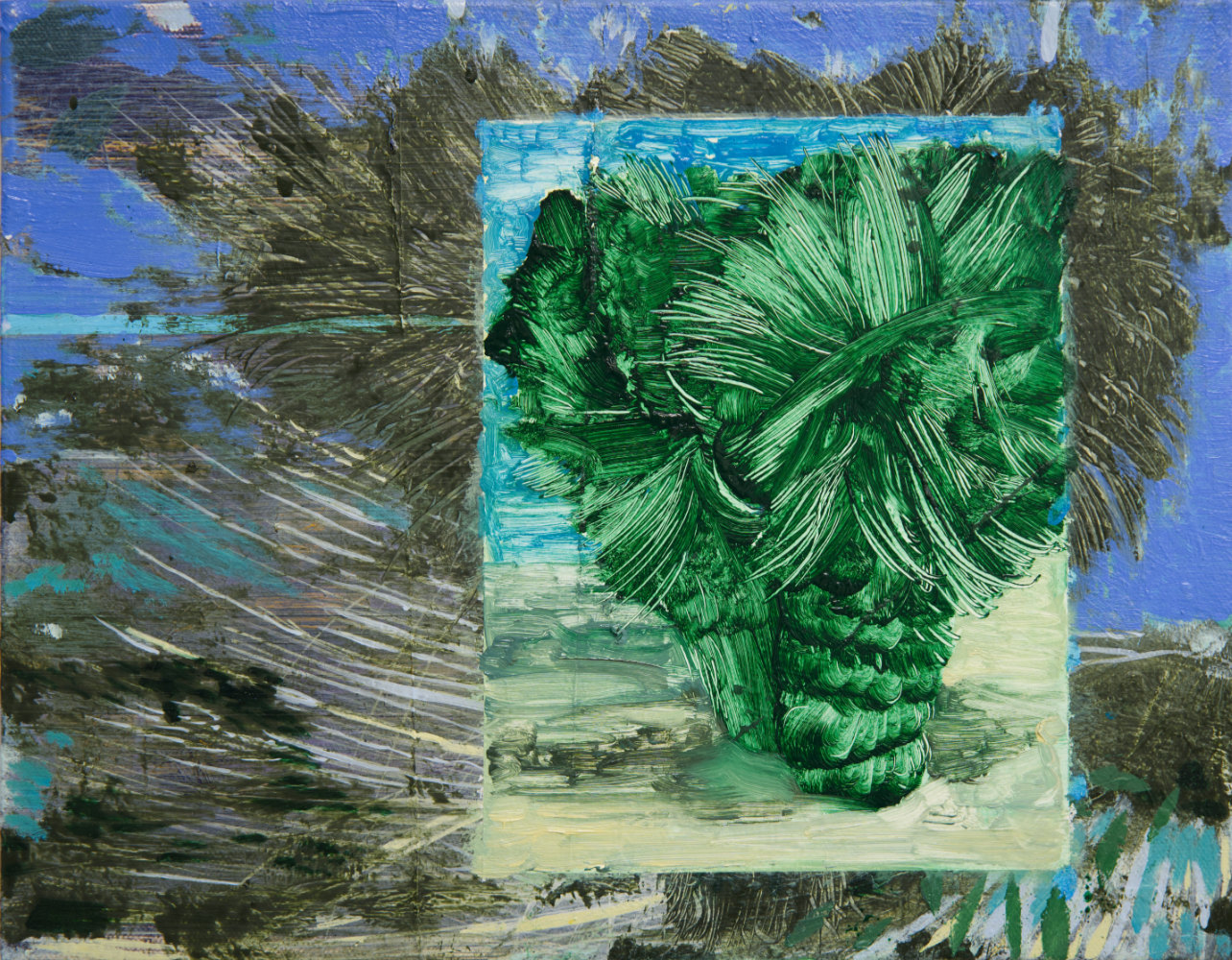
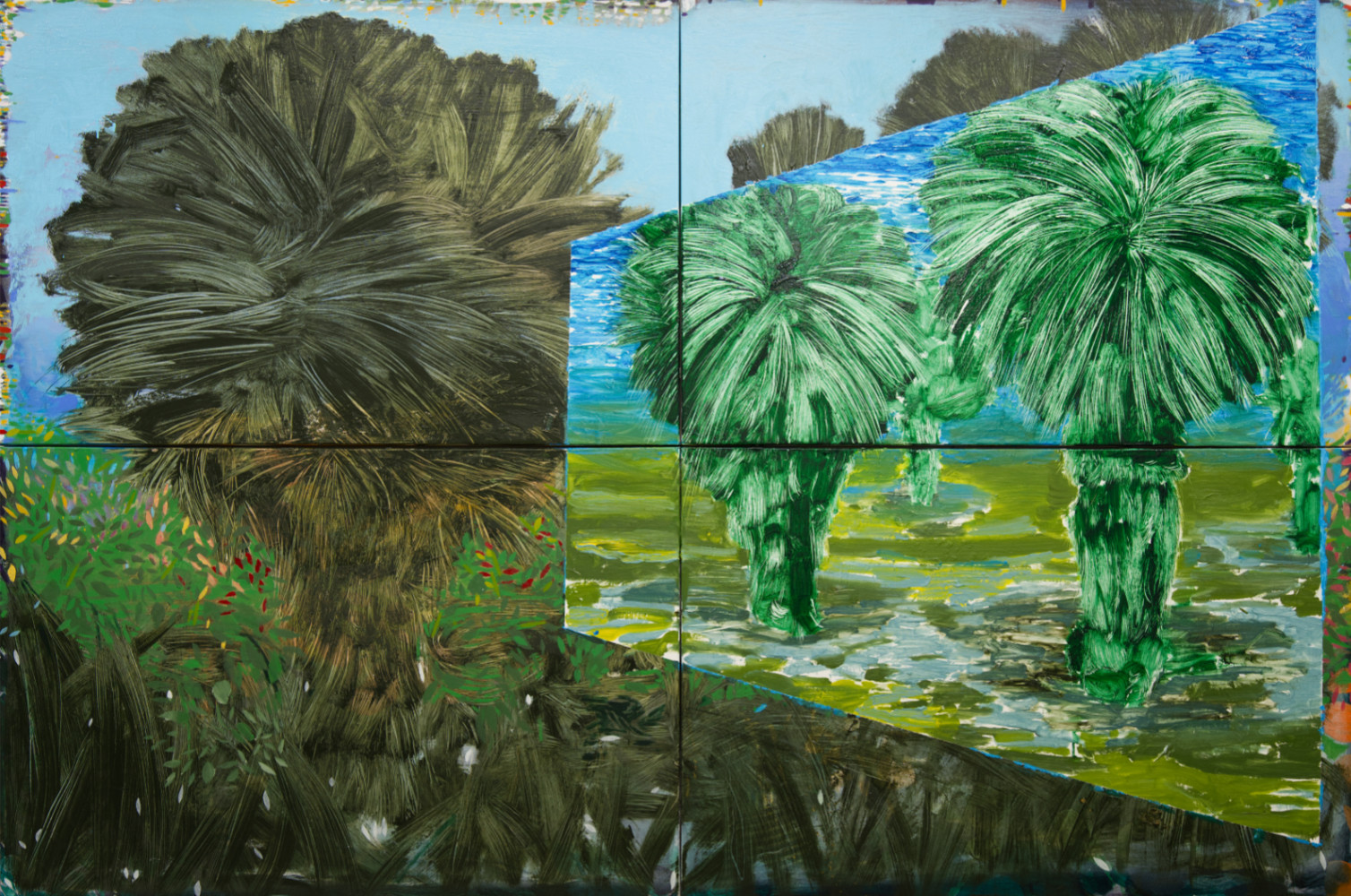
My Mirage paintings were made for rooms where people sit and look for a long time. I began the series during my residency at Angelo State University, painting the landscape around San Angelo as I saw it, and the figures rose out of that abstract landscape. The color is desert color, warm earth over wide quiet fields, with the figure half seen inside it. At four feet, over a dinner, that half seen quality is the point. The painting does not finish itself at a glance. It keeps a little back, meal after meal.
The full series is on my Mirage series page, and the originals are listed in the Mirage collection in the store, from the small 11 by 14 inch paintings sized for a short wall to the large canvases that carry a full dining wall. Measure your table. Sit in your chairs. Then choose the one that can hold a room’s attention for the length of a dinner.