How to Light a Painting at Home: Picture Lights, Windows, and the Glare Problem
How to Light a Painting at Home: Picture Lights, Windows, and the Glare Problem
A painting is only ever as good as its light. The same canvas that stops people in a gallery can go dull and flat on a home wall, and the difference is rarely the painting. It is the light falling on it, or not falling on it. Galleries spend real money on lighting because they know the work is unfinished until it is lit. Homes usually give the best wall in the room whatever light happens to be there, and then judge the painting by the result.
I am a painter. I light my own studio and my own exhibitions, and I visit collectors’ homes where the painting they love is hanging in a brown gloom beside a beautifully lit kitchen. This guide is the plain version of what galleries do, translated for a house. Judge your current light first. Then choose between the three real options. A picture light, a ceiling light aimed at the wall, or daylight managed well.
First, See the Problem: The Three Checks
Stand where you normally sit and look at the painting. Check three things. First, is the painting the brightest thing in its part of the room, or is it dimmer than the walls around it. The eye goes to light. A painting darker than its surroundings reads as a hole in the wall. Second, can you see a reflection. Move your head a foot each way. If a bright window shape or a lamp slides across the surface, that is glare, and it will hide part of the painting at some hour every day. Third, is the color honest. Under many household bulbs, blues go grey and warm colors go orange. If the painting looks different at night than it did in the shop or on the screen, the bulbs are editing it.
These three checks tell you which fix you need. Dim needs more light. Glare needs a different angle, not more power. Dishonest color needs a different bulb. Treating all three with a brighter lamp is the common mistake, and it makes glare worse.
The Picture Light: The Classic Answer
A picture light is the slim fixture that mounts above the frame or on the wall just over the painting and washes light down its face. It is the classic answer because it works. It puts the light exactly on the painting and nowhere else. It makes the painting the lit object in the room after dark, which is when most living rooms are used. And it adds no holes in the ceiling and no glare for the viewer, because the source sits above and in front of the surface, angled down.
Size it to the painting. The fixture should be roughly half to two thirds the width of the frame or canvas. A fixture nearly as wide as the painting lights the edges and leaves a hot stripe of brightness down the center. Center it. A picture light hung two inches off center announces itself every evening.
Choose the bulb color with care. Look for bulbs in the 2700 to 3000 Kelvin range with a high color rendering index, written as CRI, of 90 or above. High CRI is the number that matters most and the one most packaging hides. It means the bulb shows colors close to how daylight shows them. A warm, high CRI bulb flatters skin tones, earth colors, and wood. It is why gallery lighting feels rich rather than yellow.
Battery and plug in models have made picture lights easy. A cordless light above a painting you hang for years will need charging or batteries on a schedule, and it will dim slowly between them. If the painting is a permanent resident, a wired or plug in light with the cord dropped behind the frame or run in a slim channel is the set and forget answer. Keep the light’s throw even. The top of the painting sits closest to the fixture and takes the most light, so a fixture that stands a few inches out from the wall evens the wash better than one hugging the frame.
Ceiling Lights Aimed at the Wall
The second option is a ceiling spotlight or track head aimed at the painting. Done well, this is gallery lighting, invisible and even. Done badly, it is the most common lighting failure in homes, a hard circle of light on the top third of the painting and darkness below.
The geometry is simple. The light should strike the painting at about a 30 degree angle from vertical. Steeper than that and it rakes down the surface, exaggerating every bump of paint and throwing the frame’s shadow onto the canvas. Shallower and it bounces off the surface into the eyes of anyone facing it. Distance follows the same logic. The fixture sits far enough from the wall that its beam covers the whole painting, not a bright oval at the top.
If your ceiling already has recessed lights, check where they fall before you hang anything. A painting placed so a recessed light grazes it at a good angle can need nothing else. A painting placed between two ceiling lights, lit from both sides at once, goes flat, because light from two directions cancels the modeling that gives a painting its depth. One clear direction of light is better than plenty of light from everywhere. Painters light their studios from one side for the same reason.
Daylight: The Best Light, With Rules
Daylight is the light paintings were made under for centuries, and a painting lit by soft daylight from a side window is a beautiful thing. The rules are about dose and direction. Direct sun must never fall on the painting itself. Sunlight through glass still carries the energy that fades color over years, and it heats the surface unevenly. A wall that takes direct sun for part of the day is a wall for prints and curtains, not for an original.
North facing windows, or their light bounced off a light wall, give the steadiest daylight and the truest color. A painting on the wall beside a window, lit from its side, models beautifully. A painting on the wall opposite a large window gets the glare problem at full strength. You see the window reflected in the varnish instead of the painting, for the brightest hours of the day. If the best wall faces the glass, a matte surface helps, and so does hanging the painting a degree or two tilted, top out from the wall, so the reflection drops to the floor. Old galleries tilt paintings for exactly this reason.
Light dose over a whole year matters more than any single bright day. My care guide for oil paintings sets out the simple version. Keep originals out of direct sun, keep room light moderate, and the painting will outlive the house it hangs in.
How Much Light Is Safe, and How Much Is Show
Buyers worry about two opposite failures. Too much light harming the painting, and too little light wasting it. For an oil painting on canvas, ordinary home lighting, including a good picture light used in the evenings, is well within safe ground. Oils are among the most light hardy things you can hang. Works on paper are the sensitive ones. Ink and watercolor fade faster and want lower light and no sun at all. If you hang works on paper, keep them in the dimmer rooms and light them gently.
The practical rule for showing is contrast, not raw brightness. The painting should be somewhat brighter than the wall around it after dark, and no brighter than the brightest thing you would comfortably look at, like a lit lampshade. If guests squint at it, it is a spotlight, not a light. If they walk past it, it is underlit. In between is a wide, forgiving band, and your eye will find it in one evening of adjusting.
LED lights have removed the old heat worry. A modern LED picture light gives almost no heat and no meaningful ultraviolet. There is no longer a technical reason to leave a painting in the dark. The only remaining reason is habit, and habits can be changed for the price of one fixture.
Lighting the Whole Wall, Not Just the Painting
If a painting hangs in a group, or above a sofa with lamps at both ends, light the arrangement as one scene. Two table lamps plus a picture light can model a wall nicely, as long as the picture light stays the strongest of the three on the painting itself. Watch for lamp reflections. A lamp across the room can reflect in a painting as surely as a window can. If you see a lamp’s bright shape in the surface from your chair, move the lamp, not the painting. An arc of a few inches usually clears it.
Dimmers earn their cost on art walls. The right light at six in the evening in November is not the right light at nine. A dimmer lets the painting stay the calm center of the room as the evening changes, and it lengthens bulb life as a bonus. Smart bulbs are an easy route to the same end, and they let you warm or cool the light on the painting without touching the fixture. Set them once, honestly, against the painting in daylight, and leave them there.
The Ten Minute Test Before You Spend Anything
Before you buy a fixture, run this test on a dark evening. Turn off the room’s main lights. Take a lamp you already own, with its warmest bulb, and set it on the floor or a stool in front of the painting, a few feet out, angled up and off. It will not be perfect, and it is not meant to be. It tells you the two things you need to know. Whether more light transforms the painting on that wall, and whether glare appears from your chair when the wall is lit. If the painting wakes up and no reflection crosses it, a picture light will do the same job more neatly and permanently. If glare blooms everywhere, fix the angle problem first. The test costs ten minutes and saves the most common wasted purchase in art hanging, a good light installed in the wrong geometry.
A Lighting Example From My Studio
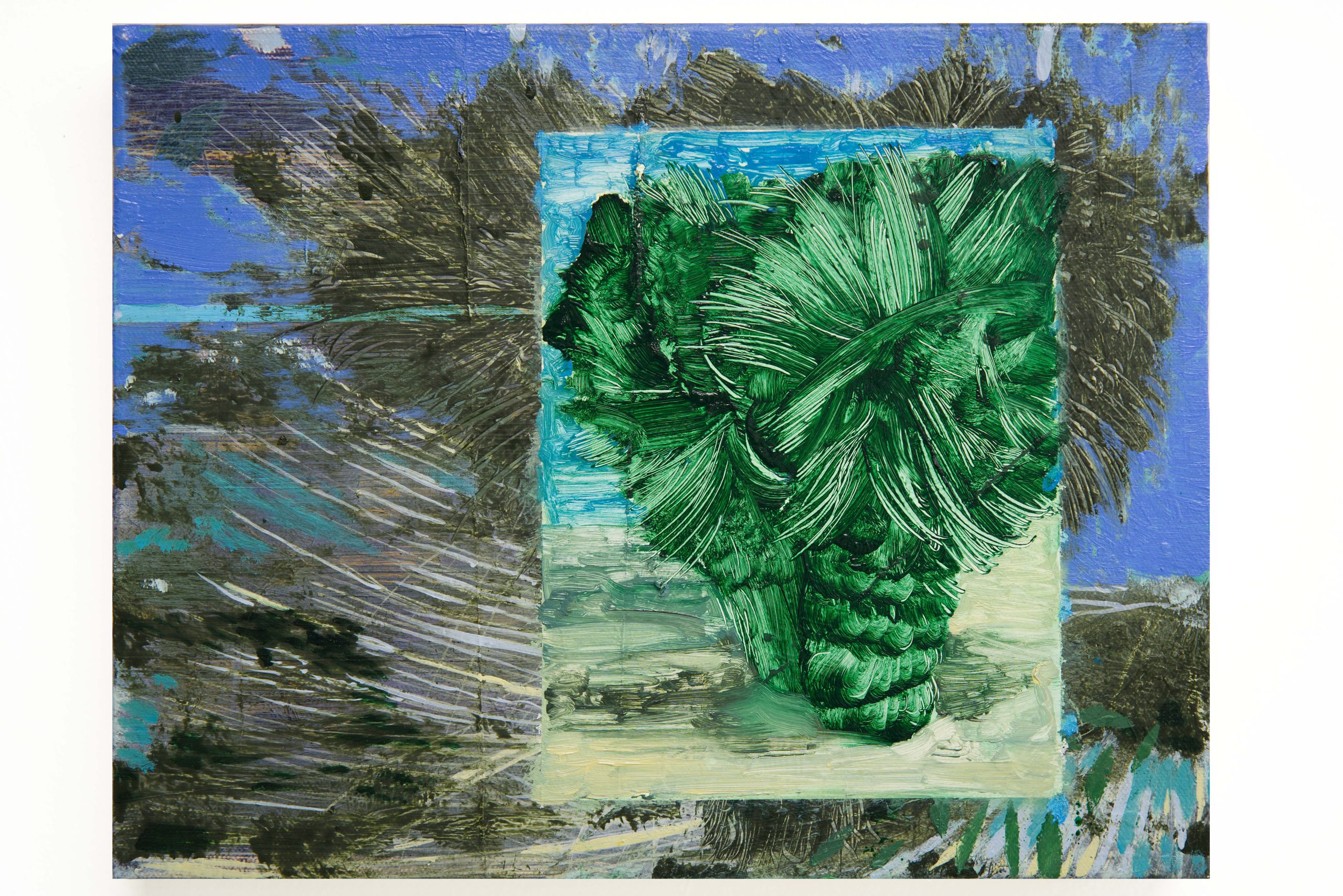
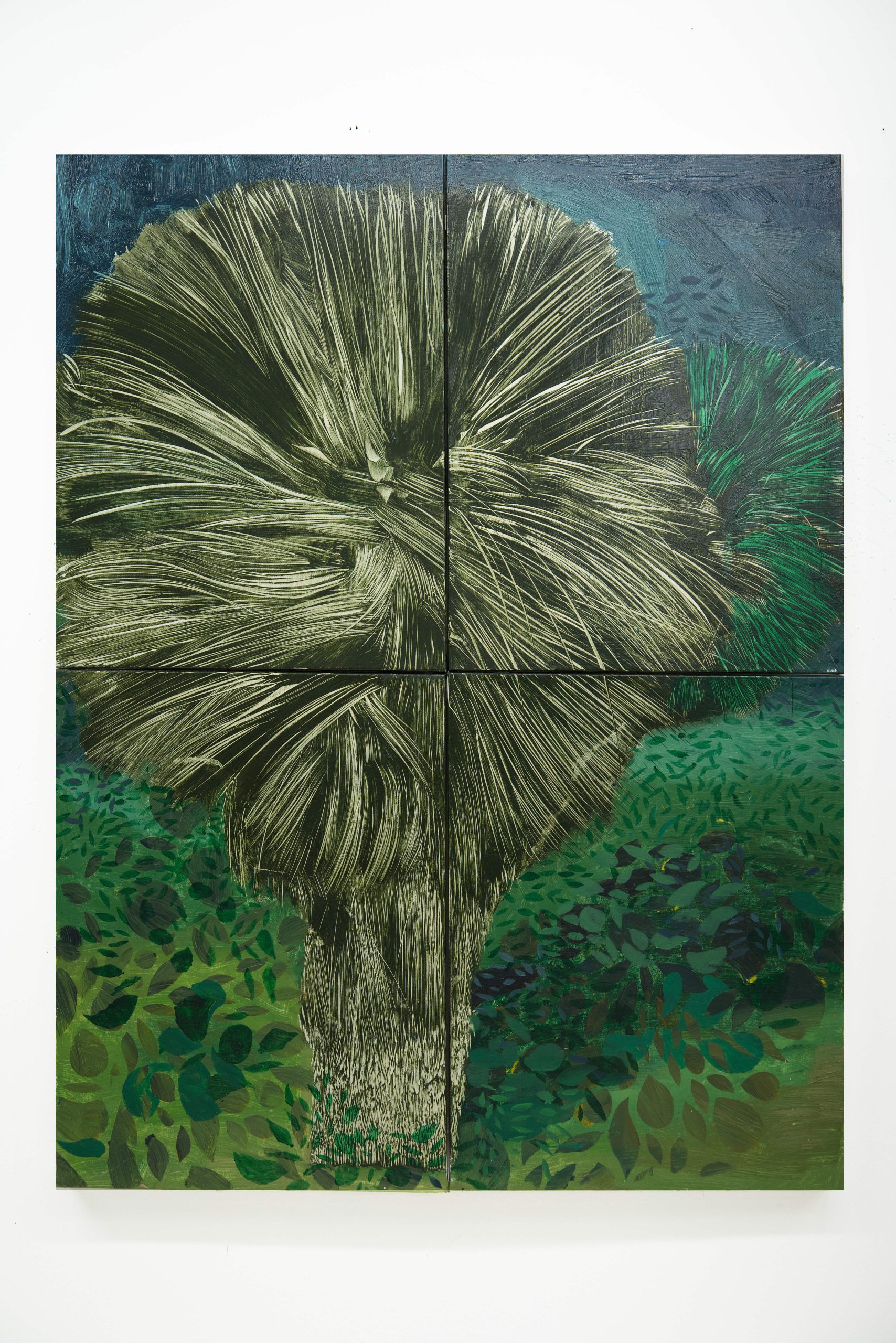
My Mirage paintings carry their light inside them. I began the series during my residency at Angelo State University, painting the landscape around San Angelo, and the figures stand in that strong desert light, half dissolved in it. A painting about light still needs real light to be read. In collectors’ homes the large Mirage canvases usually end up with a single picture light or one ceiling head at a clean angle, and the painted light and the room light agree with each other. The small Mirage works, at 11 by 14 inches, need almost nothing. A nearby lamp and a wall that is not in gloom is enough for a painting that size to hold its place.
The series is shown in full on my Mirage series page, and the originals are listed in the Mirage collection in the store. When you choose one, walk its future wall at three times of day first. Morning, afternoon, and lamplight. You will know by the third visit exactly which of the three fixes that wall needs, and it is almost always a smaller fix than you feared.