How to Start Collecting Original Art on a Real Budget
Start small, buy what you cannot forget, and grow a real collection one good piece at a time, even on an ordinary income.
Most people picture an art collector as someone rich. They picture auction rooms, paddle numbers, and paintings that cost more than a house. That picture does real damage. It convinces people who love art that collecting belongs to someone else, so they never buy a single original work. They fill their walls with reproductions instead, and quietly assume the real thing was never meant for them.
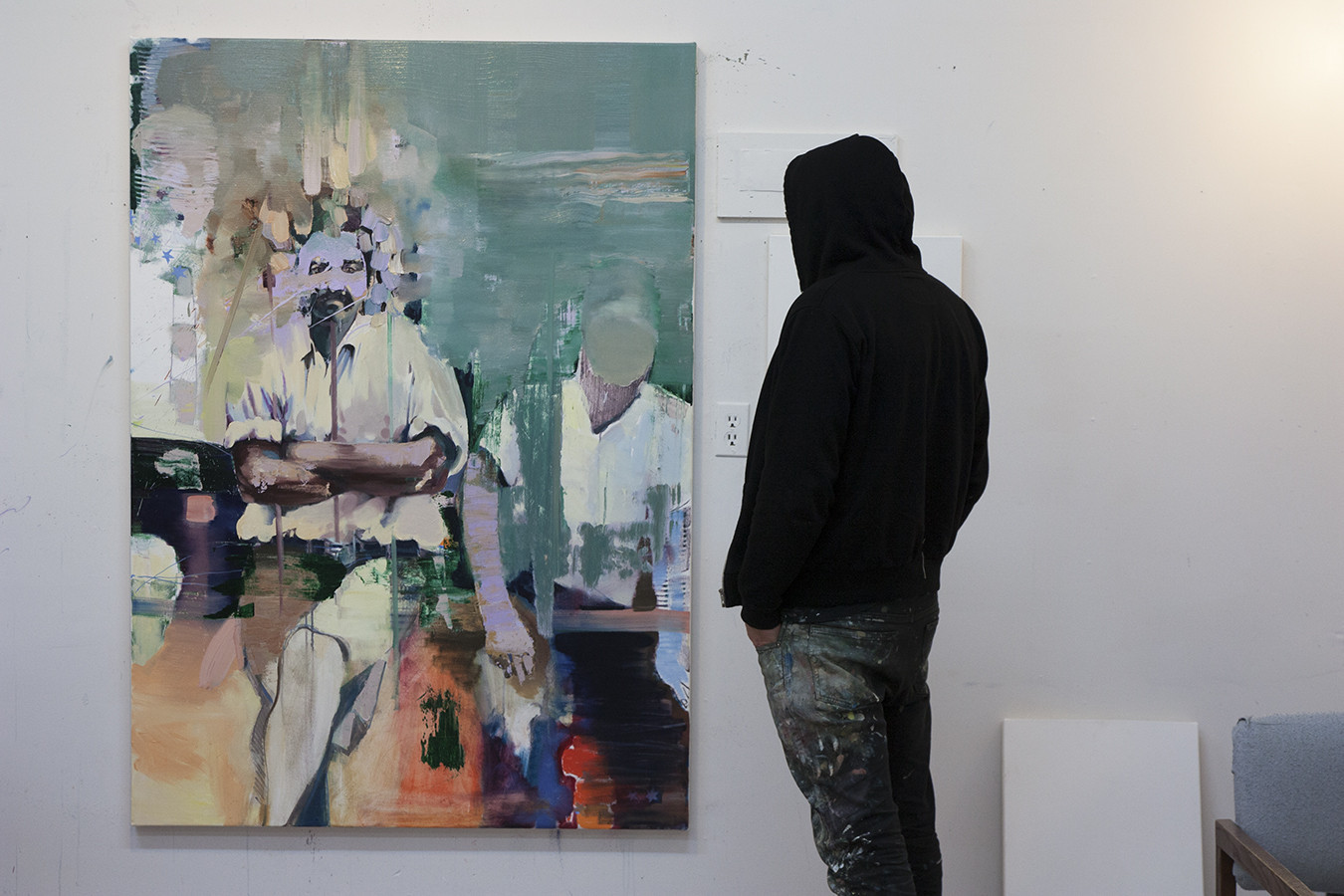
I am Bartosz Beda, a painter working in Dallas, Texas. I have been painting since I was seven years old, when I started by copying my older brother’s drawings. I sell my original paintings directly through my own store, and I talk with first-time buyers all the time. Here is what I tell them: collecting is not a wealth test. It is a habit. People with ordinary incomes build real collections every year, and they do it with a simple roadmap. This article is that roadmap.
Collecting Is a Habit, Not a Wealth Test
A collection is not a room full of expensive objects. A collection is a group of works chosen with care, by one person, over time. The care matters more than the budget. Two collectors can spend the same money and end up in very different places. One buys whatever catches his eye in a single weekend. The other buys slowly, learns as he goes, and chooses each piece on purpose. A few years later, the second wall tells a story. The first wall is just furniture.
The habit has a few parts. You look at art often, so your eye gets sharper. You save toward pieces instead of buying on impulse. You keep notes on what you bought and why. None of that requires wealth. It requires attention, and attention is free. The money you do spend goes further, because each purchase is a decision, not a reaction.
Start Small: Works on Paper and Small Originals
Almost every serious collection starts small. Works on paper are the natural first step. They cost less than large canvases because they take less time and fewer materials, and many artists price them as an open door for new collectors. A small original on paper is still an original. A hand made it. It exists once. It is not a poster of a painting. It is a painting.
In my own store, small original works on paper start at $100. My Small Originals Under $500 line holds pieces between $100 and $150, and series like Triggers, my mixed media works on paper, and Owing to the Absence, my ink on paper works, give new collectors real choices at modest prices. A first piece at that level teaches the most important lesson in collecting: living with an original feels different from living with a reproduction. The surface changes with the light. You notice new things in it for months.
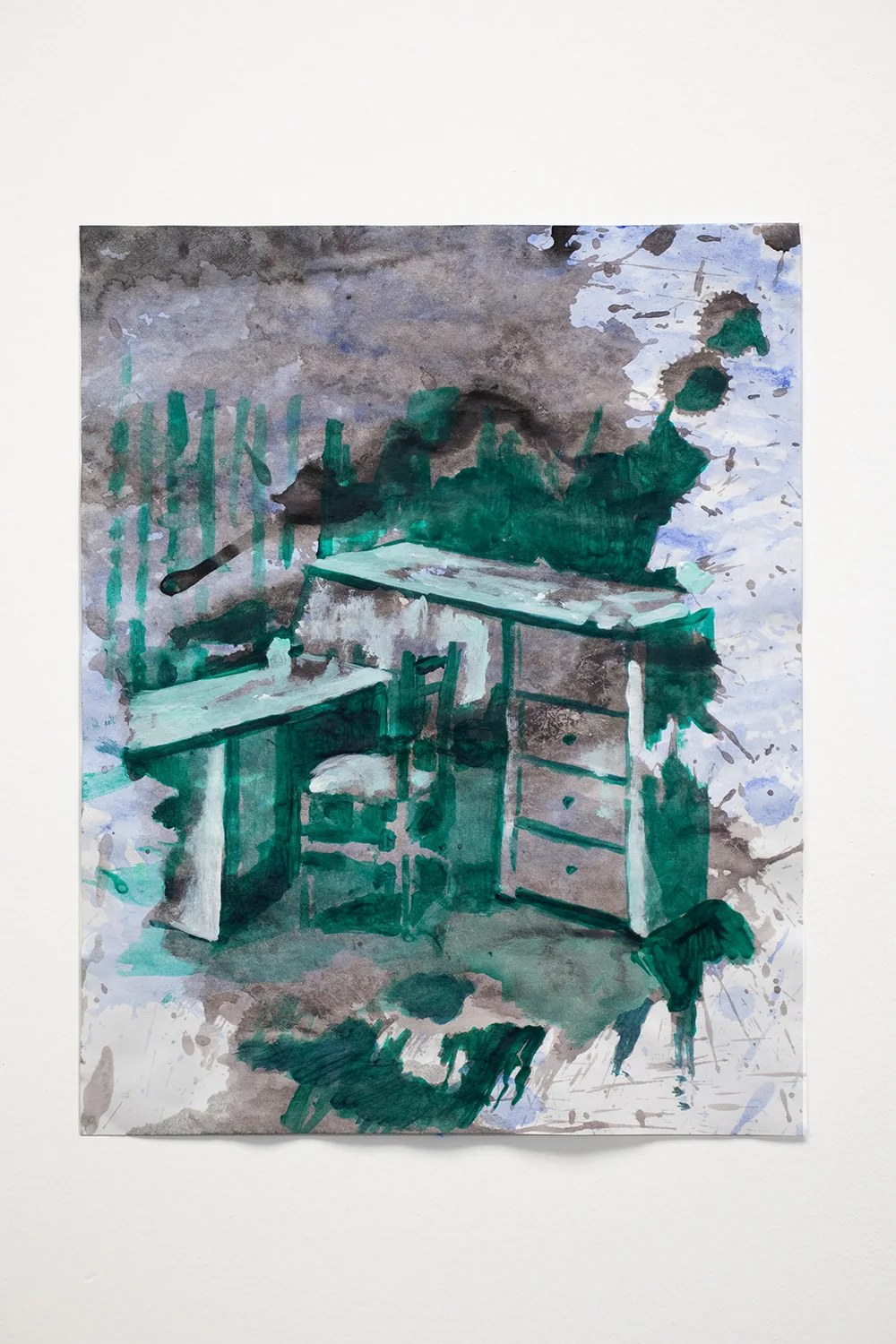
Geometry of Silence 02, an original painting for $287.
- Set a first budget you can spend without stress. For many people that is $100 to $300.
- Choose works on paper or small canvases first. They are easier to place, easier to frame, and easier on the budget.
- Buy from a living artist whose work you can follow. Your first purchase starts a relationship, not just a transaction.
Buy the Piece You Cannot Stop Thinking About
Here is the rule I give every new collector. If you look at a piece, walk away, and find yourself still thinking about it the next day, that piece is talking to you. Buy that one. If you forget it by dinner, let it go, no matter how good the deal seemed at the time.
This rule protects you in both directions. It stops impulse buys, because a picture that grabs you for ten minutes and then fades was never going to hold a wall for ten years. It also stops hesitation on the right piece. Collectors rarely regret the work they could not forget. They regret the one they talked themselves out of. Your taste is the whole foundation of your collection, so learn to trust the pieces that stay with you.
Buy Direct From the Artist When You Can
Where you buy matters almost as much as what you buy. Buying directly from the artist is usually the simplest and most honest route for a new collector, for a few plain reasons.
- The price is the artist’s own price, listed openly, with no middleman adding a cut on top.
- Provenance is simple. The work comes straight from the studio where it was made, so there is no chain of past owners to wonder about.
- Every original in my store comes with a signed certificate of authenticity, the document that proves what the piece is.
- You can ask the person who made it real questions: about the materials, the series it belongs to, or how it should be hung.
I sell only originals in my store, no prints, and every price is listed on the page next to the work. Worldwide shipping is available, so the studio door is open even if you live far from Dallas. When questions come up, you are writing to the painter, not to a sales desk.
Learn One Artist’s World Deeply
New collectors often scatter. They buy one piece here and one piece there, chasing variety, and end up with a wall of strangers. A stronger approach is to learn one artist’s world deeply. Follow the series. Read about the exhibitions. Notice how the work changes over the years. When you know an artist’s world, each new piece you buy carries more meaning, because you understand where it sits in the story.
Take my own path as an example of what to look for. I was born in Poland in 1984, trained at art school in Lodz, and earned my BA in 2011 and my MA in Fine Art from Manchester in 2012. In 2012 I was named in the Catlin Art Guide and shortlisted for Saatchi New Sensations. A scholarship took me to the Dresden Academy of Fine Arts. A fellowship took me to the Fondazione per l’Arte in Rome in 2016, and a residency to GoggleWorks in 2018. In 2025, the Edwards Trust residency at Angelo State University, in San Angelo, Texas, is where my Mirage series began. I also founded Execute Magazine and the Art Be You Academy, and wrote a book, Hear My Voice, published in 2017.
That record matters for a collector on a budget. It means the artist has been judged seriously by institutions for more than a decade, in more than one country, and is still working. You are not guessing whether the painter will still be painting in five years. The history says the work is the center of a life. Buying an artist like that, while the entry prices are still low, is how small collections quietly become significant ones. Not because of any promise about future prices, but because the work was real from the start.
One Good Piece a Year Beats Five Impulse Buys
If I had to compress this whole article into one sentence, it would be that one. One good piece a year. Five impulse buys give you five objects you feel lukewarm about by spring. One considered purchase gives you a piece you chose with your whole attention, bought at the top of your budget instead of spread thin underneath it.
The yearly rhythm also builds the habit. You spend the year looking, learning, and saving. When the right piece appears, you are ready. Collectors who buy this way often find that the waiting is part of the pleasure. The collection grows slowly, and every piece on the wall earned its place.
Keep the Paperwork in One Place
Collecting has one boring chore, and it matters. Every original you buy should come with paperwork, and you should keep all of it together.
- The signed certificate of authenticity. This is the document that ties the physical work to the artist who made it.
- The invoice or receipt, showing what you paid, when you paid it, and the title and size of the piece.
- Any notes about the work: the series it belongs to, the year it was made, and anything the artist told you about it.
A simple folder or envelope does the job. Keep it in the same drawer every time. This paperwork protects you if you ever insure, lend, sell, or pass on a piece, and it protects the work itself. An original with its documents in order is a work whose story can be proven. An original without them asks every future owner to take its story on faith.
Framing Small Works Without Spending a Fortune
Framing scares new collectors, because custom framing can cost more than a small work itself. It does not have to. Works on paper need protection from light and moisture, but a modest approach, done well, looks clean and lasts.
- Start with a ready made frame in a standard size and a mat cut to fit the piece. The mat gives the work breathing room and makes a small piece feel important on the wall.
- Use glazing with UV protection if the piece will hang in a bright room. Ask for acid free mat board, so the paper stays clean over the years.
- Keep small works out of direct sunlight and away from steamy rooms like bathrooms. Placement is free, and it protects the piece better than any frame.
A group of small framed works, hung together with even spacing, reads as one strong statement. It is one of the best looking walls a small budget can build.
How a Collection Grows: From $100 to a Statement Piece
Collections grow in steps, and it helps to see the ladder. The first step is a small original on paper, the $100 to $150 pieces in my store. The second step is a small painting. In my Mirage series, the small paintings run $1,000 and $1,200, at around 11 by 14 and 16 by 12 inches. Those are real paintings for a real wall, at a price many people reach by saving toward one piece a year.
Above that, the steps get bigger. Mirage 09 is $4,000. Mirage 10 is $7,500. Mirage 11 is $10,000, and my largest canvases reach up to $20,000. Nobody starts at the top of that ladder, and nobody has to climb all of it. Some collectors stay happily at the works on paper level for years. Others find that one statement piece, bought after several smaller ones, becomes the anchor of a room and of the whole collection.
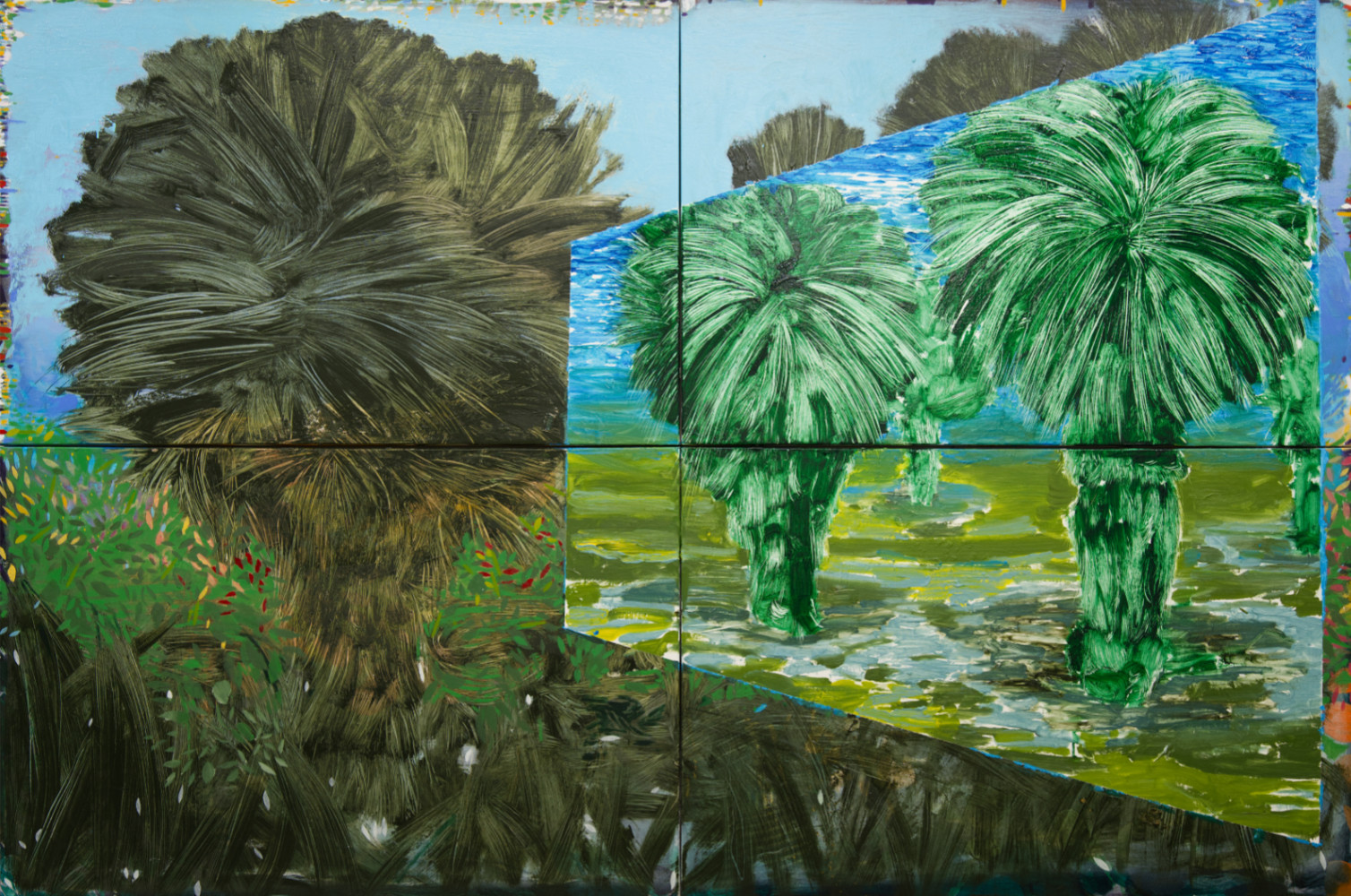
Mirage 10, oil on canvas, 48 x 72 inches.
What matters is that each step is an original, bought on purpose, from an artist whose world you know. A collection built that way, at almost any budget, is a collection worth living with. Collect for the life you get to spend with the work. If values grow over time, treat that as a bonus. It was never the plan, and it should never be the reason you buy.
The Bottom Line
You do not need to be rich to collect original art. You need a habit: start small, buy the piece you cannot stop thinking about, buy direct when you can, learn one artist deeply, and keep the paperwork. One good piece a year will do the rest. If you want to see how far a real budget goes, visit my store at store.bartoszbeda.com. Every price is listed openly, small originals start at $100, and every original comes with a signed certificate of authenticity. Your first piece is closer than you think.