How Much Does an Original Oil Painting Cost? An Honest Guide From a Working Painter
What actually sets the price of original art, from $100 studies to five-figure canvases, and how to buy your first piece with confidence.
Walk into a gallery, fall in love with a painting, and look for the price. There is no price tag. You have to find someone who works there and ask, quietly, as if you are asking about something slightly embarrassing. Many first-time buyers walk out at that exact moment. Not because they could not afford the work, but because the silence around the price made them feel like outsiders.
I am Bartosz Beda. I have been painting since I was seven years old, when I started by copying my older brother's drawings, and I sell my own work. I think the silence is bad for everyone. It keeps people who would love living with original art from ever buying it, and it keeps artists from finding the collectors their work deserves. So here is the guide I wish someone had handed me years ago: what an original oil painting actually costs, what sets that price, and how to buy with confidence.
Why Art Prices Feel Like a Mystery
The art world inherited its pricing habits from a time when almost all serious sales happened in galleries. The gallery model runs on relationships. Prices were shared privately, negotiated quietly, and almost never printed next to the work. The logic was that talking about money would cheapen the art. The result is a culture where asking “how much?” feels like a test you have not studied for.
That culture made some sense when a handful of gatekeepers controlled the market. It makes much less sense now. Artists sell directly from their own websites. A collector in another state can buy a painting at midnight without speaking to anyone. When I put my work in my online store, every piece carries its price openly, from $100 studies to $20,000 large canvases. I believe a price is information, not intimidation. You cannot decide whether something is worth it if nobody will tell you what “it” is.
There is another reason prices feel mysterious: every original painting is one of a kind. A print has an edition and a market of identical copies to compare against. A painting exists once. When it sells, it is gone. Pricing something that exists only once will always involve judgment, but judgment is not the same as randomness. There is a real structure underneath, and once you see it, the numbers start to make sense.
What Actually Sets the Price of an Original Oil Painting
When I price a painting, I am weighing a short list of factors. They are the same factors behind nearly every price you will see, from any artist, anywhere.
- Size and materials. This is the most straightforward part. A 60 by 80 inch canvas holds vastly more paint, more linen, and more stretcher bars than an 11 by 14 inch study. Large works also cost real money to frame, crate, and ship. Materials alone can separate a $500 painting from a $5,000 one.
- Time in the studio. A small study might take an afternoon. A large canvas can absorb weeks of work, layer after layer, with drying time between them. Time is the one material an artist can never get back, and it is priced into the work.
- The artist's exhibition record. A painter with museum shows, juried exhibitions, and residencies has been vetted by people whose job is to judge art seriously. My own path runs from art school in Poland and Manchester, through a Dresden Academy scholarship and a Rome fellowship, to museum and university solo shows in Texas and a solo exhibition in Ohio. None of that makes a painting better on its own, but it tells you the artist has spent years being taken seriously by institutions. That history supports the price.
- Career stage. An artist early in their career prices lower, partly to find collectors and build a market. An established artist with decades of sales behind them prices higher. Buying early-career work is how many collectors find the best value, because the prices have the most room to grow.
- Scarcity. An original painting exists once. There is no second copy coming off a press. When a piece sells, no amount of money can buy that exact painting again. Scarcity is the quiet engine under every original art price.
- The cost of the business itself. Studio rent, insurance, shipping crates, website fees, photography. An artist selling directly still carries real overhead, and honest pricing reflects it.
None of these factors is a secret formula. They are simply the reasons a painting costs what it costs, and any artist should be willing to walk you through them.
The Price Ranges You Will Actually See
Forget the auction headlines about hundred-million-dollar sales. Here is what the real market looks like for working painters selling original oils today.
- Under $500: small studies and works on paper. This is the entry point, and it is a genuine one. Many artists, myself included, make small originals specifically so new collectors can start somewhere. My own small works on paper begin at $100.
- $500 to $2,000: mid-size originals on canvas. For many first-time buyers, this is the sweet spot: a real, substantial painting at a price that does not require a financing plan.
- $2,000 to $5,000: larger statement pieces, often from mid-career artists with solid exhibition records. At this level you are buying both the painting and the artist's trajectory.
- $5,000 to $20,000 and beyond: large-scale works, often destined for significant wall space, from artists with museum shows and long careers behind them. My largest canvases, up to 60 by 80 inches, sit in this range.
These bands overlap and every artist draws the lines a little differently. But if you keep them in mind, you will never again stand in front of a painting wondering whether the price belongs to this planet.
Original Painting vs. Print: What Your Money Actually Buys
This is the question I hear most often, and it deserves a straight answer. A print is a reproduction of an artwork. An original is the artwork.
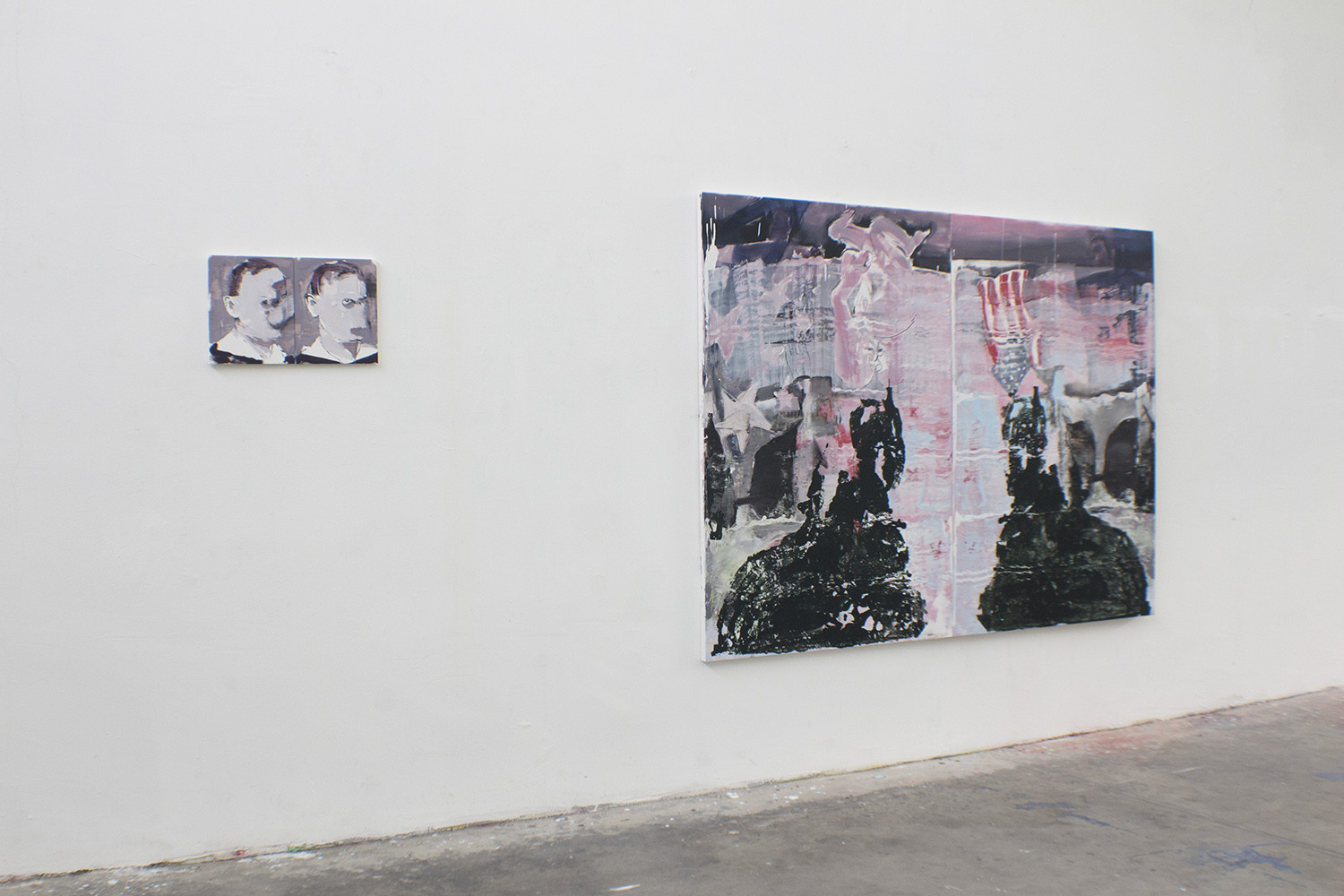
A print can be beautiful, and there is nothing wrong with owning one. But it is ink on paper or canvas, made by a machine, in an edition of dozens or hundreds. An original oil painting is built by hand, layer over layer. The surface has texture you can see shift as you walk past it. Thick paint catches light in a way no reproduction can fake. My current work pushes this even further, with heavy brushwork where the recognizable image starts to dissolve into the raw physical reality of the paint itself. You have to stand in front of it. A photograph of it is a rumor.
There is also a practical difference. A print's value is tied to its edition and the artist's market as a whole. An original's value is tied to that single object. It cannot be reprinted, reissued, or remaindered. Collectors who care about owning something no one else has are paying for exactly that.
If your budget points you toward prints, buy the print and enjoy it. But if you can stretch to an original, even a small one, you are buying a fundamentally different thing.
Buying Directly From the Artist
For most of art history, buying meant going through a gallery, and galleries typically take around half the sale price as commission. That commission pays for real things: the space, the staff, the openings. But it also means the artist receives roughly half of what you pay.
Buying directly from the artist's own website or studio changes the math. The price you see is the price the artist set, with no middleman's cut baked in. In my own store, the price on the page is the whole story. There are a few other differences worth knowing:
- Provenance is simple. The work comes from the studio where it was made. There is no chain of owners to verify.
- Every original I sell includes a signed certificate of authenticity. If you ever sell or insure the piece, that document is what proves what it is.
- You can ask the maker anything. How was it painted? What hangs well next to it? Will the colors shift in sunlight? Try getting those answers from a gallery sales associate on a Saturday.
- Artists selling directly are often flexible in ways galleries are not: payment plans, studio visits, holding a piece while you measure your wall.
None of this makes galleries the enemy. Galleries do important work. But if you find an artist whose work you love and they sell directly, you are usually getting the best version of the transaction.
How to Buy With Confidence: A Short Checklist
You do not need an art degree to buy art well. You need a short checklist and the willingness to trust your own eyes.
- Buy what you love looking at. You will live with it every day. Trends fade; the painting on your wall does not.
- Ask for a certificate of authenticity with any original you purchase.
- Read the shipping and return terms before you pay, not after. Originals travel in crates, and you should know who pays for that and what happens if the work arrives damaged.
- Ask whether the piece is framed and how it should be hung. A large canvas may need specific hardware.
- Start where you are. A $300 original you adore beats a $3,000 one you bought to impress guests.
- Buy the best work you can afford from an artist you believe in, rather than stretching for a famous name you feel lukewarm about.
What About Art as an Investment?
Every buyer wonders it, so let us say it plainly: an original painting can grow in value, but you should never buy one solely as a financial bet. The art market rewards patience and punishes speculation. Prices rise when an artist's career rises, through museum shows, strong reviews, and steady collector demand, and none of that can be scheduled.
That said, originals have one honest investment argument. Unlike stocks, you get to live with your asset. A painting pays you every day in the form of the wall it transforms, and if the artist's market grows over the years, that daily dividend comes with a rising resale value attached. Buy the work you want to keep forever. If it also appreciates, that is a bonus, not the plan.
How I Price My Own Work
I will end where I started: with specifics. My online store lists every price openly because I think you deserve that information before you fall in love with a painting.
Small original works on paper start at $100. Mid-size oil paintings, the 11 by 14 and 16 by 12 inch works, run $1,000 to $1,200. Larger canvases step up from there: $4,000, $7,500, and $10,000 for the big Mirage paintings, up to $20,000 for the largest figure canvases. The logic is the same list from earlier in this article: size, materials, time in the studio, and where I am in my career after more than a decade of exhibiting internationally.
Every original ships with a signed certificate of authenticity, and every price already includes what it costs me to get the painting safely to your door. If you have questions about any piece, you can ask me directly. That is the whole point of selling this way.
The Bottom Line
The art market spent a century making prices feel like secrets. They are not secrets. They are just numbers attached to real things: linen, pigment, time, and years of work. Once you know what goes into the number, you can judge for yourself whether a painting earns it. And the painting that earns it, hanging where you see it every morning, is worth every penny.