How to Choose Abstract Figurative Art
A figure you can feel more than see. Here is how to judge abstract figurative painting when the image will not sit still, and how to pick the one that belongs on your wall.
Abstract figurative art stops people mid-scroll. There is a body in the painting, or the memory of one. A shoulder, a head, a gesture, half dissolved into paint. It pulls at something older than taste, because we are built to find the human form. Then the doubt arrives. You like it, but you cannot explain it, and buying something you cannot explain feels risky. This guide is the explanation, and the checklist that follows from it.
I am Bartosz Beda, a painter working in Dallas, Texas. I was born in Poland in 1984, I have been painting since I was seven years old, and I trained at art school in Lodz before earning my BA in 2011 and my MA in Fine Art from Manchester in 2012. Most of my work is abstract figurative. My current series, Apogee, is built entirely on the foreshortened human figure. I sell my original paintings directly through my own store, originals only, no prints. So this is not theory for me. It is the water I swim in.
What Abstract Figurative Actually Means
The name is a spectrum, not a box. At one end, the figure is clearly there: a person you could describe, painted loosely. At the other end, the figure has almost dissolved, and only a rhythm of curves, a weight, a gesture remains. Both ends are abstract figurative, because both start from the human form and then push it somewhere a photograph cannot go.
That starting point is the whole difference from pure abstraction. A purely abstract painting begins from color, shape, or chance. An abstract figurative painting begins from a body, with all the tension a body carries: balance, strain, rest, desire, grief. Even when you cannot name what you are looking at, your eye recognizes the physics of a person. That recognition is why these paintings hold a wall for years. I wrote a separate piece on how to identify abstract figurative paintings and tell them apart from plain figurative or purely abstract work, and it goes deeper into the signs.
- A figure or body part is present, even if it is transformed or broken apart.
- The paint itself carries part of the meaning: drips, ridges, scraped passages.
- The image rewards a second look. What reads as chaos from far away resolves as you step closer, or the other way around.
- You feel the painting before you can describe it. That order is normal for this kind of work.
First Decision: How Much Figure Do You Want?
Before color, before size, settle this. How readable should the figure be on your wall? Some buyers want a figure they can point to, a form guests will find. Others want the figure buried, so the painting works as pure energy until someone looks twice. Neither is better. They are different daily experiences, and you will live with yours every day.
A simple test helps. Stand back from the image, or shrink it on your screen. If the figure still organizes the painting at a distance, it will read clearly in a room. If the figure only appears up close, the painting will live as an abstract field from across the room and reveal itself slowly. Decide which behavior you want in the space where it will hang, because a hallway piece and a living room piece do different jobs.
Read the Color Before the Story
New buyers often hunt for the story first: what is happening in this painting? With abstract figurative work, that question can stall you. Start with color instead. Color is what the room will actually live with. Ask plain questions. Is the palette warm or cool? Does it sit near the colors already in your room, or fight them on purpose? Is the strongest note a color you love, or a color you merely respect?
Color in this kind of painting also carries the figure’s mood. Heavy darks around a form read as weight and privacy. Bright, open color reads as air and movement. I have a whole article on how color in abstract figurative art influences interior design choices, because getting the color relationship right matters more than matching a sofa exactly. A painting does not need to match the room. It needs to belong in it, and belonging is about temperature and intensity more than identical shades.
Size and Space: Where the Figure Will Live
Abstract figurative paintings change with distance more than most work. Up close, you see paint handling. Across the room, the figure assembles. So size is not only about covering a wall. It is about the viewing distance the room allows. A large piece in a room where nobody can step back will never show its figure. A small, intense piece in a big room can still work if the wall and light give it a stage.
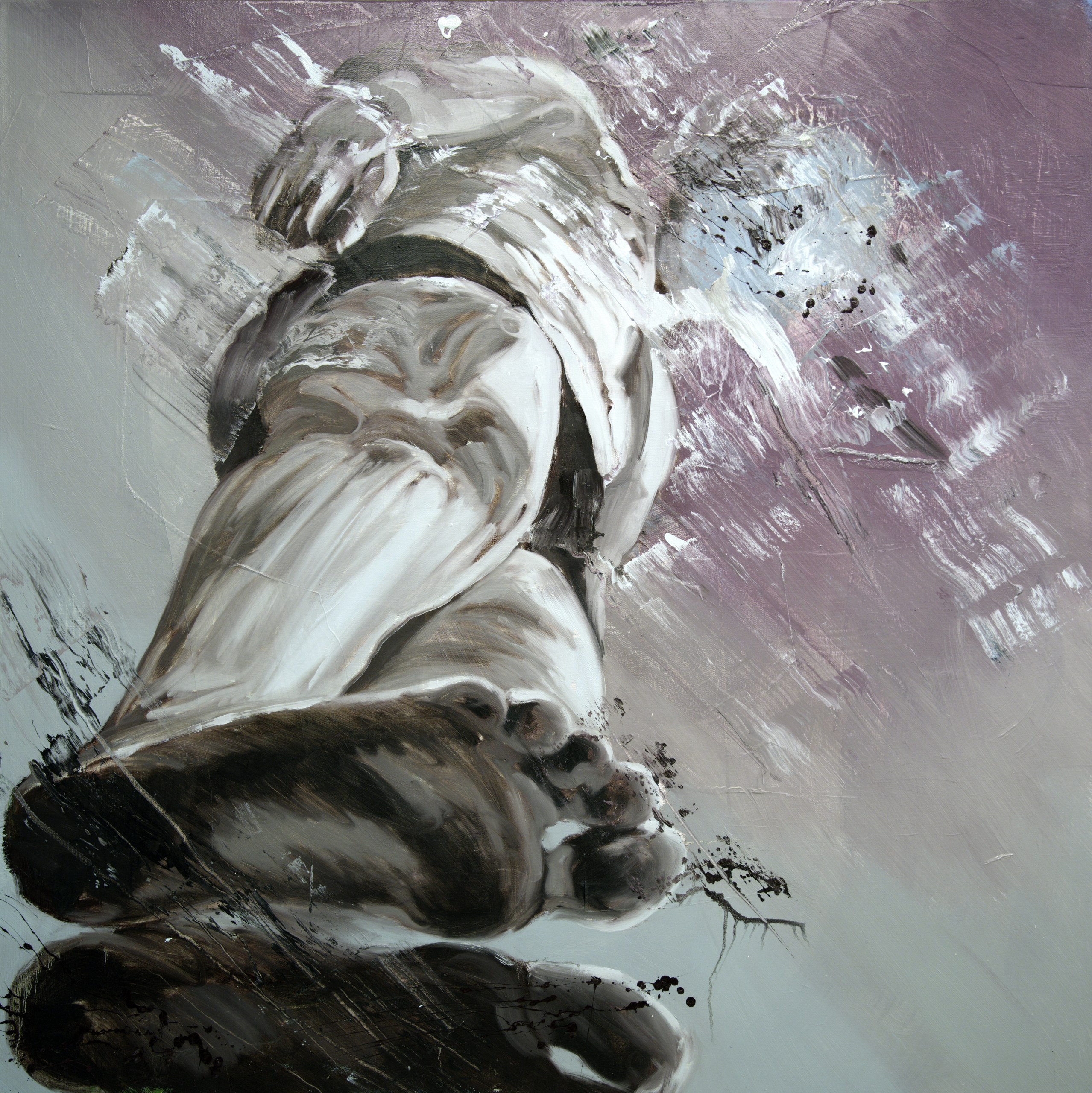
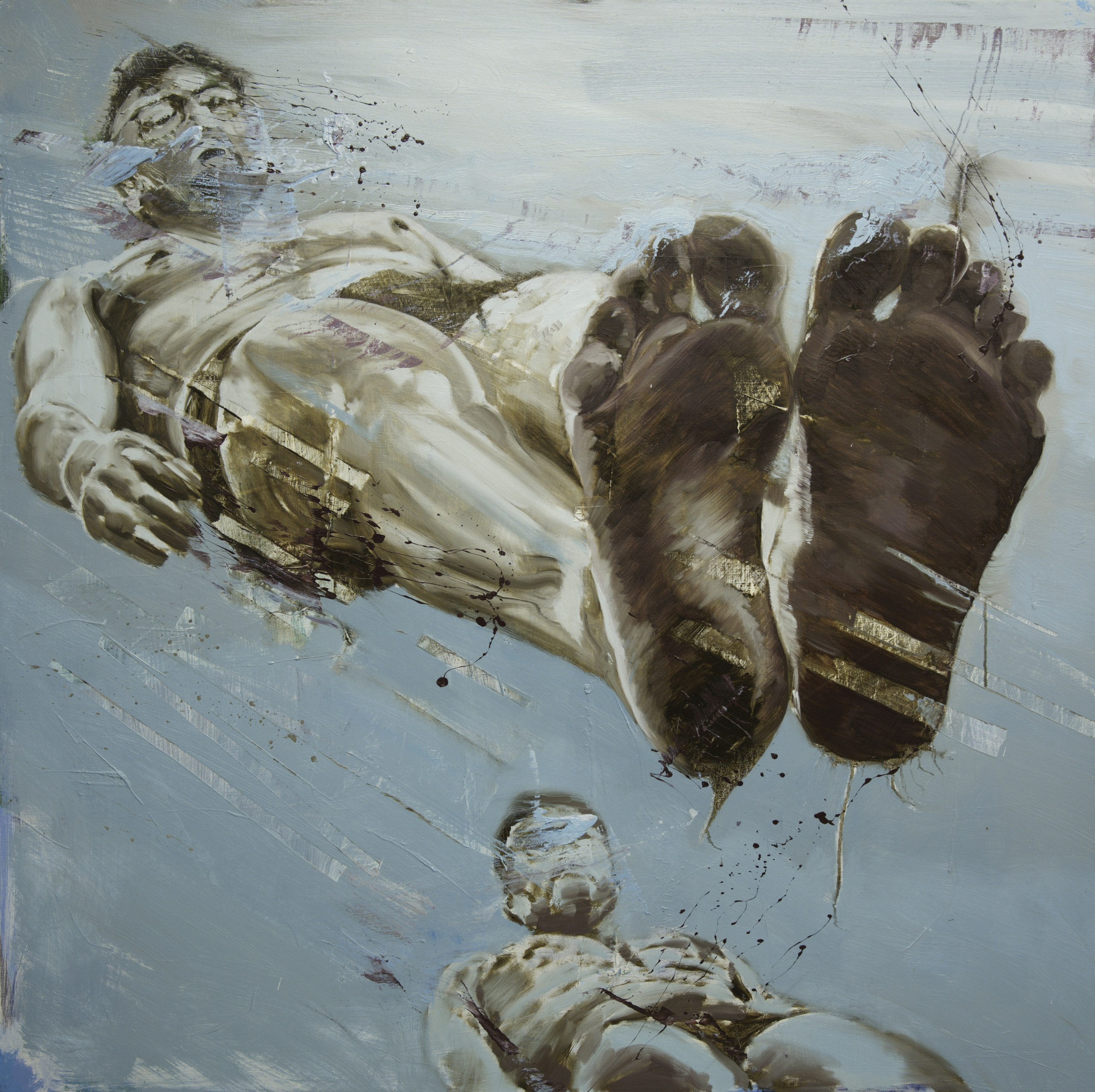
My Apogee paintings make the point. The large ones are 48 by 48 inches, built to be met from across a room, where the foreshortened figure locks into place. The small ones, 8 by 8 inches, are studies in the same language at arm’s length. Same series, different distances, different jobs. If you are torn between sizes, my room-by-room size guide walks through the measurements, and there is an older piece on this blog about whether abstract figurative paintings suit large or small spaces better. How you light and display the piece once it is home matters just as much, and another piece here covers lighting and displaying abstract figurative paintings in detail.
Judge the Surface, Not the Screen
A screen flattens everything, and abstract figurative painting is the worst victim, because so much of it lives in the surface. Thick paint, scraped-back layers, edges where the figure was built and rebuilt: none of that survives a product photo intact. So before you pay, ask for what the photo cannot show. Close photographs of the surface. A photograph of the back. A short answer from the artist about how the piece was made.
This is also where originals separate from reproductions. A print of an abstract figurative painting keeps the image and loses the event. The ridges and accidents are the painting’s handwriting, and they are the first thing a reproduction throws away. If the distinction is new to you, my guide to telling an original painting from a print lays out the checks in order. In my store the question is simple, because I sell originals only, each with a signed certificate of authenticity. But wherever you buy, ask the question.
My Own Road Back to the Figure
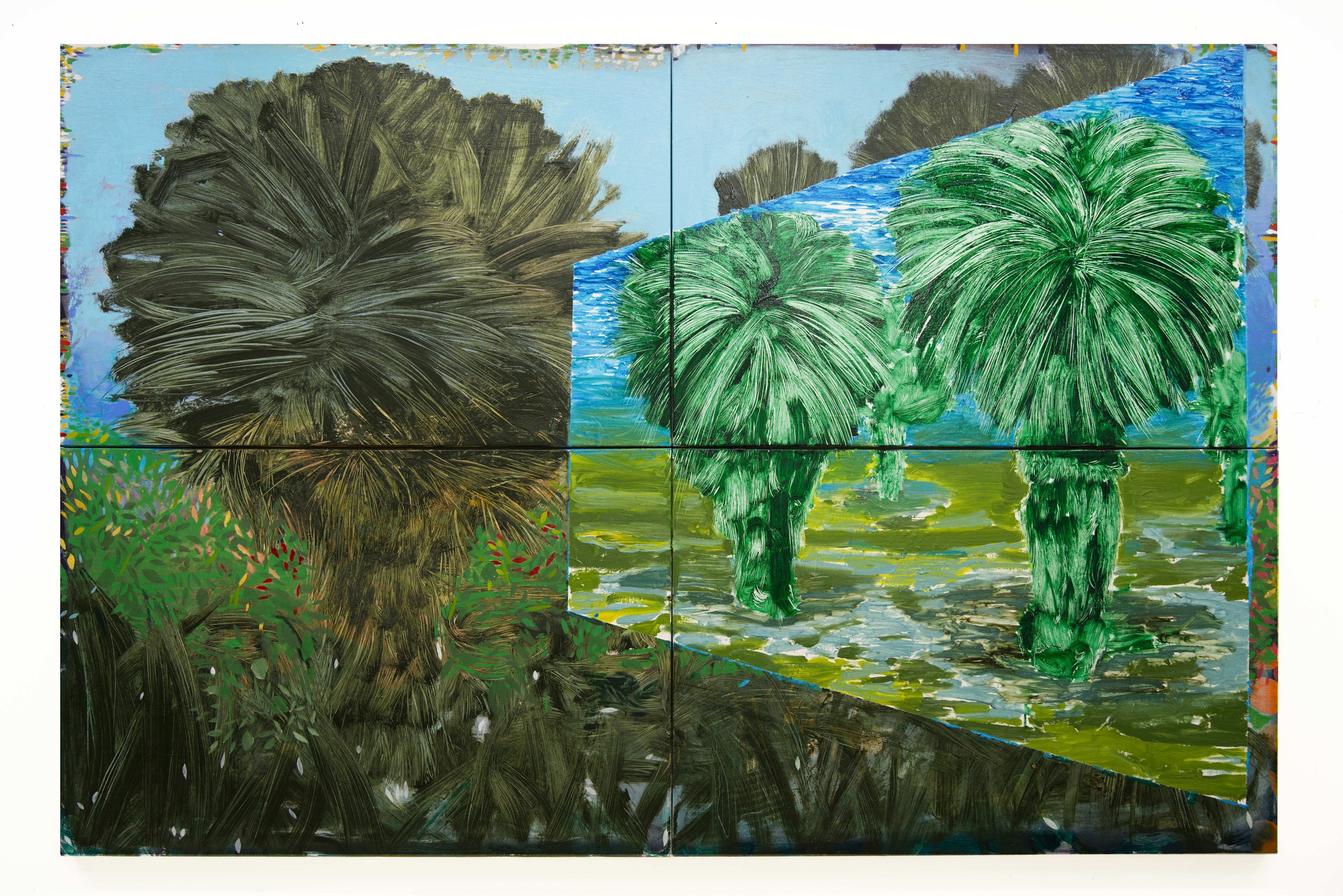
I came to this kind of painting the long way. For about a year I painted Mirage, a series of mostly abstract landscapes that began during my Edwards Trust residency at Angelo State University in San Angelo, Texas. Then, in May and June of 2026, I spent five weeks in Italy: Rome, Venice, Florence, Orvieto. I stood under the ceiling frescoes of Raphael and Michelangelo, including the Sistine Chapel, and the foreshortened figures in those ceilings would not leave me alone. They are painted to be read from far below, bodies twisted into deep space.
In July 2026 I started Apogee. I photographed myself in foreshortened poses to build references, and began with a large square oil on canvas: a figure seen from the feet, aggressive brushwork, the body stretching the picture plane. It was a return to the figure after the landscape years, with the frescoes still in my eyes. I tell you this because it is how abstract figurative paintings actually get made: an old image, a real body, and a painter pushing one against the other until something true shows up. When you buy this kind of work, that struggle is what you are buying. The calm paintings and the violent ones are both records of it.
What Should It Cost?
Prices for abstract figurative originals confuse new buyers, because the work does not price like a photograph or a poster. You are paying for the object, the materials, the weeks in the studio, and the years it took the painter to learn how to make a figure dissolve without disappearing. A small original on paper from a working painter can start around $100. A large canvas from an established hand runs into the thousands, and the price should make sense against the artist’s record: exhibitions, residencies, and a body of work that holds together.
What should worry you is not a high price. It is a price that makes no sense for the object, very large and very cheap at once. That combination usually means a reproduction wearing an original’s clothes. I wrote an honest guide to what an original oil painting costs and why, and it breaks the numbers down piece by piece. Read it before you judge any price, mine included.
Questions to Ask Before You Pay
Wherever you buy abstract figurative art, these questions protect you, and a serious artist will answer all of them in one email.
- Is this an original painting, one of a kind, or a reproduction of any kind?
- Can I see close photographs of the surface and one of the back of the work?
- What are the exact dimensions, and is the listed size the canvas or the frame?
- Does it come with a signed certificate of authenticity?
- How will it be packed and shipped, and what happens if it arrives damaged?
- What are the return terms if the painting does not work in my room?
In my own store, the answers are on the page: originals only, prices listed openly, small works on paper from $100, the Mirage paintings from $1,000 up to $10,000, and the large Apogee paintings at $5,600 each. Every original leaves with its signed certificate. And if you are choosing between two pieces, write to me. Describing how a figure behaves in real light is part of my job.
The Bottom Line
Choosing abstract figurative art is not about decoding a secret. Decide how much figure you want to live with. Read the color for the room it will join. Check that the size fits the viewing distance, not just the wall. Judge the surface, not the screen, and ask the plain questions before you pay. Do that, and the painting you choose will keep unfolding for years, which is exactly what this kind of art is for. You can browse the abstract figurative originals, every price listed openly, at store.bartoszbeda.com.