
Original Painting or Print? How to Tell the Difference and Why It Matters
A plain guide to spotting a real hand-painted original, reading the listing language that blurs the line, and knowing what your money is buying.
You are shopping for art online and you find a painting you love. The photograph looks rich and textured. The price looks almost too good. Then one question stops you. Is this an actual painting, or is it a picture of one? That question matters more than any other when you buy art online. An original painting and a print of a painting are different objects with different values, and the listing in front of you may not make the difference clear.
I am Bartosz Beda, a painter working in Dallas, Texas. I was born in Poland in 1984, and I have been painting since I was seven years old, when I started by copying my older brother’s drawings. I trained at art school in Lodz and earned my BA in 2011 and an MA in Fine Art from Manchester in 2012. The Catlin Art Guide and a Saatchi New Sensations shortlist followed in 2012, then a scholarship at the Dresden Academy of Fine Arts and a fellowship at Fondazione per l’Arte in Rome in 2016. I held residencies at GoggleWorks in 2018 and at Angelo State University in San Angelo in 2025, as the Edwards Trust resident. I also founded Execute Magazine and the Art Be You Academy, and I wrote a book called Hear My Voice. I have exhibited internationally for more than a decade, and I sell my work directly. I sell originals only. This guide shares what I have learned about where buyers get confused, and how to stop being confused.
What an Original Painting Actually Is
An original painting is a single physical object that an artist built by hand. There is only one, because nobody printed it, copied it, or produced it in a run. The artist mixed the paint, chose every mark, and decided when the work was finished. What you buy is that one object, with the whole story of its making sitting in the surface.
Look closely at a real painting and the surface gives that story away. Paint sits in ridges where the brush moved quickly. Thin passages let the canvas or the paper show through. The edges carry small accidents: a drip that stayed, a corner where one color pushed into another while both were wet. Turn the work over and the back tells the same story, with stretcher bars, staples, and sometimes pencil notes or a date. None of that is decoration. It is evidence that a person made this thing, once, by hand.
My current work leans into that physical truth. I use heavy, aggressive brushwork, and the recognizable image starts to dissolve into the physical reality of the paint itself. Standing in front of one, you are not looking at a picture of an event. You are looking at the event.
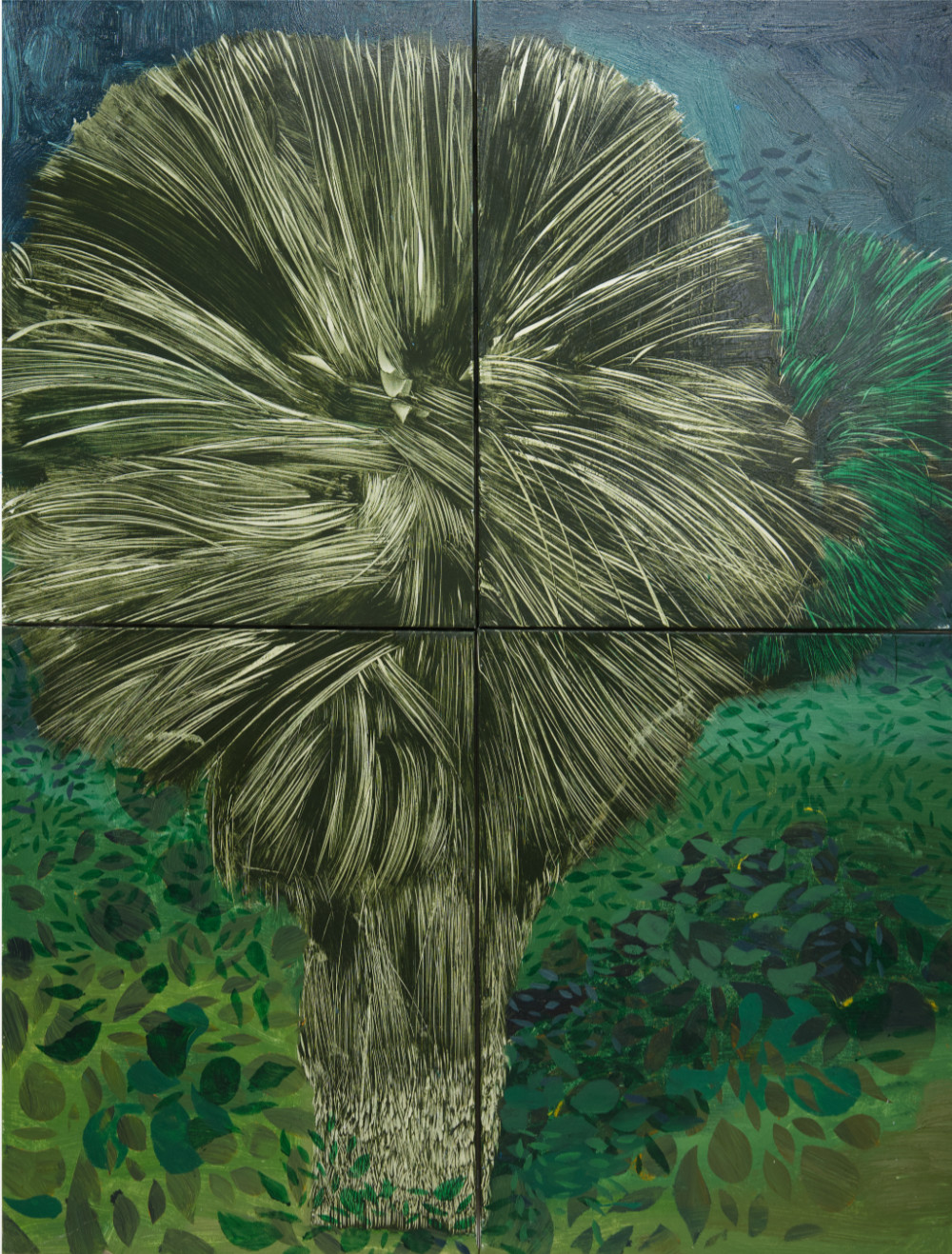
Mirage 09, oil on canvas, 48 x 36 inches.
What a Print Actually Is
A print is a reproduction. A machine puts ink onto paper or canvas by following a digital file of an artwork. That file can be printed ten times or ten thousand times, and every copy is essentially identical to the others. Prints come in a few common forms, and it helps to know their names.
- Giclée prints. These are inkjet prints made with fine nozzles and long lasting inks, usually on paper or canvas. Good giclée printing is a real craft and the results can be handsome. It is still a reproduction of a painting, not the painting.
- Canvas prints. The image is printed onto canvas fabric and stretched over a frame, like a painting. From across a room it can imitate a painting well. Up close the surface is flat and printed, with no paint on it at all.
- Limited editions. The artist caps the run at a set number, then signs and numbers each copy. The cap adds scarcity compared with an open edition, but every copy is still one of many identical objects.
- Open editions. No cap, no numbering, nothing to stop further copies. These can be printed forever, which is why they cost the least.
None of this makes prints bad. A print lets someone live with an image they love at a price they can afford, and plenty of artists sell prints honestly and label them clearly. The trouble starts only when a print is described in a way that lets you believe it is something else.
The Listing Language That Blurs the Line
Most confusion is not caused by outright lies. It is caused by careful words. When you shop, slow down whenever you meet these phrases.
- “Hand embellished.” A printed image with some real paint brushed over the top, often by studio assistants rather than the artist. Paint is present, so the word painting gets used. The image underneath is still a print, and most of the surface is printed.
- “Painting style,” or “painted look.” Style is doing all the work in that phrase. It means the image resembles a painting. It says nothing about the object in the box, because the object is a print.
- “Original” attached to the design. Some listings call a work an original design or an original digital artwork, then ship a print made from that file. The word original is technically in the listing, and completely misleading about the object.
- AI generated images sold as paintings. Software can now invent images that imitate brushwork convincingly, at least inside a photograph. Some sellers print those images on canvas and present them as original paintings by artists who do not exist. No person painted anything, because there was never a painting to begin with.
Honest listings are easy to recognize once you know the game. They state plainly what the object is: an original painting, or a print, with the process named. If a listing dances around the object itself, treat the dancing as your answer.
How to Tell the Difference in Person
If you can stand in front of the work, your eyes will tell you more than any listing can. Look for these signs of a real painted surface.
- Impasto that catches the light. Thick paint casts tiny shadows, and the surface changes as you walk past it. A printed surface looks exactly the same from every angle.
- Edges with a history. On a real canvas the paint often wraps around the side, or stops in a rough line a hand made. Printed canvas tends to show a clean mechanical edge, or a mirrored image folded around the corner.
- Small irregularities. A stray brush hair sealed into the paint. A ridge where two colors met while wet. A line that wavers slightly, the way a drawn line does and a printed line never does.
- No two alike. Ask the seller whether another copy exists. With an original the answer is simple: this is the only one. With a print there is always a file, and the file can always be printed again.
- The back of the work. Stretcher bars, staples, a signature, dates, or notes on the reverse are hard to fake convincingly, and a real artist can show them to you without hesitation.
Buying online, you cannot touch the work, so ask for the evidence instead. Request close photographs of the surface, one photograph of the back, and one of the edges. A seller holding a real painting can send those within minutes. A seller holding only a printed file cannot, and the excuses you get instead are information too.
Why a Photograph Cannot Settle the Question
Here is the uncomfortable truth at the center of buying art online. A photograph flattens everything. It turns a three dimensional surface into a flat image, which is exactly what a print already is. Photographed well, a canvas print and the original painting it copies can look nearly identical on your screen. The screen cannot show you the one thing that separates them.
That thing is surface. The texture of real paint, the way it holds and throws light, the weight of the object in your hands: none of it survives photography intact. When I photograph my own paintings for my store, I know the picture is only an invitation. The painting itself is rougher, heavier, and more alive than its photograph suggests. A seller of originals should be able to describe a surface in specific words. Sellers who stay vague are often selling you a picture of a picture.
The Price Tells You a Lot
Price is not proof, but it is evidence. A real painting carries real costs: canvas, paper, paint, and weeks of studio time, with a career standing behind it. Those costs set a floor, and no honest seller can price very far under that floor for long.
So be suspicious when a very large canvas is offered as an original oil painting for the price of a nice dinner. Materials alone for a large work run into real money before a single hour of painting is counted. A huge “original” at a tiny price is almost always a print, or a copy painted quickly to fill an order, or a listing hoping you will never ask the question this article taught you to ask. Size and price should move together. When they do not, the listing is telling you something.
The opposite extreme deserves a thought as well. A high price by itself proves nothing about whether a work is genuine or good. What you want is a price that makes sense for the object, from a seller willing to explain it openly.
What a Signed Certificate of Authenticity Proves
A certificate of authenticity is a signed document from the artist stating what the work is: its title, medium, size, and date, and that it is an original made by that artist’s hand. It is the paperwork that travels with the painting for the rest of the painting’s life, long after receipts and emails are gone.
The certificate matters for practical reasons. It supports insurance, because an insurer wants proof of what a thing is. It supports resale, because the next buyer receives evidence instead of a story. Most of all, it forces the seller to commit, in writing and over a signature, to a specific claim about the object. Sellers of prints dressed as paintings avoid exactly that kind of commitment. Every original I sell comes with a signed certificate of authenticity, because I want the claim about my work to stay checkable for as long as the painting exists. Ask for the certificate before you pay, not after. If a seller of an alleged original cannot provide one, you have learned what you needed to know.
Why I Sell Originals Only
My store sells originals only. No prints, no canvas reproductions, no editions of any kind. When you buy a painting from me, the object that leaves my studio in Dallas is the only one of its kind, and it arrives with its signed certificate of authenticity.
I list every price openly, because an open price is part of knowing what you are buying. Small original works on paper start at $100, so a first original does not have to be a major decision. The small Mirage paintings are $1,000 and $1,200. Mirage 09 is $4,000, Mirage 10 is $7,500, and Mirage 11 is $10,000. My largest canvases reach up to $20,000. You can weigh the object against the number before you ever write to me. If you want closer photographs of a surface, or of the back of a canvas, ask. That is a normal request, and I am glad to answer it.
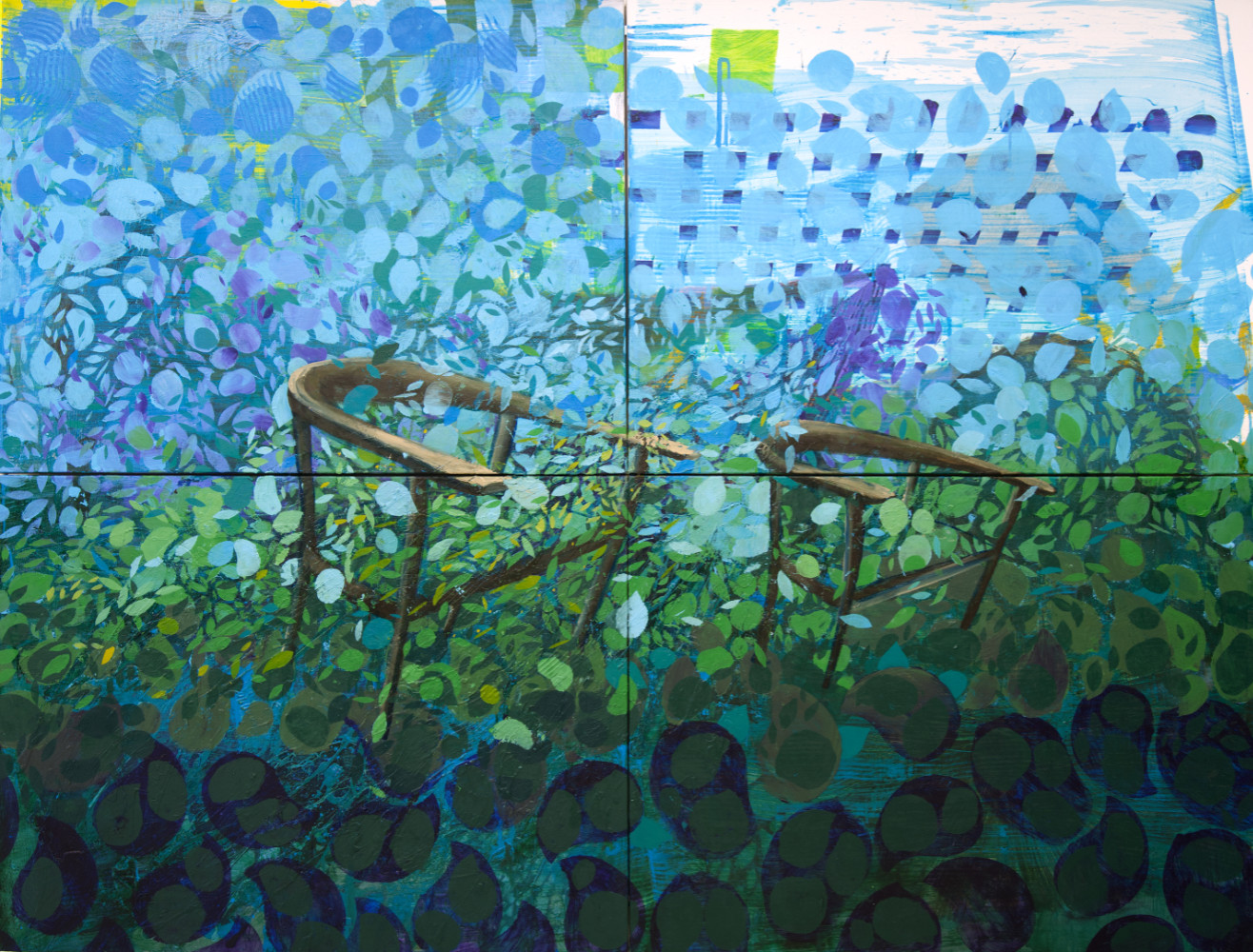
Mirage 11, oil on canvas, 60 x 80 inches.
Prints have their place, and I hold nothing against artists who sell them honestly. But my work is about the physical surface of paint. A reproduction of one of my paintings would be a postcard of the thing I actually make, and I would rather sell you the thing itself.
The Bottom Line
Original art vs print is not a snobbish distinction. It is a factual one, and your money deserves the facts. An original is one object, built by hand, with a surface no machine can copy. A print is a reproduction, and it should be priced and described as one. Learn the listing language, ask for photographs of the surface and the back, check that the price fits the object, and ask for a signed certificate before you pay. Do those things and you will know what you are paying for. When you are ready to look at originals sold with open prices and signed certificates, visit my store at store.bartoszbeda.com.

