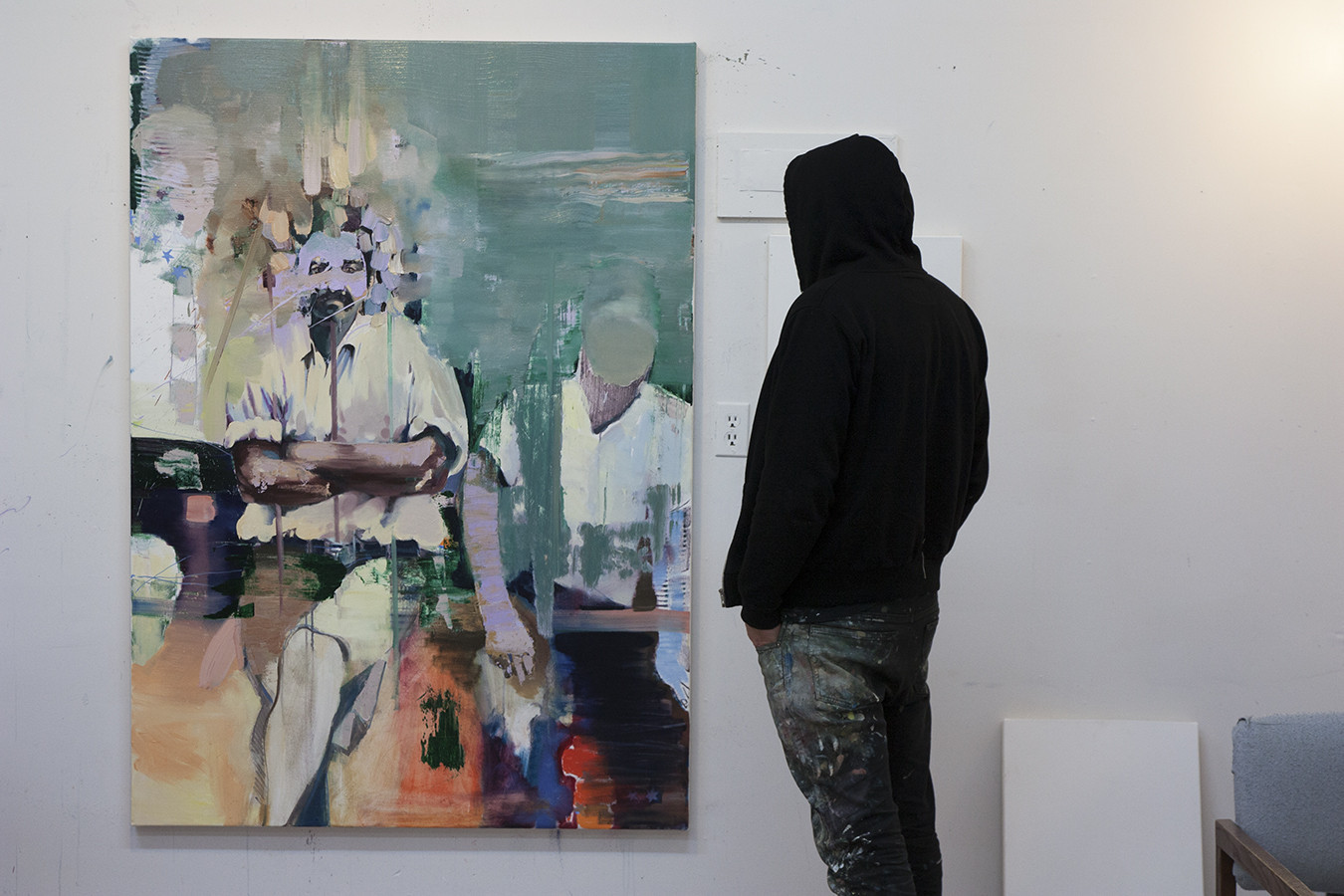
How to Commission a Custom Painting From an Artist
How to Commission a Custom Painting From an Artist
From the first email to the final varnish: how custom paintings actually get made.
Some buyers fall in love with a painting that already exists. Others arrive with a wall, a size, and a feeling, and ask: can you make one for me? The answer is usually yes. Commissions are one of the oldest arrangements in art, and one of the most misunderstood.
I am Bartosz Beda, a painter in Dallas, Texas. I have been painting since I was seven years old, I trained at art school in Lodz and took my MA in Fine Art in Manchester in 2011, and I take on commissions for collectors who want something made for their space. Here is the full process, exactly as it works in a professional studio: finding the right artist, writing the brief, money, timelines, revisions, and the awkward question of what happens if you do not love it.
Is a Commission Right for You?
Commission when you love an artist's existing work and want something in that vein, sized for your wall or tuned to your space. The best commissions give the artist room to be themselves. You are hiring a voice, not a printer.
- Good reasons: you love the artist's style and want it at a size they have never made. You want colors that talk to your room. You have a meaningful subject you want rendered in their visual language.
- Bad reasons: you want it cheaper than their listed work. You want a different artist's style painted by this artist. You need it next week. You want an exact copy of a photograph.
Be honest about which list you are on. The first list leads to paintings people treasure. The second list leads to disappointment for everyone.
Finding the Right Artist
Look for an artist whose finished work already looks like what you want. If every painting they make is abstract and you want a portrait, keep looking. Style is not a costume an artist puts on for a commission. It is years of decisions, and you want those years working for you.
Check that they have done commissions before, and ask to see examples. A painter with a long exhibition record has solved enough problems in the studio to handle yours. Then talk to them. A short call or a few emails will tell you whether communication feels easy. You will be in a working relationship for weeks or months, and ease matters more than you think.
Where do you find these artists? The same places you find any art you love: gallery shows, art fairs, open studio events, and increasingly, artists' own websites and social media. An artist who sells directly online is often easier to commission than one represented exclusively by galleries, because there is no middleman in the conversation. When you find work that moves you, check whether the artist mentions commissions. Many do, quietly, on a contact page.
Writing a Brief That Gets You What You Want
The brief is the most important document in the whole process. It is the foundation everything else stands on. A good brief covers:
- Size: exact dimensions, orientation, and whether the piece will be framed.
- The feeling or subject, in a few plain sentences. Reference images help enormously, especially images of the artist's own past work that you love.
- Color direction: what your room looks like, what hangs nearby, photos of the actual wall if possible.
- Where it will hang: light conditions change how colors read, and the artist should know.
- Your deadline, if you have one, stated honestly at the start.
What the brief should not do is dictate every brushstroke. A sentence like paint my dog exactly like this photograph is a job for a different kind of painter. A sentence like a large, warm, energetic piece in your style for the wall above our fireplace is a brief an artist can fly with. Specific about the goal, open about the path.
How Commissions Are Priced
A commission is typically priced like a comparable existing painting of the same size, sometimes with a modest premium for the extra consultation and the fact that the artist cannot offer it to anyone else. My own pricing logic is the same one I use for everything: size, materials, time in the studio, and career stage. A mid-size commissioned oil runs what a mid-size oil runs in my store, $1,000 to $1,200, and large commissions step up from there toward the $4,000 to $10,000 range of my big canvases.
Be wary of prices far below an artist's listed work. A commission discount usually means corners get cut: cheaper materials, rushed drying times, less care. You do not want a bargain version of a painting you will look at for decades.
Deposits and Payment Schedules
Money in commissions follows a standard professional pattern. Here it is:
- A deposit of one third to one half is standard. It reserves your slot in the schedule and covers materials. The deposit is almost always non-refundable, which is fair: the artist turns away other work to hold your place.
- The balance is due on completion, usually after you approve final photographs and before the painting ships.
- Get it in writing: price, size, deposit, balance, timeline, and how many rounds of revision are included. A short simple agreement protects you both.
- Never pay one hundred percent upfront to someone you just found. Professionals do not ask for that.
Timelines: Why Good Work Takes Months
Oil paint dries slowly. Layers need curing time between them. A serious painting cannot be rushed without the rush showing in the finished surface. A small commission might take a few weeks. A large canvas can take two to four months from first sketch to final varnish. Then add framing and shipping on top of that.
Ask for a realistic timeline at the start, and build in buffer if the piece is for an event, a move, or a holiday. An artist who promises a large oil painting in ten days is either a genius or about to disappoint you. Plan for the second possibility.
Revisions and Check-Ins
A professional process includes check-ins at natural stages: photographs of the sketch or underpainting, then again when the painting is nearly finished. Small adjustments at these stages are normal and expected. This is the whole point of the check-ins: steering is cheap early and expensive late.
What is not normal is redesigning the painting three times. Most artists include one or two rounds of refinements in the price. Larger changes after you have approved a stage may cost extra, and that should be agreed in advance, calmly, not discovered in the middle of an argument.
What If You Do Not Love It?
Say it early. The sketch stage exists so problems surface when they are cheap to fix. A good artist would rather hear this is not what I imagined at week two than at week ten. Silence helps no one.
Know the policy before you pay the deposit. Most artists make commissioned work non-refundable past a certain point, because the painting was made for you and cannot easily be resold. This is standard and fair, and it is exactly why the brief and the check-ins matter so much. They are the machinery that prevents surprises.
In practice, outright rejection is rare when the artist was chosen well and the communication stayed honest. The process is designed so that the finished painting feels inevitable, not surprising.
After It Arrives
You should receive the finished painting, a signed certificate of authenticity, and basic care instructions. Unpack it carefully, hang it at the height you planned, and live with it for a few weeks before judging it fully. Paintings reveal themselves slowly.
And tell the artist how it looks on the wall. Send a photo. Artists keep pictures of commissioned work in place, and it is genuinely the best payment after the payment.
Reference Images: Show, Do Not Just Tell
Words are slippery. Show the artist what you mean. The most useful reference images are photographs of the artist's own past work: this one, and this one, and the colors in this third one. That tells the painter exactly which part of their own output you are asking them to extend.
Photos of your room and your wall are the second most useful thing you can send. An artist who can see the light, the furniture, and the colors of the space will make better decisions than one working from dimensions alone. A quick phone photo of the empty wall, taken in daylight, is worth three paragraphs of description.
What reference images cannot do is replace the artist's judgment. Sending twenty images from twenty different artists and asking for all of them at once is a sign the brief needs focus. Three to five strong references beat thirty scattered ones every time.
The Sketch Stage: Your Cheapest Moment to Speak Up
Most commissions include a sketch or study stage before the real painting begins: a small drawing, a color study, or a digital mock-up showing the composition. This is the most valuable moment in the entire process, and many collectors waste it by being polite.
Look at the sketch the way an editor reads a draft. Is the composition doing what you imagined? Is the energy right? This is when changes cost nothing. Moving a shape in a sketch takes minutes. Repainting a finished canvas takes weeks. Anything you are unsure about, say now, plainly and kindly. A professional artist expects it. The sketch stage is not a formality. It is the whole reason commissions go right.
Approve the sketch in writing, even if that just means a clear email saying yes, proceed. That approval becomes the shared reference point for everything after. Both of you will be glad it exists if memories differ later.
Can You Commission as a Gift?
Yes, and it is one of the best gifts a person can give, with one warning attached. A commissioned painting is personal in two directions: it reflects the artist, and it reflects the giver's taste. Giving one means trusting your read of the recipient.
The practical version works like this. Commission the piece to your own brief, keep the subject matter broadly lovable rather than deeply specific, and give the recipient the story along with the painting: who made it, why you chose them, what it is. If you are unsure, some artists offer a gift arrangement where the recipient gets a studio visit or a call to steer the final direction. Ask. The worst outcome is a painting the recipient feels guilty about not loving, so when in doubt, keep the brief open and the colors easy to live with.
The Bottom Line
A commission done right gives you the one thing no gallery wall can: a painting that was made, from the first sketch, for your home. The process is simple when everyone is professional: a clear brief, a written agreement, honest check-ins, and patience while the paint dries.
If you have a wall waiting, start with the work that already exists. Browse my store at store.bartoszbeda.com and find the paintings whose language speaks to you. When you know whose work you love, write to the artist. That first email is the beginning of a painting that has your name on it from day one.