
Giving an Original Painting as a Gift: How to Get It Right
How to choose a painting for someone else, size it safely, and give a gift that stays on their wall for decades.
Every November and December, the same quiet panic sets in. You want to give something that matters, and the shops fill up with things that do not. Candles, bottles, gadgets, gift sets in shiny boxes. Most of them are used up, put away, or forgotten before spring. A year later, nobody remembers who gave what. If the gift is meant to mark something real, it should still be there in ten years. A painting is.
I am Bartosz Beda, a painter working in Dallas, Texas. I have been painting since I was seven years old, when I started by copying my older brother’s drawings, and my path since then has run through art school in Lodz, a master’s degree in Manchester, and residencies in Dresden, Rome, and Texas. I sell my original paintings directly through my own store. This guide answers the question I would want answered if I were the buyer: how do you give a painting to someone else and get it right?
People sometimes ask why a painter would write a gift guide at all. The answer is simple. A painting leaves my studio once, but it lives somewhere for decades, and I would rather it live in the right home. I have spent more than a decade exhibiting internationally, from a Saatchi New Sensations shortlist in 2012 to the Edwards Trust residency at Angelo State University in Texas in 2025, and the lesson repeats itself: the paintings that stay on walls are the ones chosen for a specific person and a specific room. That is what this guide is for.
A Gift That Outlasts the Season
Most gifts have a short life built into them. Food is eaten. Flowers last a week. Electronics are replaced by a newer model within a few years. Even good gifts quietly become background objects that nobody looks at anymore.
An original painting works differently. It goes on a wall and stays there, through redecorating, through moves, sometimes through decades. The person you gave it to sees it every single day, in ordinary moments: morning coffee, coming home, sitting with guests. And every so often they remember who gave it to them and why. That is the real gift. Not the object alone, but a daily reminder of a person and a moment, built into the home itself.
A painting also travels through a life. It hangs in a first apartment, then in a house, then maybe in a smaller place later on. Children grow up with it as part of the background of home. Guests ask about it. It becomes part of how a family tells its own story, and the person who gave it is inside that story every time it is told. Few objects earn that place. A painting can.
Start With Their Home, Not Your Taste
The most common mistake in giving art is buying what you like and hoping they will like it too. Sometimes it works. Often the painting ends up in a spare room. The safer method is to start from the life of the person receiving it: the rooms they live in, the colors already on their walls, and the art they have chosen for themselves before.
- Study their walls. Note the main colors in the room where a painting could hang: wall paint, sofa, rugs, curtains. A painting that speaks to those colors will look at home from the first day.
- Look at the art they already own. Is it calm or bold? Figurative or abstract? Large or small? Their past choices are the best map of their taste you will ever get.
- Picture the empty wall. Most homes have one: above a sofa, in a hallway, over a desk. A gift that answers a wall they already notice is a gift that gets hung.
- Match the energy of the house. A quiet, minimal home usually welcomes quieter work. A colorful, layered home can carry something stronger.
If you can, look at photographs of their rooms before you buy. Ten minutes of looking will teach you more than an hour of guessing. And if you are choosing between two pieces, choose the one that fits their home, not the one that fits yours.
Why Small Originals Are the Safe Gift Size
If you are unsure, go small. A small original painting or a work on paper fits almost anywhere: a hallway, a bedroom, a home office, above a desk, on a crowded wall among other pieces. It does not demand that the person rearrange a room around it. It is easy to hang, easy to move, and easy to live with while they find its perfect spot.
Small does not mean lesser. A small original is still one of a kind, painted by hand, and impossible to replace with an identical copy, because no copy exists. In my store, small original works on paper start at $100, with pieces at $100 to $150 in the Small Originals Under $500 range. That makes a genuine original painting a realistic gift at a price where most people are buying scented candles and gift cards. You are giving the real thing, just in a size that asks nothing of the person receiving it.
There is another reason small works make sense as gifts. Many people have never owned an original painting, and a large canvas can feel like a responsibility they did not ask for. A small work on paper asks for nothing and gives them the experience of living with real art: a real surface, real brushwork, a piece that exists once in the world and now hangs in their home. If they fall in love with that experience, the next painting in their life will be their own choice, and it may well be bigger.
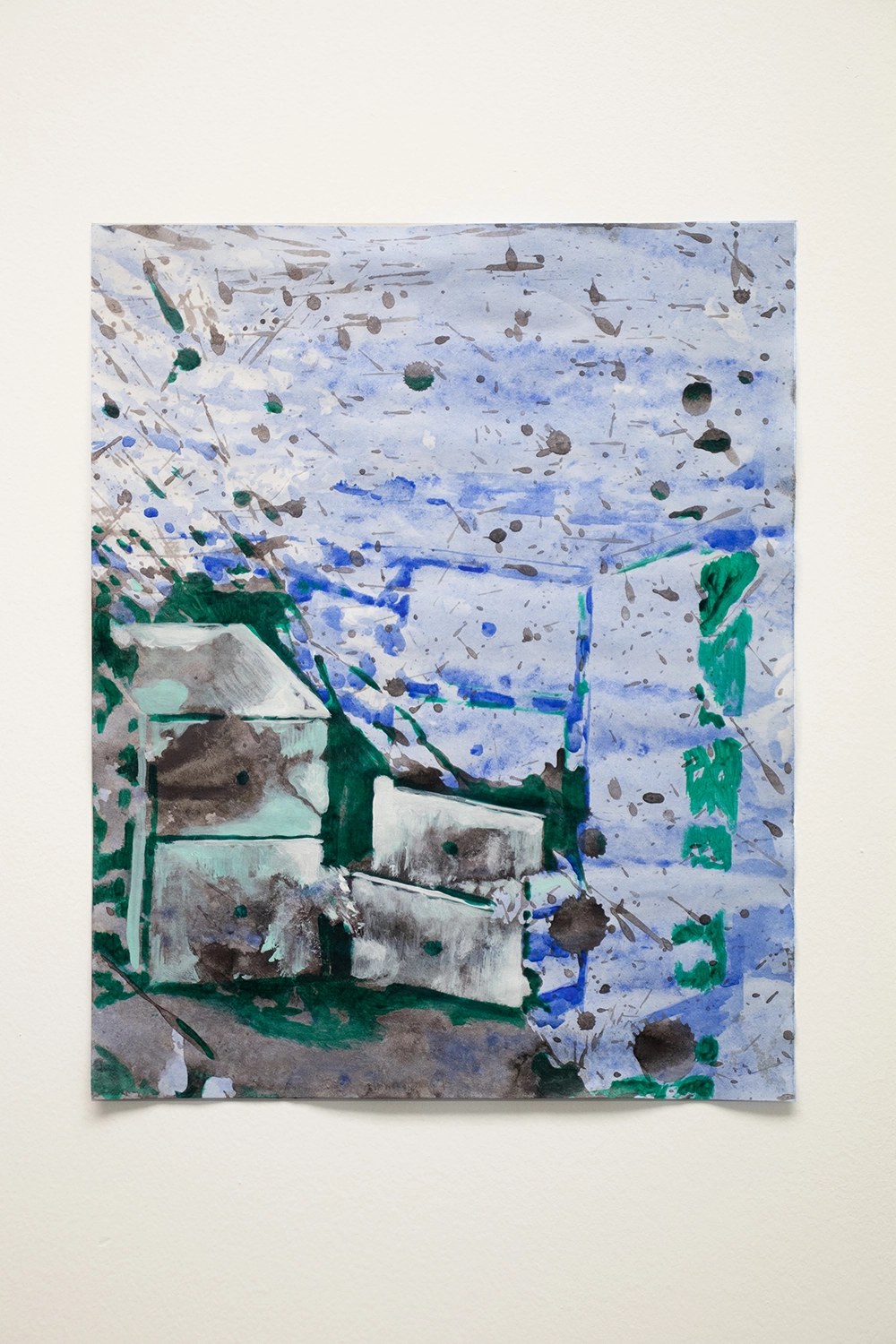
Geometry of Silence 03, an original painting for $287.
Buying From a Living Artist Changes the Gift
When you buy a painting from a living artist, the gift carries something a factory made object cannot: a story you can tell. You can ask the artist questions before you buy. How does the color look in real light? What was happening in the studio when this piece was made? What does the artist see in it? The answers can become part of the gift itself.
When the painting is unwrapped, you can say more than a hopeful sentence. You can say where it was painted, what drew you to it, and what the artist told you about it. That conversation turns a beautiful object into something with roots. It also means the person receiving it can write to the artist themselves one day and ask their own questions. No mass produced gift offers that connection.
The Certificate Is Part of the Presentation
Every original in my store comes with a certificate of authenticity that I sign. For a gift, do not treat that document as paperwork to file away. Treat it as part of the presentation. The certificate names the work and confirms that it is an original, and it stays with the painting for its whole life, through moves, inheritance, and any future sale. Handing it over with the painting tells the person receiving it that this was chosen carefully, not ordered in a panic. It also protects them. Decades from now, the certificate is what proves what the painting is and who made it.
Occasions an Original Painting Fits
Some occasions call for a gift with weight. An original painting fits the moments that people remember for the rest of their lives:
- Weddings. A couple starting a home together receives many useful things. A painting is the one gift that can hang in that home for fifty years and still be pointed to.
- Housewarmings. New walls are empty walls. A first painting gives a new home its character faster than almost any piece of furniture.
- Retirements. A retirement marks the end of one life and the start of another. A painting for the home where that new life happens carries the meaning well.
- Milestone birthdays. A fortieth, fiftieth, or sixtieth birthday deserves better than a joke gift. An original is a serious present for a serious year.
The pattern is simple. When the occasion will be remembered, give something that lasts as long as the memory. An original also solves the hardest case of all: the person who seems to have everything. Nobody already owns this painting twice.
Order Early, and Check the Terms Before You Buy
Originals are not pulled from a warehouse shelf. In my studio, every painting is packed by hand. Small works travel flat-packed between rigid boards. Large canvases travel in custom wooden crates, and I ship worldwide. That kind of care takes time at every step, so if you are buying for a specific date in November or December, order early and leave room for the journey. A painting that arrives a week early is a relief. One ordered at the last moment is a worry nobody needs.
Also read the seller’s return or exchange terms before you pay, whoever you buy from. Art is personal, and even a well chosen gift can miss: the color fights the room, or the size is wrong for the wall. Clear terms are part of a professional sale. Knowing them in advance protects the person giving the gift and the person receiving it, and it lets you give with confidence instead of crossed fingers.
Giving a Larger Painting: When It Works
A large painting is a different level of gift, in price and in presence. In my store, the larger Mirage paintings run from $4,000 for Mirage 09 to $7,500 for Mirage 10 and $10,000 for Mirage 11, and the largest canvases reach $20,000. A piece like that becomes the center of a room. Given well, it is unforgettable. Given carelessly, it is a beautiful problem: too big for the wall, too strong for the room, and impossible to store.
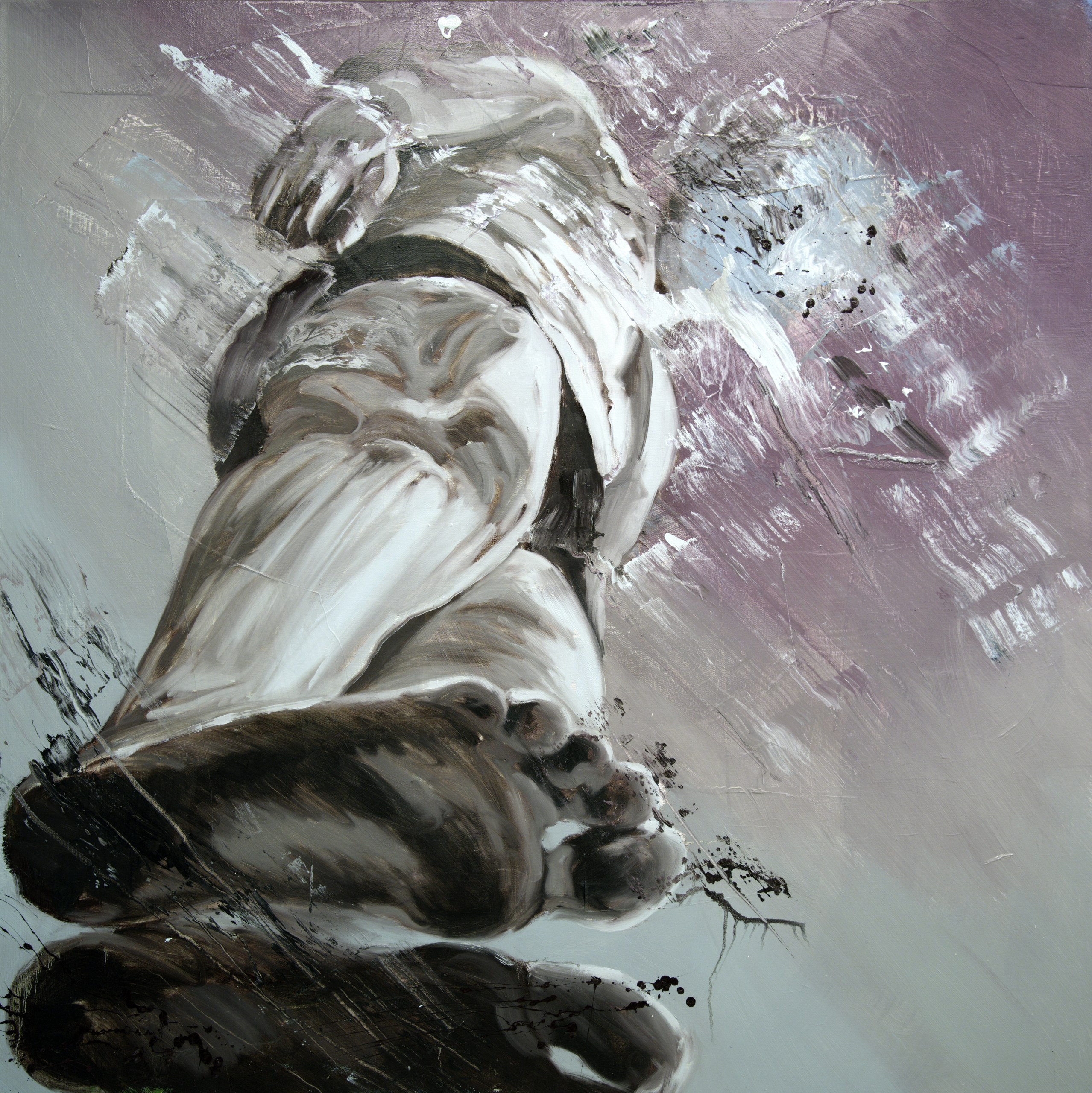
Apogee Fragment 07, oil on canvas, 48 x 48 inches.
So give a large painting only when two things are true. You know the space: you have stood in the room, seen the empty wall, and know the painting will fit it. And you know the taste: the person has admired this artist, or this kind of work, before, out loud, in front of you. If either one is a guess, step down to a smaller piece and give it with a clear conscience. You can always ask me questions about size and placement before you decide. That is one of the advantages of buying from the person who painted it.
The Bottom Line
A good gift says two things: I know you, and I thought about this. An original painting says both, and then it keeps saying them from the wall for decades. Start from their home, choose a size that asks nothing of them, and order early enough for careful packing and shipping. In my store at store.bartoszbeda.com you will find originals only, every price listed openly, small works on paper from $100, and a signed certificate of authenticity with every piece. If you are not sure which painting fits the person you have in mind, write to me. I am happy to help you choose.
You Might Also Like

Why Is Abstract Figurative Canvas Prints Investment a Smart Choice for New Collectors?
