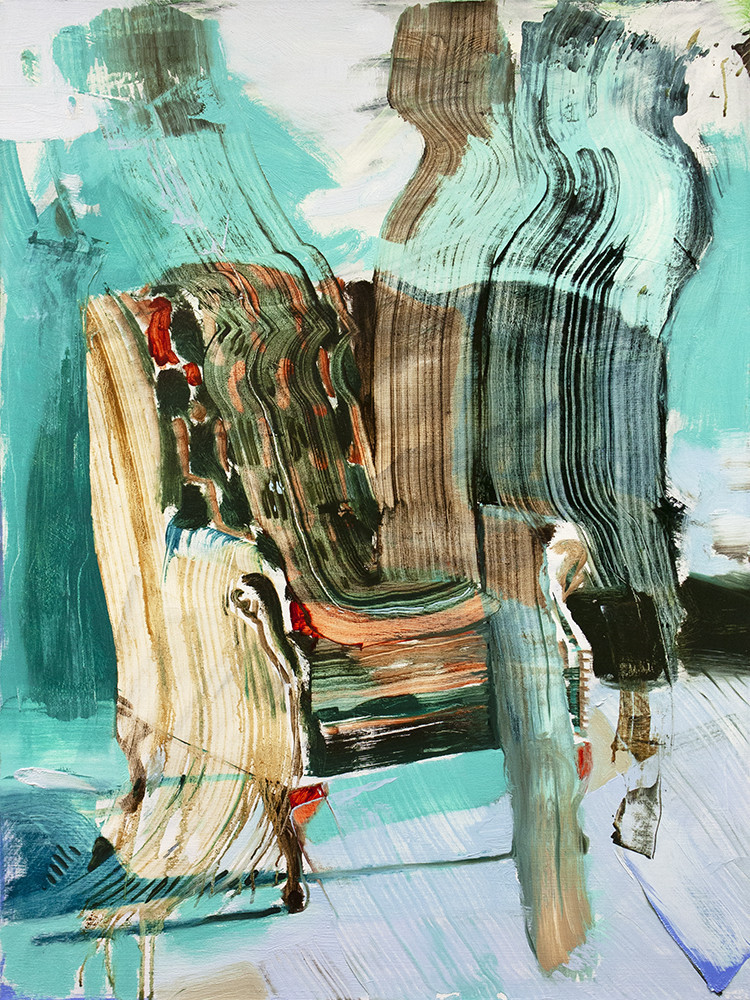
Buying a Large Painting: What to Check Before You Pay
A statement piece changes a room. It also has to fit through your door. Here is the checklist I give buyers before they pay for a big canvas.
A large painting does something no other object in a room can do. It sets the scale of everything around it. The sofa looks smaller. The ceiling feels higher. Guests walk toward it before they sit down. That is the reward. The risk is just as plain: a big painting is a physical object, and it has to travel from the artist’s studio to your wall without anything going wrong on the way.
I am Bartosz Beda, a painter working in Dallas, Texas. I was born in Poland, I have been painting since I was seven years old, and I trained in Lodz and in Manchester, finishing my BA in 2011 and my MA in Fine Art in 2012. I sell my original paintings directly through my own online store, and my largest canvases run up to 60 by 80 inches and up to $20,000. When someone asks about one of the big ones, the conversation is rarely about color first. It is about doors, stairs, walls, and crates. This article is that conversation, written down: everything worth checking before you pay.
Why a Big Painting Needs a Different Checklist
Buying a small painting is simple. It arrives in a box, you lean it against a wall, and it goes up on one hook. A large painting is a different category of purchase. The money is bigger, so the decision carries more weight. The object is bigger, so the logistics matter more. And a mistake is bigger too, because sending a six foot canvas back is nothing like returning a pair of shoes.
None of this should scare you off. It should slow you down for one afternoon. Run through the checks below before you pay, and the painting that arrives will be the painting you pictured.
Measure the Wall, Then Measure the Way In
Start with the wall. Measure its width and its height. A large painting needs breathing room around it, so the wall should be noticeably wider than the canvas. A piece that fills a wall edge to edge looks squeezed, and a piece that is too small for its wall looks lost. If you are unsure, tape the painting’s dimensions onto the wall with painter’s tape and live with the outline for a day before you decide.
Then measure the route. This is the step buyers forget, and it is the one that causes real trouble. A canvas that fits your living room wall still has to reach that wall. Check every doorway it will pass through. Check the hallway turns. If you have stairs, check the space at the turn, where big pieces get stuck. If your building has an elevator, measure its door and its interior. Compare all of it against the painting’s full dimensions, including the depth of the frame if it has one.
- Doorways: width and height, with the door opened fully.
- Stairwells: the turn is the danger point, not the straight run.
- Elevators: the door opening is often smaller than the cab inside.
- Tight corners: a long canvas cannot bend, so corners need diagonal room.
- The final wall: confirm the tape outline before you commit.
If the route does not work, say so before you pay. Artists would rather hear it early. There may be options, such as a different piece or another way in, but nobody can solve a doorway problem after the crate is built.
Weight, Wall Type, and Hanging Hardware
A large canvas weighs more than people expect. Canvas and stretcher bars are light for their size, but add a frame and the total climbs. The photograph on a website will not tell you the number. Ask the artist or the seller what the piece weighs and what it needs in order to hang safely.
Your wall matters as much as the painting. Modern drywall needs the weight carried by studs or by proper wall anchors rated for the load. Brick, concrete, and old plaster each take different fixings. A small hook that once held a framed poster will not hold a large canvas. For a serious piece, two strong fixing points spread the load and keep a wide painting level instead of slowly tilting.
- Ask what the painting weighs and whether it arrives ready to hang.
- Ask whether it is framed, and whether the frame is counted in the listed size.
- Find the studs in your wall, or plan on anchors rated well above the weight.
- Use two fixing points for wide pieces so the load is shared.
- If the wall is brick or plaster, ask at a hardware store which fixings suit it.
If hanging it yourself feels uncertain, hire a professional art installer for the big one. It is a modest cost next to the painting, and it turns the riskiest ten minutes of the whole purchase into someone else’s job.
Think About Light Before the Painting Arrives
Light behaves differently on a big surface. A small painting receives one kind of light. A large canvas can catch a window reflection across half its face, and glare that would be a minor annoyance on a small piece becomes the main thing you see. Before you buy, stand where the painting will hang and study the wall at different times of day. Note where the sunlight lands, and when.
Direct sun is hard on any painting over the years, and on a large piece it can also throw a bright patch across the image that fights what the painting is doing. A wall that receives soft, indirect light is ideal. A bright room is not a deal breaker, but you should know its light before the painting is hanging, not after. Lighting can be adjusted, too. A well aimed light washes a big canvas evenly and makes large work look its best in the evening, when most people actually sit with it.
Crating and Shipping: The Hidden Half of the Purchase
Small paintings travel in boxes. Large paintings travel in crates. In my studio, a large canvas ships in a custom wooden crate built around that specific piece. The protection is the crate itself, and the care taken at every step of the packing. Crating is slow, skilled work, and the crate for an oversized painting is a small piece of carpentry in its own right. Moving something that size also costs far more than an ordinary parcel, simply because of the dimensions involved.
So before you pay for any large painting, from any seller, settle three questions. How will it be packed? What happens if it arrives damaged? And who pays for shipping: is it included in the price, or added on top? There is no wrong answer. There is only a wrong time to learn the answer, and that is after the money has moved. Oversized work can also cost more to deliver to some addresses than to others, so confirm the full delivered price, not just the price of the painting itself.
- Ask how the piece will be packed: box, crate, or something else.
- Ask what happens, step by step, if the painting arrives damaged.
- Ask whether shipping is included in the price or charged separately.
- Confirm the total delivered price to your address before paying.
Ask to See the Painting in a Real Room
Photographs of a painting on its own, shot against a plain background, tell you about the image. They tell you very little about its presence. Before buying a large piece, ask the artist for photographs of it in a real space: hanging above a sofa, leaning against a studio wall, standing next to a person. One photograph with furniture in it teaches you more about scale than ten measurements do.
This is one of the real advantages of buying directly from the artist. You can simply ask. When buyers write to me about a large Mirage painting, I can send room views and answer direct questions about the surface, the painted edges, and how the colors behave in daylight. A seller who will not send one extra photograph of a painting at this level is telling you something. Listen to it.

Mirage 10, oil on canvas, 48 x 72 inches.
Read the Return Terms Before You Pay
Here is the uncomfortable truth about returns. Sending back a small painting is an errand. Sending back a large one is a project. The painting has to come off the wall, go back into serious protective packing, and travel as a large, fragile object all over again. If the original crate was damaged or thrown away, a new one may need to be built first. All of that is possible, and all of it is a hassle that neither side wants.
So read the return terms before you pay, while everything is still hypothetical. Is returning the piece possible at all? Who pays for return shipping on an oversized painting? Does it need to travel back in its original crate? What happens if the work arrives damaged? Good sellers put these answers in writing. If the terms are written down nowhere, ask for them in an email before any money changes hands.
Plan Where It Goes the Day It Arrives
A crated large painting takes up real space when it lands in your home. Plan for arrival day before the piece ships. Clear a spot where the crate can sit while you open it. Arrange a second pair of hands; a big canvas is awkward for one person even when it is not especially heavy. Decide in advance whether the painting hangs the same day or leans somewhere safe, its face protected, until the hardware is ready.
Also decide what happens to the crate. If there is any chance you will move house with the painting, or store it for a while, the crate is worth keeping. It was built for that exact painting, and a replacement would have to be built from scratch. A garage corner or a storage unit solves the problem.
What Large Looks Like in My Store
To make all of this concrete, here is what large means in my own work. The Mirage series, mostly abstract landscapes, began during my Edwards Trust residency at Angelo State University in San Angelo, Texas, in 2025. The series runs from smaller paintings at $1,000 and $1,200, through Mirage 09 at $4,000, Mirage 10 at $7,500, and Mirage 11 at $10,000. My largest canvases reach $20,000, at up to 60 by 80 inches. Every painting in the store is an original. I sell no prints. Every price is listed openly on the page, and every original comes with a signed certificate of authenticity.

Mirage 11, oil on canvas, 60 x 80 inches.
When a buyer is considering Mirage 11, the checks in this article stop being theory. That painting has to pass through their door, hang on a wall that can hold it, and travel across the country in a custom wooden crate. The buyers who run the checklist are the ones whose paintings go up without drama. The painting deserves that. So does the wall.
The Bottom Line
Buying a large painting is part art decision and part moving job. Fall in love with the image first, because you will live with it for years. Then measure the wall and the route in, check the weight and the hanging, think about the light, understand the crating and the shipping, read the return terms, and plan the day it arrives. Do those things before you pay, and a big painting stops being a gamble and becomes what it should be: the strongest thing in the room. You can see the large originals, every price listed openly, at store.bartoszbeda.com.